

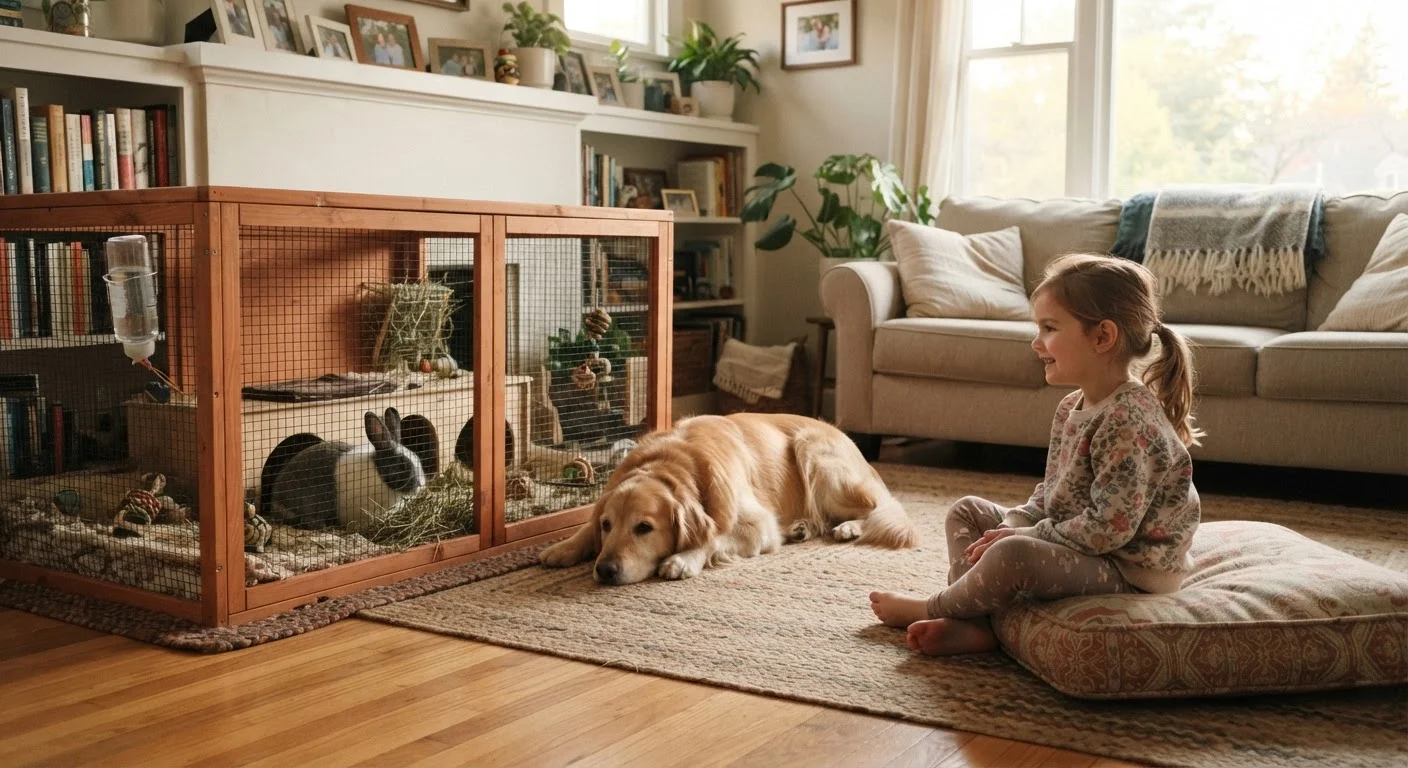
Understanding the Real Risks in a Multi-Pet Household
Small pets - rabbits, guinea pigs, hamsters, birds, and similar animals - are physiologically and behaviorally distinct from dogs and cats. In a shared household, these differences create genuine safety challenges that owners often underestimate. A dog that is gentle with children can still injure a rabbit through rough play. A cat's instinct to stalk a caged bird can cause the bird severe chronic stress, even without direct contact.
Stress alone is a serious health risk for small animals. Prey species like rabbits and guinea pigs are hardwired to conceal illness, meaning internal stress responses - elevated cortisol, reduced appetite, GI disruption - may not be obvious until the animal is already unwell. Learn to recognize the early warning signs that your small pet may be struggling, so you can act quickly.
It's also worth dispelling a common assumption: that "friendly" cats or dogs are inherently safe around small animals. Predatory drive and prey response are instinctual, not a reflection of a pet's personality or training. Safe cohabitation requires structure - not trust alone.
Common misconceptions about small pets often lead owners to underestimate these animals' needs, so approaching cohabitation with accurate expectations is the essential first step.
Best Practices for Physical Safety and Enclosure Setup
The enclosure is your first and most important line of defense. Follow these practices to build a safer shared environment.
Use enclosures with secure, latching doors that cannot be nudged open by a dog's nose or a child's curious hands.
Dogs and cats can open simple wire doors through persistent contact. Children may inadvertently leave doors ajar. A compromised enclosure in seconds can result in injury or escape that takes hours - or longer - to resolve.
Position small pet enclosures in a dedicated room that can be closed off from dogs and cats.
Physical separation is the most reliable safety measure in a multi-pet home. Even well-trained dogs retain predatory instincts, and a locked door removes the variable of animal behavior from the safety equation entirely.
Conduct all introductions between species under direct adult supervision and for short, controlled durations.
Gradual, positive exposure reduces predatory arousal in dogs and cats over time. However, unsupervised access - even after months of apparent calm - carries unpredictable risk. Supervision must remain consistent.
Establish and consistently enforce a 'no handling without adult present' rule for young children.
Small animals can be seriously injured by being dropped, gripped too tightly, or startled into a fall. Young children lack the fine motor control and impulse regulation to handle small animals safely without guidance.
Keep toxic household items - cleaning products, certain houseplants, scented sprays - well out of reach or away from small pet areas.
Small animals are often more sensitive to environmental toxins than dogs or cats. Birds especially can suffer severe respiratory reactions to fumes that humans barely notice. Hazard-proofing principles developed for puppies translate directly to small pet safety.
Learn and respect each species' stress signals so you can intervene before fear escalates to a health crisis.
Prey animals mask distress instinctively. By the time obvious symptoms appear, the animal may already be in a serious state. Early recognition allows owners to adjust the environment before harm occurs.
Enclosure Placement Matters as Much as Design
Even the most secure enclosure can become a stress trap if positioned where household pets can circle it constantly or press against it. Elevating small mammal enclosures off the floor puts them out of nose-and-paw reach of dogs and reduces the constant predator-presence cues that trigger chronic stress. For birds, placing the cage in a corner rather than the center of a room gives them a sense of shelter and security.
For rabbit owners considering more open living arrangements, understanding hutch vs. free-roam setups can help you weigh what's realistic given the other animals in your home.
Managing Children's Interactions with Small Animals
Children are among the most common sources of accidental injury to small pets - not from malice, but from a natural impulse to pick up, squeeze, or startle animals they find exciting. Young children may also unintentionally leave enclosure doors open or offer unsafe foods.
Direct, age-appropriate education is more effective than simple rules. Explain why a hamster must be held close to the ground, or why shouting near the bird cage causes the bird distress. Children who understand the reasoning behind safety rules tend to follow them more consistently.
Supervised handling sessions with a calm adult present help children learn appropriate technique while giving the small pet a chance to habituate to human contact. Keep sessions short - most small animals tolerate handling better in brief, frequent intervals than in long, exhausting ones.
Supervised exposure also benefits the small pet. Animals that are handled regularly from a young age are generally calmer and less reactive to household activity, which reduces stress over time.
Species-Specific Considerations Worth Knowing
Safety measures are not one-size-fits-all. The right approach depends on which small animal you have and which other pets or people share the space.
- Birds are highly sensitive to airborne toxins - non-stick cookware fumes, scented candles, aerosol sprays, and cigarette smoke can be fatal. Keep birds in well-ventilated rooms away from the kitchen, and eliminate aerosol use nearby.
- Rabbits can die from fright alone - a condition sometimes called capture myopathy. A dog barking repeatedly at a rabbit's enclosure is not just annoying; it can be life-threatening. Separate rooms or a heavy visual barrier between the enclosure and dog access is often necessary.
- Hamsters and gerbils are nocturnal or crepuscular, meaning household noise and activity during the day disrupts their natural rest cycles and causes chronic stress. Place their enclosures in quieter areas of the home.
- Guinea pigs are social and vocal but also prey animals - they need predictable, calm environments. Understanding what guinea pigs actually require before bringing them into a multi-pet household helps set realistic expectations.
When Cohabitation Isn't Working
Some combinations of animals - particularly high-prey-drive dogs and prey species like rabbits or birds - may never be fully safe together, regardless of training or setup. If your small pet is showing persistent signs of stress despite environment modifications, consult both an exotic animal veterinarian and a certified animal behaviorist. Rehoming is sometimes the most humane outcome, and there is no shame in recognizing that.
Routine veterinary care is especially important for small animals in busy households, where stress-related conditions can develop quietly and worsen quickly.
This article is for general informational purposes only and does not constitute veterinary advice. Always consult a qualified exotic animal veterinarian for concerns about your specific pet's health or behavior.
The content provided on our blog site traverses numerous categories, offering readers valuable and practical information. Readers can use the editorial team’s research and data to gain more insights into their topics of interest. However, they are requested not to treat the articles as conclusive. The website team cannot be held responsible for differences in data or inaccuracies found across other platforms. Please also note that the site might also miss out on various schemes and offers available that the readers may find more beneficial than the ones we cover.