

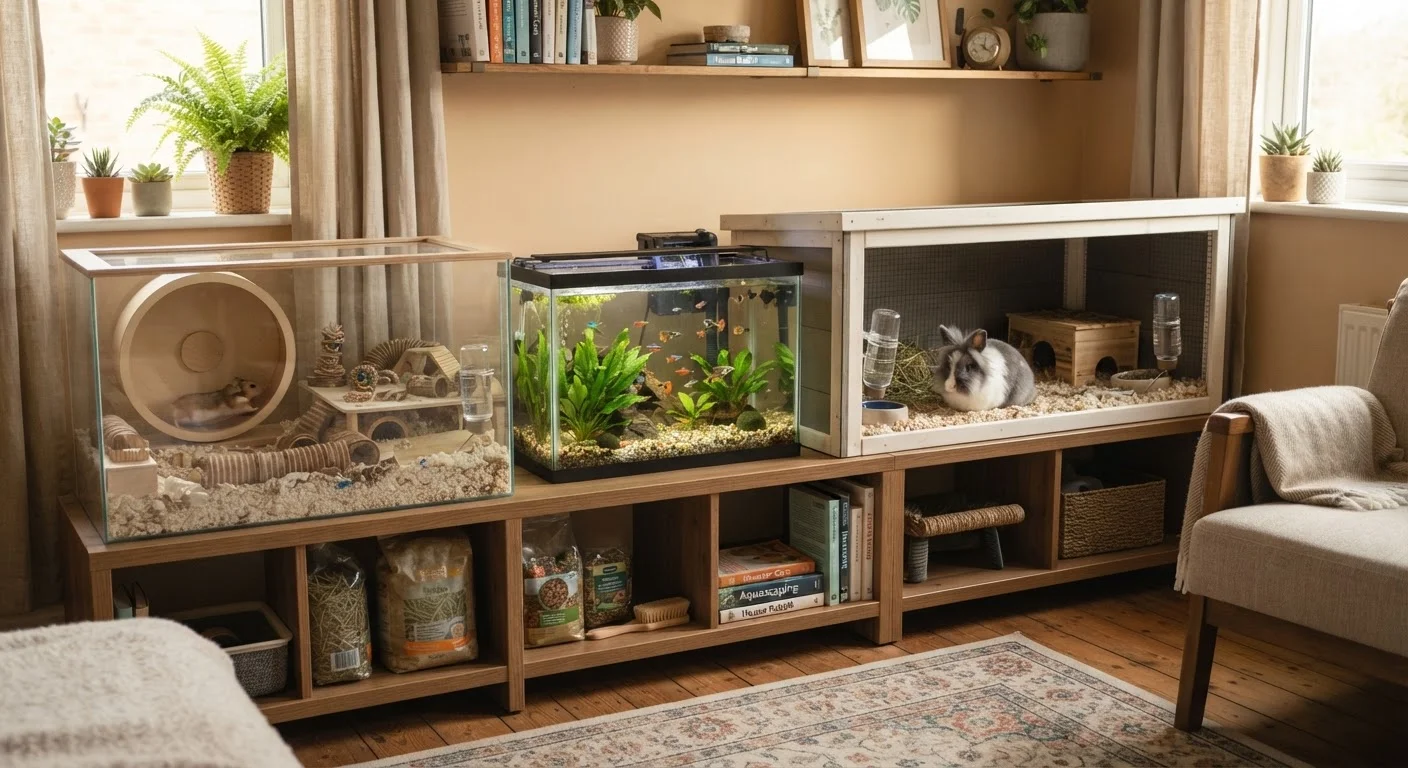
Why Myths About Small Pets Are More Harmful Than They Seem
Small pets - hamsters, rabbits, guinea pigs, fish, gerbils, and birds - are often marketed as easy starter animals, ideal for children or busy households. That framing has given rise to a set of persistent myths that, when acted on, lead to real harm: understimulated animals, preventable illness, and shortened lifespans.
The consequences aren't always dramatic or immediate, which is part of what makes these misconceptions so durable. A hamster living in a too-small cage won't protest loudly. A fish in a sparse tank won't file a complaint. But the cumulative impact on welfare is significant - and avoidable. The myth-busting that follows draws on broadly accepted veterinary and behavioral science to give small pet owners a more accurate picture of what these animals actually need.
For those who keep dogs or cats alongside smaller animals, accurate species knowledge matters for household safety too. See keeping small pets safe in a shared household for practical guidance.
Myth
Hamsters are low-maintenance pets, perfect for children or people who don't have much time.
Fact
Hamsters require daily feeding, fresh water, regular cage cleaning, handling for socialization, and significant space for burrowing and exercise.
The perception of hamsters as effortless pets largely comes from how they're sold - small, quiet, and housed in compact cages at pet stores. But those cages are often far too small by the standards of current animal welfare guidance, and hamsters are actually highly active animals that can run several miles on a wheel in a single night.
They need deep bedding to burrow, sufficient floor space, and daily interaction to remain healthy and unstressed. Hamsters housed in cramped or barren environments often develop repetitive behaviors - such as bar-chewing or excessive wheel-running - that are indicators of chronic stress. For a detailed look at appropriate enclosure requirements, see what hamsters actually need to thrive.
Myth
Fish have a three-second memory, so tank conditions and enrichment don't matter much.
Fact
Fish have been shown in research settings to retain learned information for days, weeks, or longer - far beyond the three-second myth.
The three-second memory claim is one of the most widely repeated animal myths, and it has no solid scientific basis. Studies on various fish species have demonstrated that they can learn to navigate mazes, recognize feeding schedules, and even distinguish between individual humans. Memory retention varies by species, but it is measured in meaningful time spans, not seconds.
This matters practically because fish are sensitive to their environment. Tank size, water quality, temperature, filtration, and the presence of appropriate hiding spots all affect stress levels and longevity. A goldfish kept in a small bowl, for example, will typically live a fraction of the lifespan it could achieve in a properly maintained, larger aquarium.
Myth
Rabbits are content living alone in a hutch outside and don't need much interaction.
Fact
Rabbits are highly social animals that can suffer from loneliness and boredom; they generally thrive with companionship and significant space to move freely.
Rabbits were domesticated from wild European rabbits that live in social groups, and that social nature hasn't been bred out of them. Solitary rabbits - particularly those kept in small outdoor hutches with minimal human contact - can develop signs of depression, destructive behavior, and health problems linked to inactivity.
Rabbits need several hours of supervised out-of-enclosure time daily, a companion rabbit in most cases, and a living space large enough to allow full movement including running and jumping. Outdoor hutches, while traditional, carry real risks including temperature extremes, predator stress, and limited interaction. Many rabbit welfare organizations now recommend indoor housing where supervision is easier and social contact more frequent.
Myth
Guinea pigs can do fine living alone as long as their owner spends time with them.
Fact
Guinea pigs are highly social and generally require same-species companionship to meet their social needs - human contact alone is typically insufficient.
Guinea pigs communicate constantly using a range of vocalizations and physical behaviors that are directed at other guinea pigs. While they can bond with humans and enjoy interaction, the type of social stimulation they receive from a cage mate is fundamentally different - and usually necessary for their wellbeing.
Solitary guinea pigs often show signs of loneliness including lethargy and reduced activity. Many countries, including Switzerland, have laws requiring that guinea pigs be kept in pairs or groups. For a thorough look at what guinea pig ownership genuinely involves, the honest pros and cons of owning a guinea pig is a useful read before committing.
Myth
Small pets don't need veterinary care - they're too inexpensive to justify a vet bill.
Fact
All animals - regardless of purchase price - can experience illness, injury, and pain that requires professional veterinary diagnosis and treatment.
The cost of acquiring a small pet has no bearing on that animal's capacity to suffer or its need for care. Rabbits, guinea pigs, hamsters, and birds can all develop serious conditions - dental disease, respiratory infections, tumors, and parasites among them - that require an exotic animal veterinarian's expertise to diagnose and treat.
Because small prey animals hide illness instinctively, symptoms often don't become visible until a condition is already advanced. Regular wellness exams give vets the opportunity to catch problems early, when treatment is more likely to be effective. The framing that small pets don't warrant medical care leads many owners to delay seeking help until it's too late. This is a direct, preventable welfare harm.
What Accurate Small Pet Care Actually Looks Like
Correcting these myths isn't about guilt - it's about giving owners the information they need to make better decisions going forward. Most people who believe hamsters are low-maintenance or that fish don't feel stress simply weren't told otherwise when they got started.
~5-7 years
Potential lifespan of a well-cared-for rabbit
Many rabbits live well under this range when kept in suboptimal conditions - hutch-only housing, poor diet, and lack of veterinary care are common contributing factors.
30+ miles
Distance hamsters can run weekly in the wild
Research on European hamster behavior highlights their high activity levels, underscoring why small cages and a single wheel are often inadequate for domestic hamsters.
10-15 years
Lifespan of a properly kept goldfish
Goldfish in appropriate tank conditions with good water quality routinely live over a decade - a stark contrast to their short lives in bowls or inadequate setups.
One consistent theme across species is that small pets are prey animals. In the wild, showing vulnerability invites predation, so they have evolved to mask pain and illness remarkably well. This is why recognizing the subtle signs your small pet may be unwell is a critical skill for any owner. A slight change in eating, movement, or posture can signal a serious problem that a vet needs to evaluate.
Routine veterinary care is another area where myths do damage. Many owners assume small pets don't need vet visits. In reality, exotic animal vets provide species-appropriate care that can catch problems early and extend healthy lifespans considerably. Learn more about why small pets benefit from regular veterinary care and how to locate a qualified provider. If you're also interested in how similar myth-busting applies to cats, veterinary science on cat misconceptions covers that ground in depth.
This article is for general informational purposes only and does not constitute veterinary advice. Always consult a qualified exotic animal veterinarian for concerns about your pet's health or care needs.
The content provided on our blog site traverses numerous categories, offering readers valuable and practical information. Readers can use the editorial team’s research and data to gain more insights into their topics of interest. However, they are requested not to treat the articles as conclusive. The website team cannot be held responsible for differences in data or inaccuracies found across other platforms. Please also note that the site might also miss out on various schemes and offers available that the readers may find more beneficial than the ones we cover.