

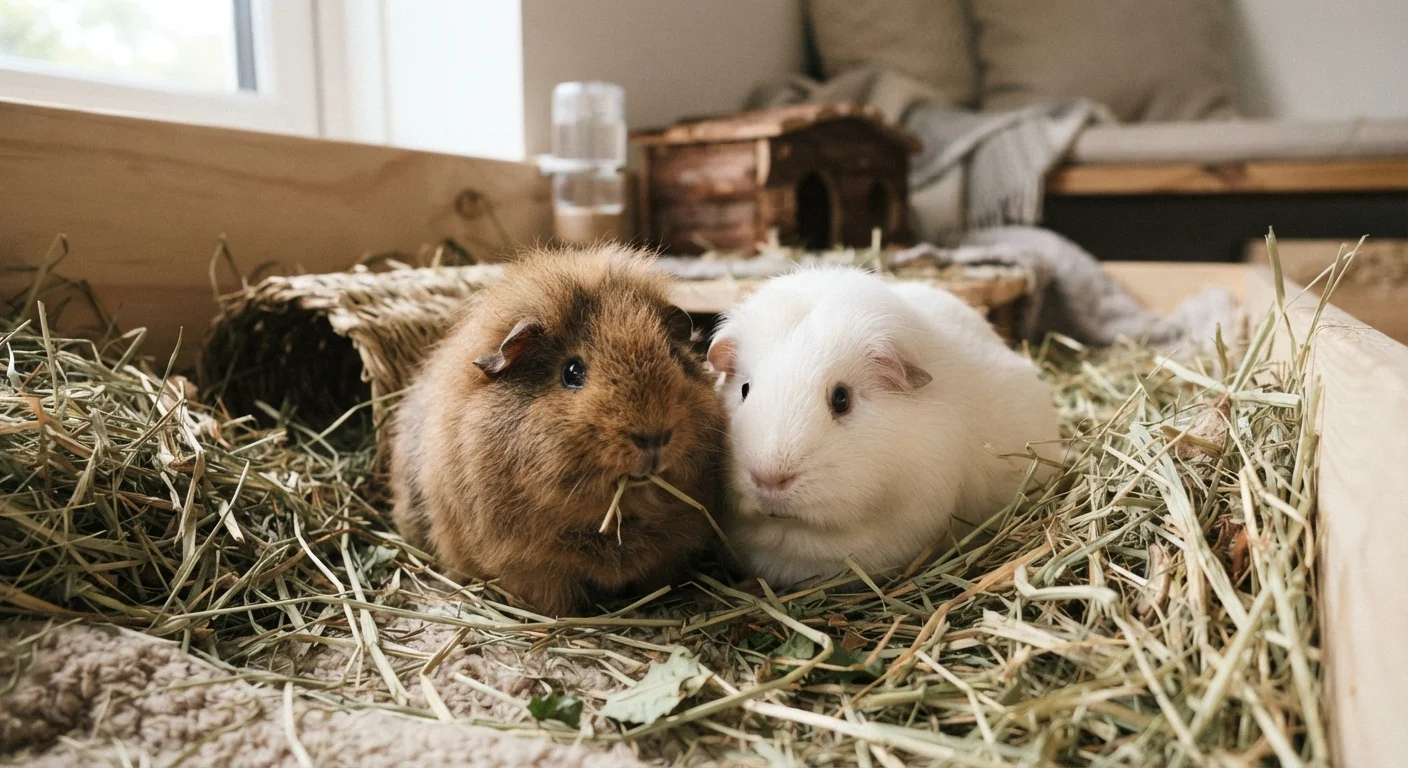
Our Verdict
Guinea pigs are genuinely rewarding pets for people who go in with realistic expectations. They offer real personality, consistent interaction, and a manageable size-but they need daily care, social companionship, and access to an exotic animal veterinarian. They are not low-effort starter pets.
Best for families or individuals who can commit to daily feeding and handling, have the space for a proper enclosure, and are prepared for ongoing veterinary costs over a five-to-seven-year lifespan.
What Guinea Pigs Are Really Like
Guinea pigs-also called cavies-are small, ground-dwelling herbivores native to South America. They are active during the day (and sometimes at night), vocal communicators, and highly social. In the wild, they live in groups, which is a fact that shapes nearly every aspect of responsible ownership. A solitary guinea pig that receives insufficient attention can become withdrawn and stressed.
Their vocalizations include wheeks, purrs, rumbles, and chattering teeth-each carrying distinct meaning. Many owners find this expressiveness one of the most appealing aspects of keeping them. But it also means they aren't silent background pets. Before reading further, check out common myths about small pets to understand what misconceptions might shape your expectations.
Expressive and engaging personalities
Guinea pigs vocalize, respond to their owners, and develop recognizable preferences over time. Many owners describe them as far more interactive than they anticipated.
Manageable size for most living spaces
They don't require a yard, large indoor space for roaming, or the infrastructure of a dog or cat. An appropriately sized enclosure fits comfortably in most apartments or bedrooms.
Gentle temperament suits careful handling
Once socialized, guinea pigs rarely bite and tend to be calmer than hamsters or gerbils. This can make them a reasonable fit for older children who understand gentle handling.
No strong odor when housed properly
With regular bedding changes and a well-ventilated enclosure, guinea pigs produce far less noticeable odor than many people expect from a small mammal.
Diurnal schedule aligns with human households
Unlike hamsters, which are most active at night, guinea pigs are awake and interactive during daylight hours, making them easier to observe and bond with.
The Real Challenges of Guinea Pig Ownership
The appeal of a small, fluffy pet can obscure some genuinely demanding realities. Guinea pigs are not beginner pets in the casual sense-they need structured daily care and an owner who takes their health seriously.
Require daily time and consistent social interaction
Guinea pigs kept without a companion animal need meaningful daily handling from their owner. Without adequate stimulation, they can develop stress-related health and behavioral problems.
Exotic vet care is harder to find and costly
Not all veterinary clinics treat guinea pigs, and those that do often charge higher rates for exotic species. Unexpected illnesses can result in significant out-of-pocket expenses.
Short lifespan means loss within a few years
Most guinea pigs live five to seven years. For families with children, this relatively short lifespan means early exposure to pet loss is likely.
Enclosures need frequent cleaning
Daily spot-cleaning and weekly full cage changes are required to prevent ammonia buildup, which harms respiratory health. This is a time commitment that compounds over years.
Vitamin C must be actively supplemented
Guinea pigs cannot produce their own vitamin C and will develop scurvy without adequate dietary sources. Fresh vegetables must be provided daily, not just occasionally.
Considering Another Small Pet Instead?
If you're weighing guinea pigs against other small animals, the comparison is worth making carefully. Gerbils, for example, have different social structures, activity patterns, and housing needs. Our gerbil ownership guide covers what life with gerbils actually looks like day to day, which can help clarify which species fits your household better.
If you share your home with dogs, cats, or young children, the safety calculus changes significantly. See our guidance on creating a safe environment for small pets in a shared household before committing.
Diet, Housing, and Daily Routine
Unlimited timothy hay should form roughly 70-80% of a guinea pig's diet. This keeps their continuously growing teeth worn down and their digestive systems functioning correctly. Fresh leafy vegetables-like romaine lettuce and bell pepper-provide essential vitamin C, which guinea pigs cannot synthesize on their own. Pellets should be plain, hay-based, and given in limited quantities. Fruit and sugary treats should be rare.
On the housing side, larger is always better. Most animal welfare organizations recommend a minimum of 7-8 square feet of floor space for a pair of guinea pigs, though more is preferable. Wire-bottomed cages can injure their feet; solid-bottomed enclosures with paper bedding are safer. Spot-cleaning bedding daily and doing a full cage clean weekly are non-negotiable tasks.
5-7 years
Typical guinea pig lifespan
The American Veterinary Medical Association notes guinea pigs commonly live five to seven years, making them a longer commitment than many small rodents.
7-8 sq ft
Minimum floor space for a pair
Many small animal welfare organizations recommend at least 7-8 square feet of living space for two guinea pigs, with more strongly preferred.
Before your guinea pig comes home, walk through a full preparation checklist for small pets to confirm your supplies, space, and schedule are genuinely ready.
Veterinary Care and Health Awareness
Guinea pigs are classified as exotic animals in veterinary medicine, meaning not every vet clinic is equipped to treat them. Finding an experienced exotic animal vet in your area before you bring a guinea pig home-not after a health scare-is a critical step. Costs for exotic vet visits, diagnostics, and procedures tend to be higher than for dogs and cats.
Like many prey animals, guinea pigs instinctively conceal illness, which means symptoms often appear late. Common health concerns include respiratory infections, dental problems (malocclusion), bladder stones, and skin issues. Learning the early warning signs is essential. Our article on signs your small pet may be unwell walks through behavioral and physical signals that warrant a prompt call to a vet.
This article is for general informational purposes only and is not a substitute for veterinary advice. Always consult a qualified exotic animal veterinarian for guidance specific to your pet's health.
The content provided on our blog site traverses numerous categories, offering readers valuable and practical information. Readers can use the editorial team’s research and data to gain more insights into their topics of interest. However, they are requested not to treat the articles as conclusive. The website team cannot be held responsible for differences in data or inaccuracies found across other platforms. Please also note that the site might also miss out on various schemes and offers available that the readers may find more beneficial than the ones we cover.