

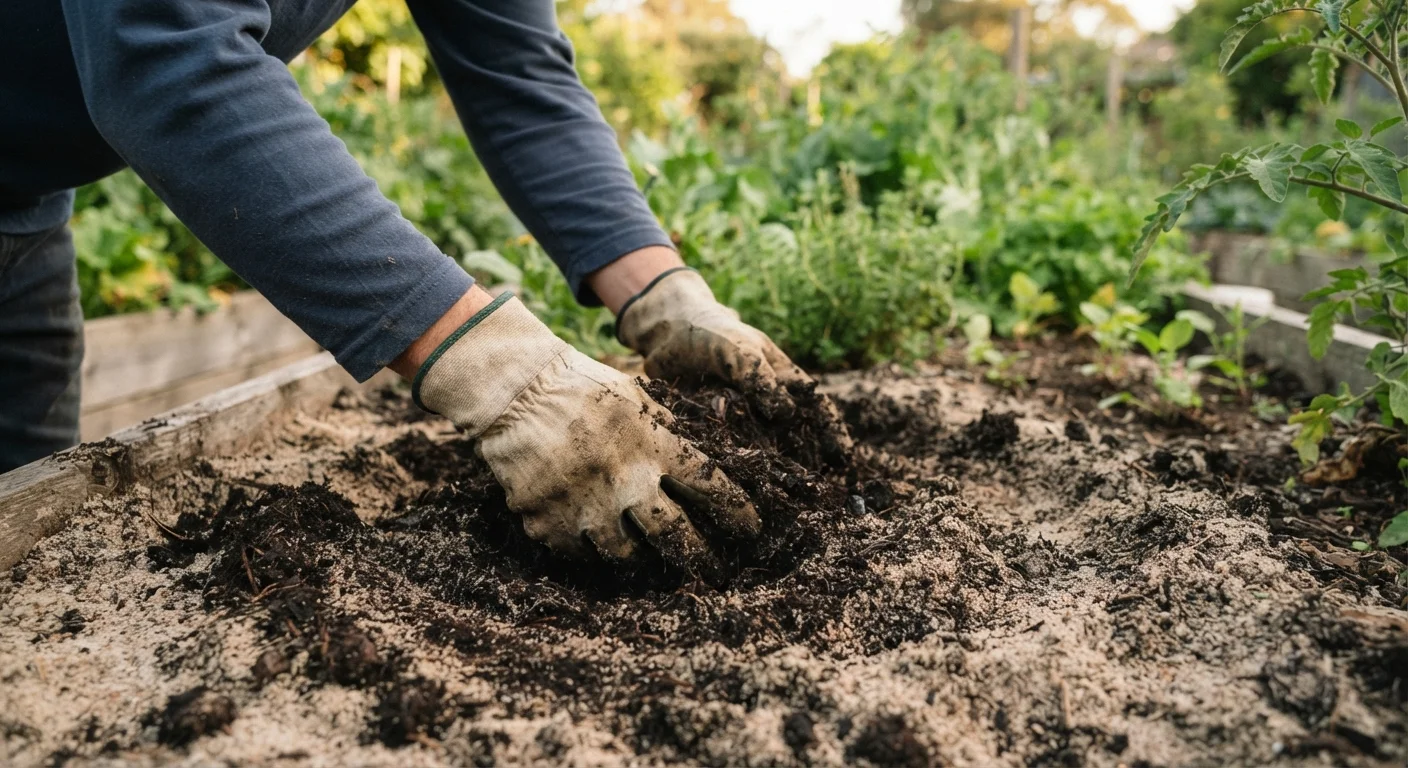
What Soil Amendments Actually Do
Healthy soil is more than dirt - it's a living system of minerals, organic matter, air, water, and billions of microorganisms. When that system is out of balance, plants struggle even when they receive adequate sunlight and water. Soil amendments address the underlying imbalance rather than masking symptoms with heavy fertilizing.
Amendments work across three dimensions:
- Physical structure: Sandy soil drains too fast and holds few nutrients. Clay soil compacts easily and suffocates roots. Organic amendments like compost improve both extremes by adding pore space to clay and water-holding capacity to sand.
- Chemical balance: Soil pH determines which nutrients plants can access. Even nutrient-rich soil becomes functionally deficient if the pH is wrong. Lime raises pH; sulfur lowers it.
- Biological activity: Beneficial bacteria, fungi, and earthworms break down organic matter and make nutrients available. Compost and aged manure feed these organisms, sustaining a productive underground ecosystem.
Understanding which dimension is causing problems in your yard is the first step - and it almost always starts with a soil test.
6.0-7.0
Ideal pH range for most vegetables and lawns
Soil pH in this range maximizes nutrient availability for the majority of common garden plants, according to university cooperative extension guidelines.
~5%
Organic matter content in healthy garden soil
Many cultivated soils in the US fall well below this level, often sitting between 1-3%, making organic amendments a common and beneficial addition.
3-6 months
Time for lime to fully adjust soil pH
Lime reacts gradually with soil, which is why fall application is generally recommended to allow full effect before the spring growing season.
Common Amendments and What Each One Fixes
Not every garden needs every amendment. Here's a practical rundown of the most widely used options and the specific problems each one addresses:
- Compost
- The workhorse of soil improvement. Compost feeds soil biology, improves structure in both sandy and clay soils, and adds a broad spectrum of nutrients slowly over time. It's appropriate for nearly every garden situation. See our guide to composting at home if you want to make your own.
- Lime (ground limestone)
- Used to raise pH in acidic soils. Lawns, vegetable gardens, and most ornamental beds prefer a pH between 6.0 and 7.0. If your test shows pH below 6.0, lime is typically the recommendation.
- Sulfur
- Lowers pH in alkaline soils, making it useful in arid regions where soils tend to be naturally basic. Blueberries and azaleas are classic examples of acid-loving plants that often need sulfur in high-pH yards.
- Perlite or coarse sand
- Inorganic materials added to improve drainage and aeration in heavy clay. Perlite is lightweight and long-lasting; coarse sand must be added in significant quantities to be effective.
- Aged manure
- Similar in function to compost, aged manure adds organic matter and nutrients. It must be fully composted before use near edible crops to reduce pathogen risk.
- Gypsum
- Adds calcium and sulfur without significantly changing pH - useful for loosening heavy clay soils and correcting calcium deficiencies, particularly in vegetable beds.
Always Test Before You Amend
Purchasing a soil test through your state's cooperative extension service is the single most cost-effective step you can take before amending. Without test data, you're guessing - and over-correcting pH or organic matter can set your garden back rather than move it forward. Most tests cost under $20 and return actionable results within a few weeks.
How to Tell If Your Yard Actually Needs an Amendment
The most common mistake homeowners make is amending by assumption - adding lime because a neighbor does, or dumping compost every spring without knowing if the soil needs it. This can create new problems, including nutrient lock-up and pH swings that harm rather than help plants.
Start with a soil test. Many state university cooperative extension offices offer affordable testing, typically for under $20. The results will tell you your soil's pH, major nutrient levels, and often organic matter content. The report usually includes specific amendment recommendations tailored to what you're growing.
Beyond testing, physical clues can point you in the right direction:
- Water pooling on the surface for hours after rain suggests poor drainage - possibly clay-heavy soil.
- Water running off immediately and plants wilting quickly between waterings can indicate sandy, low-organic-matter soil.
- Yellowing leaves (especially between the veins) may signal a pH problem preventing nutrient uptake.
- Compacted, hard-to-dig soil that repels roots is a sign structural improvement is needed.
If you're deciding between raised beds and working directly with your native soil, check out our comparison of raised beds vs. in-ground planting - sometimes amending native soil is less practical than starting fresh in a raised bed.
Lawn bare spots can also hint at soil problems beneath the surface. Our article on why lawns develop bare patches covers how compaction and poor soil structure contribute to turf decline.
Applying Amendments: Timing and Method
Timing matters. Most amendments work best when incorporated before planting, giving them time to integrate with the soil and for pH adjustments to stabilize. Fall is an ideal window for many amendments: lime applied in autumn has months to react with soil before spring planting begins.
For established beds, topdressing - spreading amendments on the surface and allowing rainfall and earthworms to work them down - is often the only practical option without disturbing plant roots. Compost works particularly well as a topdress.
A few practical guidelines:
- Work amendments into the top 6 to 8 inches of soil using a garden fork or tiller where possible.
- Apply lime or sulfur only when a soil test confirms it's needed, and follow the rate on the test report rather than guessing.
- Avoid amending waterlogged soil - wait until it drains and is workable to prevent compacting it further.
- Retest every two to three years rather than amending on autopilot.
Amendments and fertilizers serve different purposes and are often used together. For a clearer picture of how they compare, our overview of organic vs. synthetic fertilizers is a useful companion read. And if mulch is part of your soil-care strategy, see mulch vs. ground cover plants for guidance on layering these approaches effectively.
Frequently Asked Questions
Fertilizers supply specific nutrients (nitrogen, phosphorus, potassium) directly to plants. Soil amendments change the physical, chemical, or biological properties of the soil itself - improving structure, adjusting pH, or feeding soil microbes. Some materials, like compost, do both.
The most reliable method is a soil test, available through many university extension services and garden centers. The test reveals pH, nutrient levels, and sometimes organic matter content, giving you a precise prescription rather than a guess.
Yes. Excessive compost can raise phosphorus to levels that actually inhibit plant uptake of other nutrients. Apply based on test recommendations - typically 1 to 3 inches worked into the top 6 to 8 inches of soil - rather than applying it heavily every season without testing.
Lime raises soil pH, making acidic soil more alkaline. Most vegetables and lawn grasses prefer a pH of 6.0-7.0, and lime is the standard correction when a soil test shows the pH is too low. It also adds calcium, which supports plant cell structure.
There is no universal schedule. Amend based on soil test results, which many gardeners run every two to three years. Compost is generally safe to incorporate annually in modest amounts, but pH-adjusting amendments like lime or sulfur should be applied only when testing confirms a need.
Most organic amendments are safe for food gardens when used correctly. Avoid amendments derived from biosolids (treated sewage sludge) in edible beds if you prefer a conservative approach, and always follow label rates for any packaged product. Fresh manure should be composted before use near edibles.
The content provided on our blog site traverses numerous categories, offering readers valuable and practical information. Readers can use the editorial team’s research and data to gain more insights into their topics of interest. However, they are requested not to treat the articles as conclusive. The website team cannot be held responsible for differences in data or inaccuracies found across other platforms. Please also note that the site might also miss out on various schemes and offers available that the readers may find more beneficial than the ones we cover.