

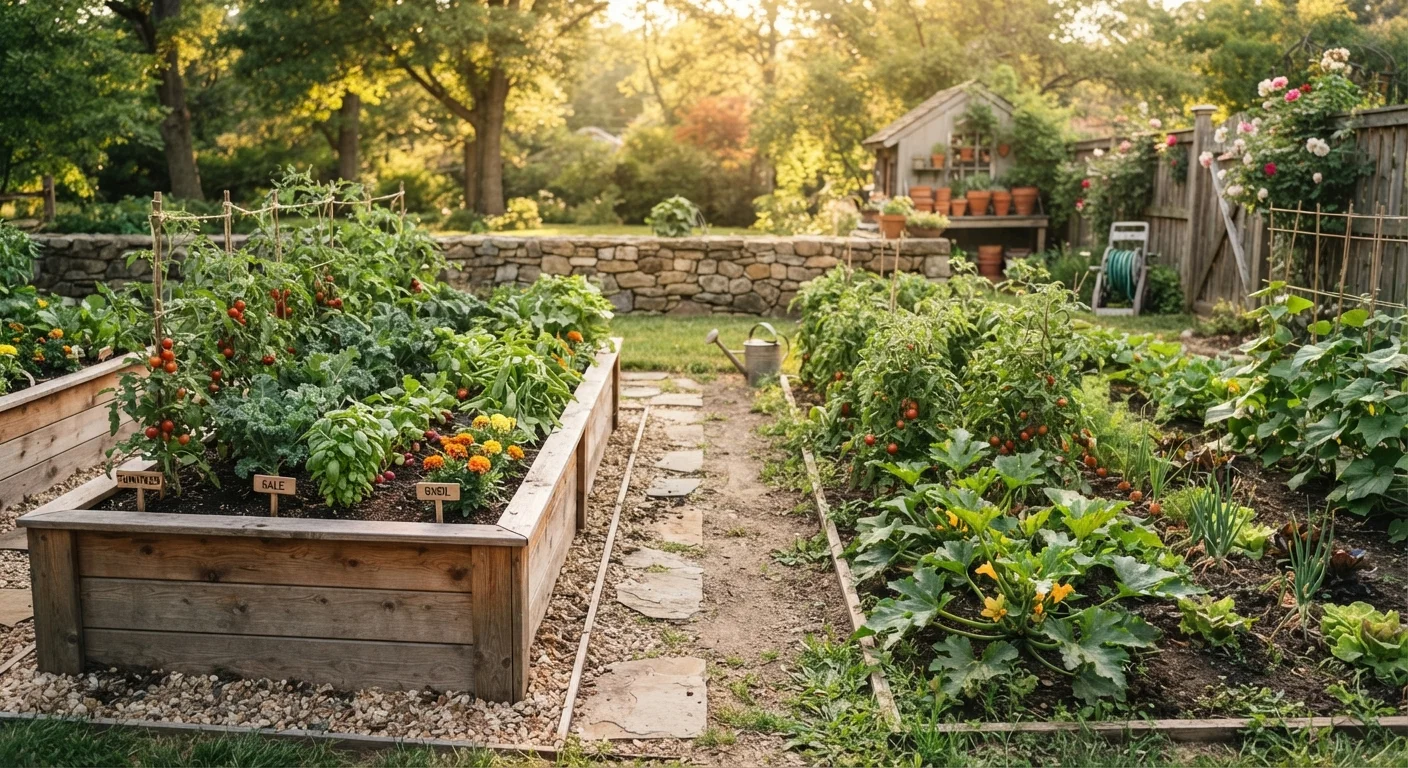
Option A
Raised Beds
The controlled, high-performance growing environment.
Best for: Homeowners with poor native soil, drainage problems, or physical limitations who want precise control over growing conditions.
Option B
In-Ground Planting
The traditional, low-cost, scalable approach.
Best for: Gardeners with healthy, workable native soil who want to cultivate large areas without significant upfront investment.
Cost and Setup: What Each Method Actually Requires
The most immediate difference between raised beds and in-ground planting is cost. Building a simple 4×8-foot raised bed from untreated cedar or pine lumber typically runs between $50 and $150 in materials alone - and that's before you purchase soil. Filling a 12-inch-deep bed requires roughly 32 cubic feet of growing mix, which adds another $80-$200 depending on your region and mix quality. Stacked stone, galvanized metal, or composite boards push costs higher still.
In-ground gardening, by contrast, requires little more than a spade, some compost, and your time. If your native soil is in reasonable shape, you can establish a productive plot for under $30. The tradeoff is that poor soil - compacted, sandy, or heavy clay - demands amendment work before planting is viable. A soil test is a smart first step either way; see our guide on reading a soil test report for help interpreting the numbers.
| Criterion | Raised Beds | In-Ground Planting |
|---|---|---|
| Upfront cost | $130-$350+ per bed | Under $30 (soil in good shape) |
| Soil control | Complete - choose your own mix | Limited by native soil quality |
| Drainage | Generally excellent | Depends on native soil |
| Season length | Longer - warms earlier in spring | Standard for your region |
| Weed pressure | Lower initially | Higher, especially first season |
| Scalability | Modular but costly to expand | Easy and inexpensive to expand |
| Physical accessibility | High - adjustable height | Requires bending and kneeling |
| Long-term maintenance | Annual soil topdressing; frame upkeep | Ongoing soil amendment; crop rotation |
Soil Quality, Drainage, and Root Health
Raised beds give you complete authority over growing conditions. You choose the mix, the depth, and the ratio of compost to structure material. This matters enormously for root vegetables like carrots and parsnips that stall in compacted ground, and for any plant in a region with heavy clay or waterlogged soils. Drainage in raised beds is generally excellent - excess water moves freely through the bottom - though very shallow beds over hardpan soil can still retain moisture problematically.
In-ground planting relies on what nature gave you. In parts of the Midwest and Pacific Northwest with deep loamy topsoil, that's a tremendous asset. In areas with shallow, rocky, or heavily compacted soil, it's a liability that takes seasons of amendment to correct. Enriching in-ground beds with homemade compost is one of the most cost-effective improvements you can make - our article on composting at home walks through the process from start to finish.
~32 cu ft
Soil needed to fill one 4×8×12" raised bed
This volume estimate is based on standard raised bed dimensions and highlights why soil purchasing costs add up quickly for multiple beds.
2-4 weeks
Earlier spring soil warm-up in raised beds
Raised bed soil typically reaches workable planting temperatures weeks ahead of in-ground soil, according to general horticultural guidance from university extension programs.
10-15 years
Typical lifespan of untreated cedar raised bed frames
Cedar is among the more durable wood choices for raised beds; actual longevity varies with climate, moisture levels, and construction quality.
Seasonal Performance, Weeds, and Pest Pressure
Raised beds absorb and retain heat more efficiently than ground-level soil, often warming two to four weeks earlier in spring. For gardeners in USDA zones 5 and below, that extended season can meaningfully expand what's possible to grow. The elevated walls also create a physical barrier that makes slug and cutworm management easier to target.
Weed pressure in raised beds tends to be lower initially - especially if you start with weed-free purchased soil - but persistent weeds do colonize over time through wind-borne seeds and organic matter additions. In-ground plots, particularly those converted from lawn, often face heavier weed competition in the first one to two seasons until the soil biology stabilizes. A consistent mulching strategy helps with both methods; our comparison of mulch versus ground cover plants can guide that decision. For plant selection that reduces ongoing maintenance demands in either setup, consider exploring low-maintenance plants for American backyards.
Long-Term Maintenance and Scalability
Over time, raised bed soil settles and loses volume, requiring annual topdressing with compost to maintain depth and fertility. Wooden frames eventually break down - even cedar, one of the more rot-resistant choices, typically lasts 10 to 15 years before needing repair or replacement. Metal and composite beds last longer but cost more upfront.
In-ground gardens demand less structural upkeep but more soil stewardship year over year. Rotating crops, adding organic matter each season, and managing compaction from foot traffic are ongoing responsibilities. Irrigation planning is worth considering early for either approach; our comparison of drip irrigation versus sprinkler systems covers how each method fits different garden layouts. Before the growing season begins, run through our spring garden readiness checklist to make sure your beds - raised or in-ground - are set up for success.
This article is for general informational purposes only. Local soil conditions, climate, and regulations vary; consult your local cooperative extension service or a qualified landscape professional for advice specific to your property.
The content provided on our blog site traverses numerous categories, offering readers valuable and practical information. Readers can use the editorial team’s research and data to gain more insights into their topics of interest. However, they are requested not to treat the articles as conclusive. The website team cannot be held responsible for differences in data or inaccuracies found across other platforms. Please also note that the site might also miss out on various schemes and offers available that the readers may find more beneficial than the ones we cover.