

Our Verdict
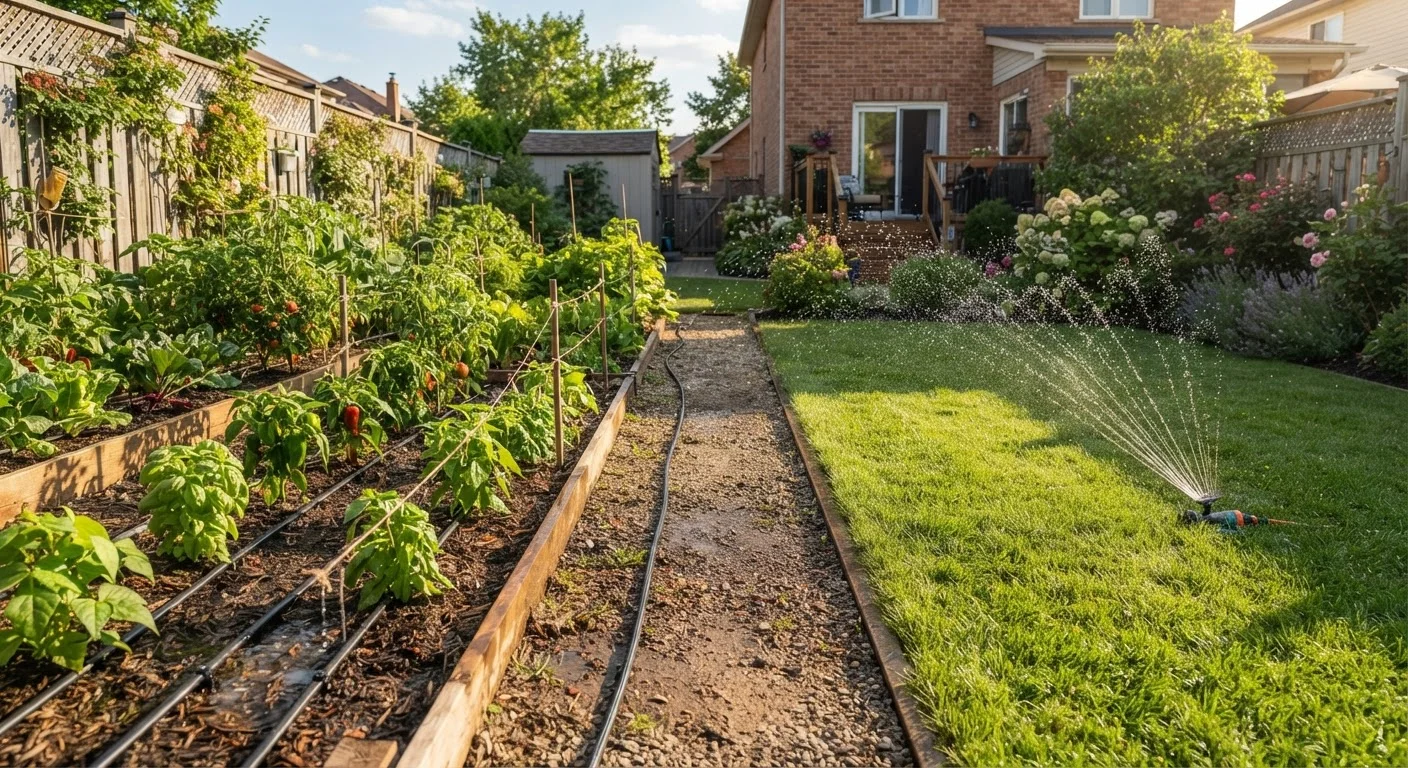
Drip irrigation wins for water efficiency in garden beds, vegetable patches, and shrub borders, delivering moisture precisely where plants need it. Sprinkler systems remain the practical standard for lawns and large open areas where uniform coverage matters most. Most homeowners with mixed yards will benefit from using both approaches in the right zones.
| Best for | Recommended |
|---|---|
| Vegetable gardens, flower beds, and shrub borders | Drip Irrigation |
| Lawns and large open turf areas | Sprinkler Systems |
| Water-conscious homeowners in drought-prone regions | Drip Irrigation |
| Homeowners seeking simple, wide-area coverage with minimal setup | Sprinkler Systems |
How Each System Delivers Water
Understanding how these two systems work is the foundation of choosing between them. Drip irrigation uses a network of flexible tubing and small emitters placed at or just below soil level, releasing water slowly and directly to the base of individual plants. This low-flow, targeted approach minimizes evaporation and keeps foliage dry - a meaningful advantage for disease-prone plants.
Sprinkler systems distribute water through pressurized heads that spray or rotate overhead, covering a broad area simultaneously. They mimic rainfall and are designed for uniform coverage across lawns and wide garden zones. Most residential systems use pop-up heads that retract flush with the ground when not in use.
The core difference is precision versus breadth. Drip systems water individual plants; sprinklers water an area. That distinction shapes every other comparison between them. If you're also rethinking your planting layout, our guide on raised beds vs. in-ground planting explores how garden structure affects watering needs.
Water Efficiency and Plant Health
Drip systems are widely regarded as the more water-efficient option. Because water is delivered slowly at the root zone, there's far less surface evaporation and no overspray onto walkways or non-planted areas. Studies from university extension programs consistently show drip irrigation can use significantly less water than overhead sprinklers for the same planting area, though exact savings depend on climate, soil type, and system design.
Sprinklers, by contrast, are more prone to evaporation loss - especially in hot or windy conditions - and can promote fungal issues on plants that prefer dry foliage. However, for grass, overhead watering is often the most practical method, and modern sprinkler heads with pressure regulation and matched precipitation rates have improved efficiency considerably.
Up to 50%
Less water used vs. overhead irrigation
The EPA's WaterSense program estimates drip systems can reduce outdoor water use by up to 50% compared to conventional sprinkler methods.
30-50%
Outdoor water use share of household total
According to the EPA, outdoor watering accounts for roughly 30-50% of total household water use in many US regions, making irrigation choices a meaningful factor in conservation.
For a deeper look at how watering habits affect plant health, see our article on common watering myths that may be harming your garden without you realizing it.
Installation, Cost, and Maintenance
Drip irrigation systems are generally affordable to start. Basic drip kits for a small garden bed are available at hardware stores, and many homeowners install them without professional help. Costs scale with coverage area and emitter count. Maintenance involves periodically flushing lines, checking for clogged emitters, and replacing UV-degraded tubing every several years. Rodents can occasionally chew through surface tubing - a frustrating but manageable issue.
In-ground sprinkler systems typically require a larger upfront investment and often benefit from professional installation to ensure proper head placement, coverage overlap, and zone configuration. Maintenance includes seasonal startup and winterization (blowing out lines before freezing temperatures), head adjustment, and occasional valve repair. For homes with existing plumbing, tying into the main line is a job most licensed plumbers can complete efficiently. Our plumber vs. DIY guide can help you assess which parts of a sprinkler installation are reasonable to tackle yourself.
| Drip Irrigation | Sprinkler Systems | |
|---|---|---|
| Best suited for | Garden beds, shrubs, vegetables | Lawns, large open areas |
| Water efficiency | High - targets root zone directly | Moderate - evaporation and overspray possible |
| Typical upfront cost | Lower - DIY kits widely available | Higher - often requires professional install |
| DIY-friendliness | High - surface tubing, easy to modify | Moderate - in-ground work, zone planning needed |
| Maintenance needs | Flush lines, check emitters seasonally | Winterize, adjust heads, inspect valves |
| Foliage wetting | Minimal - soil-level delivery | High - overhead spray wets leaves |
Choosing the Right System for Your Yard
Most residential yards contain more than one type of planting area, which means the answer is rarely one system or the other - it's often both, assigned to the right zones. Use drip irrigation for vegetable gardens, raised beds, foundation shrubs, and ornamental borders. Reserve sprinkler zones for lawn areas and wide groundcover sections where individual emitter placement isn't practical.
Climate and local water regulations should also guide your decision. Homeowners in arid or drought-prone regions often find drip systems the stronger choice for water budgeting, and some municipalities offer rebates for switching from overhead to drip irrigation. Pairing either system with a programmable timer and rain sensor is one of the simplest ways to prevent overwatering regardless of which type you use. If you're drawn to lower-maintenance gardening overall, native plants can reduce irrigation needs significantly across both system types.
Whatever you choose, consider your system part of a broader home efficiency picture - much like the energy upgrades that reduce utility bills over time, a well-designed irrigation setup can deliver ongoing savings on your water bill.
The content provided on our blog site traverses numerous categories, offering readers valuable and practical information. Readers can use the editorial team’s research and data to gain more insights into their topics of interest. However, they are requested not to treat the articles as conclusive. The website team cannot be held responsible for differences in data or inaccuracies found across other platforms. Please also note that the site might also miss out on various schemes and offers available that the readers may find more beneficial than the ones we cover.