

Our Verdict
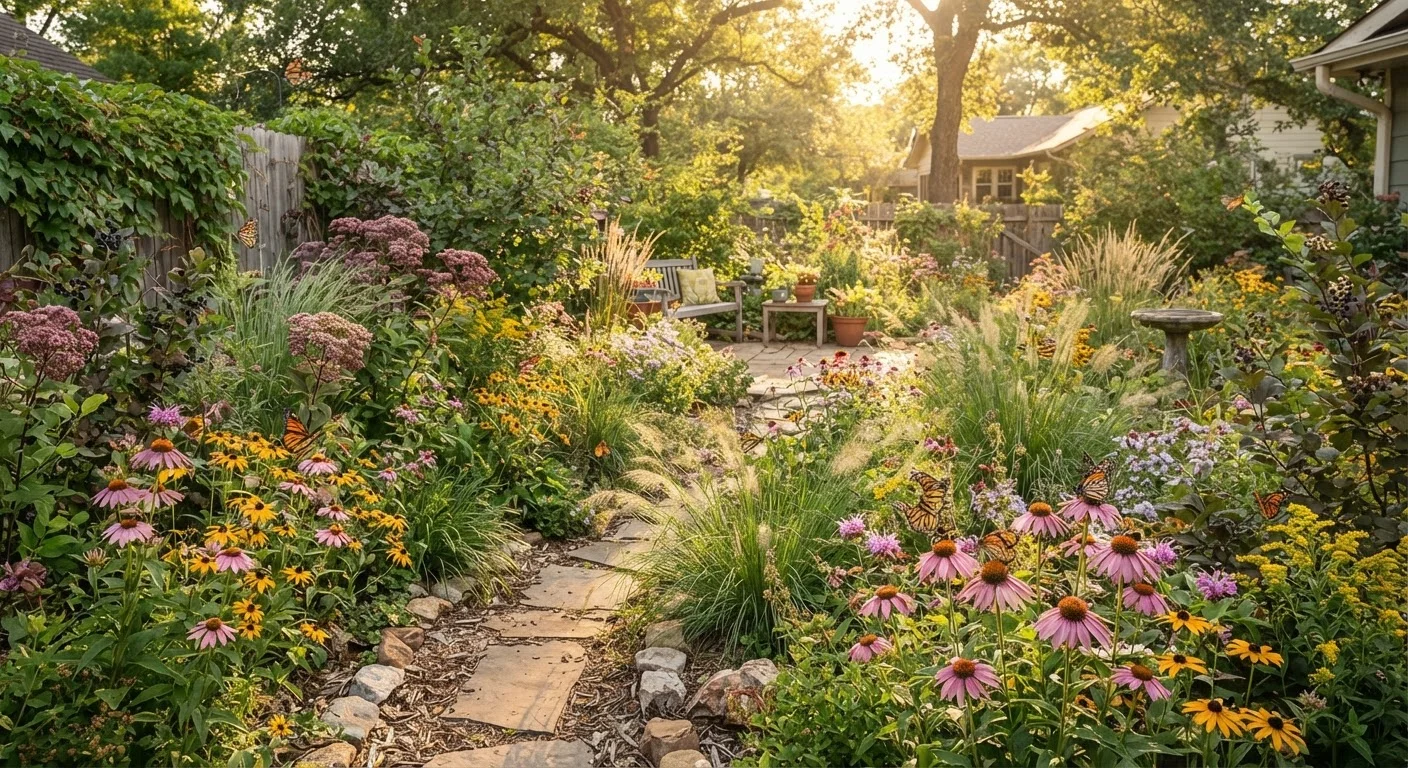
Native plants offer genuine, well-documented advantages for water conservation, wildlife support, and long-term garden resilience. The tradeoffs - slow establishment, limited retail availability, and a learning curve on plant selection - are real but manageable with planning. For most American homeowners, incorporating even a portion of native species into existing landscapes is a practical step toward a lower-maintenance, ecologically healthier yard.
Homeowners who want to reduce irrigation and chemical inputs, support local wildlife, and build a garden that works with their regional environment rather than against it.
What Makes a Plant 'Native' - and Why It Matters
A native plant is one that evolved in a specific region over thousands of years, developing relationships with local soils, rainfall patterns, insects, and wildlife. The term is often misunderstood: a plant native to the Pacific Northwest is not necessarily native to the Mid-Atlantic, even if it grows well there. Regional specificity is the core of what makes native planting ecologically meaningful.
This matters because plants and the animals that depend on them co-evolved together. Research from entomologist Doug Tallamy and colleagues has shown that many specialist insects - including the caterpillars that songbirds depend on to raise their young - can only feed on a narrow range of native host plants. Replacing a native oak with an ornamental pear, for example, can dramatically reduce the food web available to local wildlife.
For homeowners, this doesn't mean ripping out every non-native shrub. It means understanding that plant origin has functional consequences, not just aesthetic ones. Tools like the Calscape database (California) or the National Wildlife Federation's native plant finder can help you identify species genuinely native to your zip code.
The Advantages of Going Native
The case for native plants rests on several well-supported benefits that directly affect your time, budget, and yard health.
Significantly lower water requirements once established
Native plants adapted to regional rainfall cycles typically need far less supplemental irrigation than exotic ornamentals, which can meaningfully reduce both water bills and gardening labor over time.
Supports pollinators and local wildlife
Native plants provide the specific food sources - nectar, pollen, seeds, and foliage - that local insects, birds, and other wildlife have evolved to depend on, contributing to healthier regional ecosystems.
Fewer pesticides and fertilizers needed
Because natives co-evolved with local pest pressures, they generally demonstrate greater natural resistance, reducing the need for chemical interventions that can harm soil health and waterways.
Deep root systems improve soil and reduce runoff
Many native perennials and grasses develop extensive root systems - sometimes several feet deep - that improve soil structure, increase water infiltration, and reduce erosion compared to shallow-rooted turf grass.
Long-term cost savings on maintenance
After the establishment period, mature native plantings typically require less mowing, watering, fertilizing, and replanting than conventional landscapes, which can add up to meaningful savings in time and money.
Water efficiency is one of the most practical draws. Native plants grown in their home region are typically adapted to local rainfall cycles, which means once established, many require little to no supplemental irrigation during normal weather. This is especially valuable in drought-prone areas of the Southwest and Southeast. For more on efficient garden watering, see our guide on common watering misconceptions.
Reduced chemical inputs follow naturally. Because native plants evolved alongside local pests and pathogens, they generally don't need the pesticide applications that keep many exotic ornamentals looking presentable. This benefits soil microbiomes, waterways, and non-target insects - including the pollinators that support food production.
The Honest Drawbacks
Native gardening has genuine challenges. Acknowledging them upfront helps you plan realistically rather than be caught off guard.
Slow establishment frustrates many first-time growers
Most native perennials and shrubs invest their first one to three seasons in root development rather than visible top growth, requiring patience and consistent weed management before the garden looks as intended.
Limited availability at mainstream retail outlets
True native species - as opposed to hybridized cultivars - can be harder to find at large garden centers, often requiring homeowners to seek out specialty nurseries, native plant society sales, or mail-order sources.
Steep learning curve for plant identification and selection
Choosing the right native for your specific region, microclimate, and soil type requires research; a plant native to one part of the country may be unsuitable or even ecologically irrelevant in another.
May conflict with HOA rules or neighbor expectations
Naturalistic plantings with seed heads, irregular forms, or taller grasses can attract complaints in communities accustomed to conventional manicured landscaping, requiring homeowners to communicate their intentions proactively.
Upfront sourcing and installation costs can be substantial
Quality native plants from reputable nurseries, combined with soil preparation and mulching, can mean a higher initial investment than purchasing common annuals or conventional ground covers from a big-box store.
Establishment is the most common frustration. Unlike annuals, which bloom the first season, many native perennials and shrubs spend their first year or two putting down deep root systems - visible top growth is minimal. The old saying goes: sleep, creep, leap - year one the plant sleeps, year two it creeps, year three it leaps. Patience is non-negotiable.
Design can also be tricky. A naturalistic plant palette looks intentional when done well but can read as neglect to neighbors or HOAs when it isn't. Edging beds cleanly, adding a simple sign explaining the ecological intention, and mixing in some structure with ornamental grasses or shrubs can help.
Practical Steps for Incorporating Natives
You don't need to overhaul your entire yard at once. A phased approach is more manageable and lets you learn as you go.
- Start with a pilot bed. Convert one underperforming area - often a dry strip or shady corner - to natives suited to those exact conditions. Track what thrives and what struggles.
- Source carefully. Buy from local native plant nurseries, native plant society sales, or conservation organizations. Big-box retailers increasingly carry plants labeled "native," but these are often cultivars bred for showier flowers that may offer reduced wildlife value compared to straight species.
- Match plants to your site conditions. Sun, soil drainage, and moisture levels matter more than regional origin alone. A native prairie grass will not thrive in a shaded, wet corner.
- Layer your planting. Healthy native landscapes typically include a canopy layer (trees), shrub layer, herbaceous layer, and ground layer. Even a small yard can incorporate two or three of these layers.
- Mulch during establishment. A 2-3 inch layer of wood chip mulch suppresses weeds and retains moisture while roots develop. See our comparison of mulch versus ground cover plants for more on this approach.
Cultivars vs. Straight Species: A Key Distinction
Many plants sold as "natives" in garden centers are actually nativars - cultivated varieties bred for unusual flower color, compact size, or double blooms. Some nativars retain most of the wildlife value of the straight species; others have significantly reduced pollen, nectar, or foliage palatability for insects. When ecological impact is your goal, straight species are generally the more reliable choice. Ask your nursery specifically whether a plant is a straight species or a cultivar before purchasing.
Once your native plants are established, pairing them thoughtfully with other species can further boost garden health. Our article on companion planting principles explores how strategic plant pairings can reduce pests and improve overall garden performance.
Setting Realistic Expectations
Native plant gardening rewards a shift in perspective. A yard managed for ecological function looks and behaves differently from a conventional lawn-and-border garden - and that's by design. Seed heads left standing through winter feed birds. Leaf litter provides overwintering habitat for native bees. A bit of "messiness" is doing real work.
That said, native gardens are not zero-maintenance. Weeding is especially critical in the first two seasons before plantings fill in. Invasive non-native plants - from Japanese honeysuckle to garlic mustard - will exploit any open soil. Early and consistent removal prevents them from outcompeting your new natives.
If you're planning a broader garden refresh alongside native planting, our spring garden readiness checklist can help you sequence tasks efficiently. And for homeowners weighing how to structure their planting areas, our guide on raised beds versus in-ground planting is worth reading alongside this one.
~30%
Typical outdoor water use devoted to landscape irrigation
According to the U.S. Environmental Protection Agency, roughly 30% of a household's water use goes to outdoor irrigation, much of which is applied to non-native turf and ornamentals with higher water needs.
~70%
Reduction in irrigation for established native landscapes
Studies cited by the EPA's WaterSense program suggest that well-designed native and drought-adapted landscapes can reduce outdoor water use by up to 70% compared to conventional turf-dominated yards once plants are fully established.
500+
Caterpillar species supported by native oaks alone
Research by entomologist Doug Tallamy found that native oak trees support over 500 caterpillar species in the eastern U.S., illustrating the disproportionate ecological value of selecting native keystone plant species.
The content provided on our blog site traverses numerous categories, offering readers valuable and practical information. Readers can use the editorial team’s research and data to gain more insights into their topics of interest. However, they are requested not to treat the articles as conclusive. The website team cannot be held responsible for differences in data or inaccuracies found across other platforms. Please also note that the site might also miss out on various schemes and offers available that the readers may find more beneficial than the ones we cover.