

What Companion Planting Actually Means
Companion planting is the practice of growing two or more plant species in close proximity because their relationship benefits at least one of them. The mechanisms vary: some plants repel pests through scent, others attract predatory insects that control pest populations, and still others contribute nutrients to the soil that neighboring plants can use.
This isn't a modern invention. Indigenous agricultural traditions - most famously the Haudenosaunee (Iroquois) Three Sisters method - demonstrated centuries ago that corn, climbing beans, and squash support each other structurally and nutritionally. The corn provides a trellis for beans, the beans fix atmospheric nitrogen into the soil, and the broad squash leaves shade the ground, reducing moisture loss and suppressing weeds.
If you're planning a vegetable garden from scratch, understanding companion planting from the start can save you a lot of reactive trouble later - fewer pest crises, healthier soil, and less need for intervention.
Core Principles Behind Effective Pairings
Successful companion planting rests on a few consistent principles worth understanding before you start experimenting.
Pest Disruption
Many plants produce volatile compounds - essentially airborne chemicals - that confuse or repel insects searching for their preferred host plants. Aromatic herbs like basil, dill, and rosemary are frequently used near vegetables for this reason. Marigolds (Tagetes species) are among the most studied, with research suggesting their root secretions can suppress certain soil nematodes over time.
Beneficial Insect Attraction
Flowers like dill, fennel, and yarrow attract parasitic wasps and hoverflies - natural predators that feed on aphids, caterpillars, and other garden pests. Allowing some plants to bolt (go to flower) rather than removing them entirely can support this ecosystem.
Nitrogen Fixation
Legumes - beans, peas, and clover - host bacteria in their roots that convert atmospheric nitrogen into a form plants can absorb. Growing legumes alongside heavy-feeding crops like corn or brassicas can reduce how much supplemental fertilizer those plants need. For more on feeding your soil, see our guide to organic vs. synthetic fertilizers.
Physical Support and Microclimate
Tall plants shade heat-sensitive neighbors. Low-growing, leafy plants retain soil moisture and reduce weed pressure, essentially functioning like a living mulch. Understanding how ground covers compare to traditional mulch can help you decide which approach suits each section of your beds.
Companion Planting Has Limits
While companion planting has strong traditional roots and some scientific support, results can vary by climate, soil type, and local pest populations. Think of it as a helpful tool in your garden toolkit rather than a guaranteed fix. Pair it with good soil health, proper spacing, and consistent watering for best results.
Proven Pairings to Try at Home
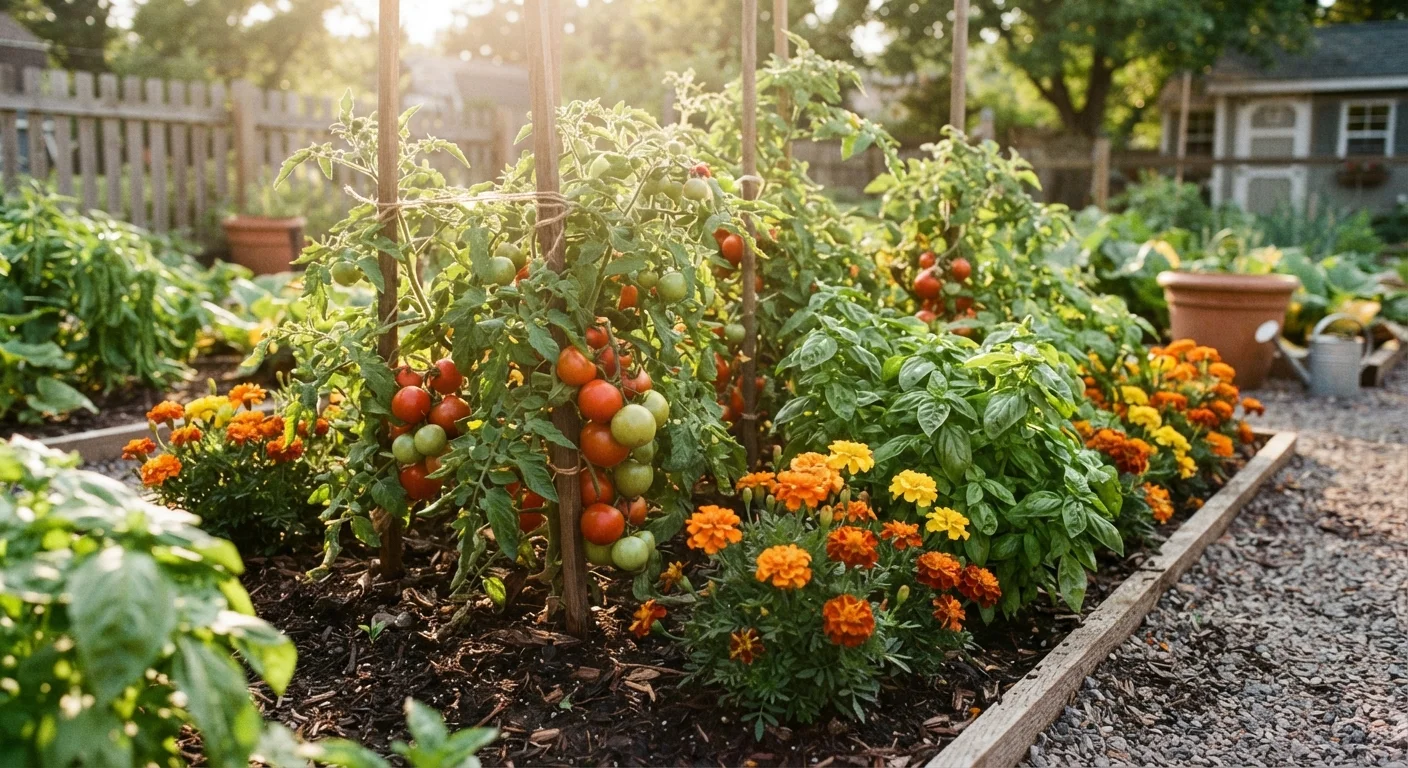
Pair tomatoes with basil for pest disruption and aromatic benefits.
Basil's volatile oils are thought to confuse insects that target tomatoes, including aphids and certain moth species. The pairing also makes good use of vertical and ground space, with basil filling lower bed area.
Grow marigolds as a border crop around vegetable beds.
Marigold roots secrete compounds that can reduce soil nematode populations over a full growing season. Their flowers also attract beneficial predatory insects and pollinators to the area.
Interplant beans or peas alongside corn or brassicas to build soil nitrogen.
Legumes form symbiotic relationships with soil bacteria that fix atmospheric nitrogen into the root zone, benefiting nearby heavy-feeding crops and reducing the need for supplemental nitrogen fertilizer.
Use nasturtiums as a trap crop to protect more valuable vegetables.
Nasturtiums attract aphids strongly, drawing them away from tomatoes, cucumbers, and squash. Monitoring nasturtiums makes pest problems visible early, before they spread.
Allow flowering herbs like dill or fennel to bloom in a dedicated bed corner to attract beneficial insects.
Parasitic wasps and predatory hoverflies - natural enemies of aphids and caterpillars - are drawn to umbel-shaped flowers. Providing a habitat for them reduces the need for other pest interventions.
Combinations to Avoid
Companion planting isn't only about beneficial combinations - some plants actively interfere with their neighbors. Knowing what not to grow together is just as important.
- Fennel and most vegetables: Fennel releases allelopathic compounds that inhibit the growth of tomatoes, peppers, and many other garden staples. Grow it in a container or isolated bed.
- Onions and beans: Alliums (onions, garlic, chives) can suppress bean and pea growth. Keep these families separated in the garden layout.
- Brassicas and tomatoes: Both are heavy feeders that compete aggressively for nutrients, and they don't offer meaningful mutual benefits.
- Dill near carrots: Young dill seedlings can cross-pollinate with carrots, affecting seed quality if you're saving seeds, and mature dill inhibits carrot growth.
If you're weighing how to organize your beds spatially, our article on raised beds versus in-ground planting covers how each setup affects your ability to control plant placement and rotation.
Building Companion Planting Into Your Garden Plan
Think of companion planting as one layer of your overall garden strategy, alongside good soil preparation, crop rotation, and consistent moisture management. The spring garden readiness checklist is a useful starting point for integrating these decisions before the season begins.
Start small: choose one or two pairings to test alongside your usual layout rather than redesigning everything at once. Keep notes on what works in your specific conditions - companion planting outcomes can vary with local soil chemistry, microclimates, and regional pest pressures. Building healthy soil through home composting gives any companion planting system a stronger foundation.
Over time, observing your garden closely will tell you more than any planting chart. Companion planting rewards attentive gardeners who are willing to adapt.
“Diversity in the garden is the best defense. A garden that mimics natural ecosystems - where many species coexist - tends to be more resilient to pest outbreaks and disease.”
— Eliot Coleman, Author and organic farming advocate
The content provided on our blog site traverses numerous categories, offering readers valuable and practical information. Readers can use the editorial team’s research and data to gain more insights into their topics of interest. However, they are requested not to treat the articles as conclusive. The website team cannot be held responsible for differences in data or inaccuracies found across other platforms. Please also note that the site might also miss out on various schemes and offers available that the readers may find more beneficial than the ones we cover.