

Our Verdict
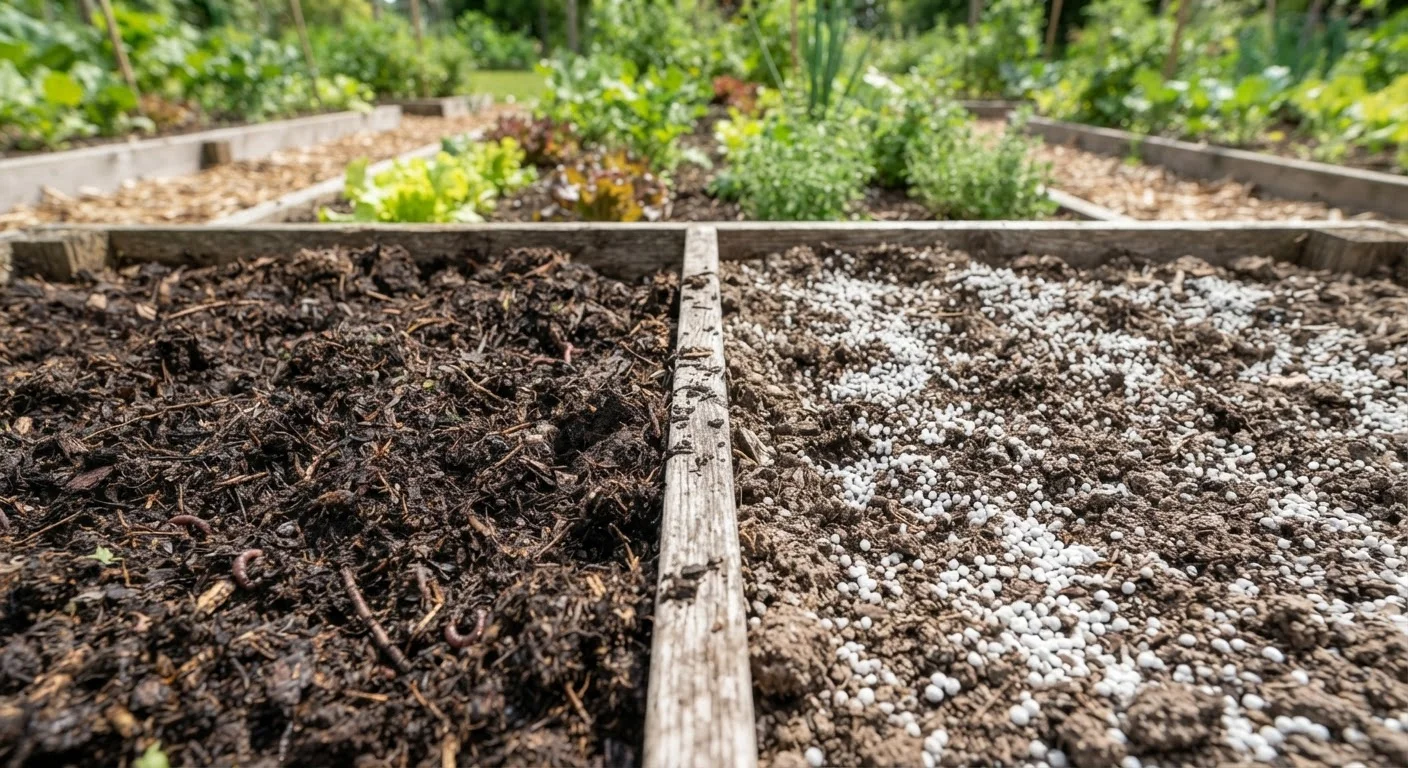
Organic and synthetic fertilizers serve different but complementary purposes in a home garden. Organic options invest in long-term soil health, while synthetics offer speed and precision for targeted needs. Most homeowners benefit from understanding both rather than treating them as rivals.
| Best for | Recommended |
|---|---|
| Homeowners focused on long-term soil health and sustainability | Organic fertilizers |
| Gardeners addressing a specific, confirmed nutrient deficiency quickly | Synthetic fertilizers |
| Those who want balanced nutrition and improved soil structure over time | A combined approach using both types strategically |
What Sets Them Apart
At the most basic level, organic fertilizers come from natural sources - plant matter, animal byproducts, and minerals like bone meal or kelp. Synthetic fertilizers are manufactured, typically from mined or chemically processed materials, and are formulated to deliver concentrated, specific nutrient ratios.
Both types supply the three primary macronutrients plants need: nitrogen (N), phosphorus (P), and potassium (K). The difference lies in how those nutrients are packaged and delivered. Organic sources must break down in the soil before plants can absorb them. Synthetics are usually water-soluble and available to plant roots almost immediately.
This distinction in nutrient release rate is the single most important factor for most gardeners to understand. It shapes not only how quickly you see results, but also what happens to the soil beneath your plants over time. Understanding how fertilizers interact with soil structure is also useful context when exploring soil amendments and what your garden actually needs.
| Organic Fertilizers | Synthetic Fertilizers | |
|---|---|---|
| Nutrient Release Speed | Slow; weeks to months | Fast; days or less |
| Nutrient Precision | Variable, source-dependent | Consistent, labeled exactly |
| Soil Biology Impact | Feeds microbial life, builds soil | Neutral to slightly depleting over time |
| Risk of Overapplication | Lower; harder to burn plants | Higher; root burn possible |
| Typical Cost | Higher per bag, often bulkier | Lower per unit of nutrient |
| Best Use Case | Long-term soil building | Correcting specific deficiencies fast |
How Each Type Affects Soil Health
Organic fertilizers do more than feed plants - they feed the microbial communities living in the soil. As organic matter decomposes, beneficial bacteria and fungi break it down, releasing nutrients gradually while also improving soil texture, water retention, and aeration. Over multiple seasons, consistent organic fertilization can meaningfully improve the structure of clay-heavy or sandy soils.
Synthetic fertilizers, by contrast, deliver nutrients directly without contributing organic matter. Used responsibly, they cause no immediate soil harm. However, habitual heavy use without organic inputs can gradually deplete soil biology, reduce water-holding capacity, and - in some cases - contribute to salt buildup that hinders root function. This doesn't make them harmful by definition, but it does make balanced application important.
Start With a Soil Test Before Fertilizing
Before purchasing any fertilizer, invest in a basic soil test through your local cooperative extension office. It will tell you your soil's current pH and nutrient levels, which helps you choose the right product and avoid wasting money on nutrients your soil doesn't need. Many extension offices offer tests for under $20, making this one of the most cost-effective steps a gardener can take.
If you grow vegetables in a raised bed, the choice of fertilizer interacts closely with your overall growing system. See our comparison of raised beds vs. in-ground planting for more context on managing soil in different setups.
Practical Tradeoffs for Home Gardeners
For most homeowners, the decision comes down to timing, budget, and gardening goals. Organic fertilizers are generally less concentrated, so you often need to apply larger volumes - and results take weeks rather than days. They tend to cost more per bag and can vary in nutrient content depending on the source. The upside: lower risk of overapplication damage and ongoing benefit to soil structure.
Synthetic fertilizers are more affordable per unit of nutrient, easier to measure, and faster-acting. They're especially useful when a soil test reveals a specific deficiency that needs addressing before a growing season gets underway. The tradeoff is that precise application matters: too much, too fast can burn plant roots or push excessive leafy growth at the expense of flowering and fruiting.
4-8 weeks
Typical organic nutrient release window
Most organic fertilizers require several weeks of microbial decomposition before nutrients become fully plant-available, depending on soil temperature and moisture.
~1%
Ideal soil organic matter for most gardens
Many university extension programs suggest that garden soils with at least 1-5% organic matter support better structure, drainage, and nutrient retention.
A practical middle path that many experienced gardeners use is to build and maintain soil with organic inputs throughout the year, then use targeted synthetic applications to correct specific shortfalls identified through soil testing. This approach avoids treating the two as all-or-nothing choices.
Pairing good fertilizer practices with smart planting strategies can also reduce how much fertility you need to add artificially. Companion planting - such as growing nitrogen-fixing legumes alongside heavy feeders - is one technique worth exploring to reduce your garden's overall fertilizer demand.
Getting It Right: Soil Testing and Application Tips
No fertilizer decision should begin without understanding what your soil already contains. Cooperative extension offices in most U.S. states offer affordable soil testing services that reveal your soil's pH, existing nutrient levels, and organic matter content. A test result takes the guesswork out of what type and amount of fertilizer will actually benefit your plants.
When applying either fertilizer type, follow label guidance on rates and timing. For organics, applying in fall gives materials time to break down before spring planting. For synthetics, applying at the start of active growth - not during dormancy or heat stress - reduces the risk of root burn or runoff.
Finally, avoid the common assumption that more fertilizer means more growth. Excess nutrients - organic or synthetic - can leach into groundwater or nearby water bodies, contributing to runoff problems. Responsible application protects both your garden and your surrounding environment.
The content provided on our blog site traverses numerous categories, offering readers valuable and practical information. Readers can use the editorial team’s research and data to gain more insights into their topics of interest. However, they are requested not to treat the articles as conclusive. The website team cannot be held responsible for differences in data or inaccuracies found across other platforms. Please also note that the site might also miss out on various schemes and offers available that the readers may find more beneficial than the ones we cover.