

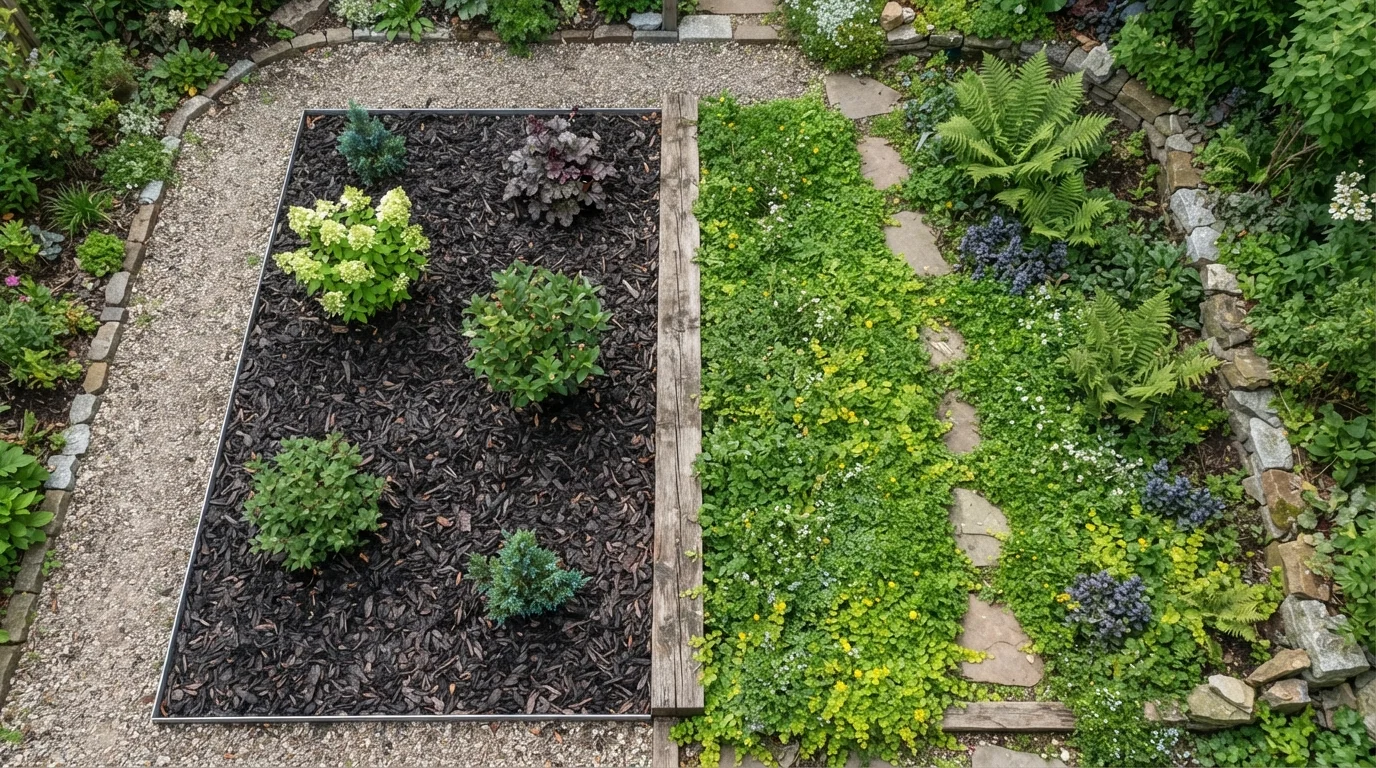
Option A
Mulch
The fast, flexible, low-effort soil protector.
Best for: Homeowners who want immediate weed suppression and moisture retention with minimal upfront work and flexible placement.
Option B
Ground Cover Plants
The living, self-sustaining alternative that improves with age.
Best for: Gardeners willing to invest establishment time in exchange for a long-term, low-maintenance living carpet that supports local ecology.
What Each Approach Actually Does
Bare soil in a garden bed is an open invitation to weeds, moisture loss, and erosion. Both mulch and ground cover plants address these problems - just through very different mechanisms.
Mulch is any material layered on top of soil to block light and slow evaporation. Common types include shredded wood or bark, straw, pine needles, and shredded leaves. It works passively: it doesn't grow, compete, or spread. Applied at two to four inches deep, a good mulch layer can reduce weed germination significantly and cut watering frequency. The tradeoff is that organic mulches break down over time, meaning you'll need to top them off roughly every one to three years depending on the material.
Ground cover plants are low-growing species - typically under 12 inches tall - that spread to fill open soil. Examples include creeping phlox, ajuga, vinca minor, native wild ginger, and creeping thyme. They suppress weeds through shading and root competition rather than by smothering. Unlike mulch, they're living systems: they feed soil microbes, provide habitat, and improve over time without reapplication. The cost is patience - most spreading ground covers take at least one full growing season to fill in properly. For more on choosing resilient options, see low-maintenance plants that thrive in American backyards.
| Criterion | Mulch | Ground Cover Plants |
|---|---|---|
| Time to effectiveness | Immediate | 1-2 growing seasons |
| Upfront cost | Low to moderate | Moderate to high |
| Ongoing maintenance | Reapply every 1-3 years | Minimal once established |
| Erosion control | Moderate (surface only) | Strong (root systems) |
| Wildlife and ecology value | Low | High (habitat, nectar) |
| Flexibility / replanting | High - easy to move or remove | Low - plants are established |
| Weed suppression | Strong with proper depth | Strong once plants fill in |
| Works in shade | Yes | Yes, with right species |
Where Each One Works Best
Neither mulch nor ground cover plants wins universally - context matters enormously.
Best situations for mulch
- Around newly planted shrubs and trees where root competition from new plantings could be harmful
- Annual and mixed flower beds that get replanted or rearranged each season
- Small, irregular patches where spreading plants would be hard to contain
- Areas with tree roots close to the surface - a shallow layer of mulch protects roots without disturbing them
Best situations for ground covers
- Slopes and banks where root systems prevent soil erosion better than any surface layer can
- Shaded areas under trees where grass won't thrive - shade-tolerant ground covers like pachysandra often succeed where lawn fails
- Large, open areas where repeated mulch purchases and labor would add up significantly over years
- Ecology-minded gardens - native ground covers in particular support pollinators and beneficial insects. See why native plants make strong ground cover candidates for more context.
Watch Out for Invasive Ground Covers
Some commonly sold ground covers - including certain varieties of vinca (periwinkle) and English ivy - can spread beyond garden beds and outcompete native vegetation in natural areas. Before planting any spreading species, check whether it's considered invasive in your state or region. Your local cooperative extension office is a reliable resource for region-specific planting guidance.
Cost, Effort, and Long-Term Maintenance
Mulch has a lower barrier to entry. A cubic yard of shredded hardwood bark typically covers about 100 square feet at a three-inch depth. The work is straightforward: clear weeds, apply, repeat in a year or two. Ground covers require more upfront investment - purchasing enough starter plants to cover a large area meaningfully adds up, and you'll need to weed carefully during that first season while plants establish themselves.
Over a five- to ten-year horizon, however, the equation can flip. Ground covers that spread aggressively (in a managed way) may eventually eliminate the need for any additional purchases or labor. Mulch, by contrast, is a recurring cost. Improving your underlying soil quality before installing either option helps both strategies perform better and can reduce maintenance demands over time.
A practical middle path: use mulch in the first season to suppress weeds while young ground cover plants establish themselves. Once the plants fill in, you can stop topping off the mulch and let the living layer take over. This staged approach gives you near-term weed control without committing entirely to one method. For a broader look at how bed type affects these decisions, the raised beds vs. in-ground planting comparison covers related tradeoffs worth considering.
2-4 inches
Ideal mulch depth for weed suppression
Cooperative extension programs broadly recommend this depth range - shallower layers allow more weed germination; deeper layers can restrict oxygen to roots.
1-2 seasons
Typical ground cover establishment period
Most spreading ground cover species fill in noticeably within one to two full growing seasons under adequate watering and weed management conditions.
The content provided on our blog site traverses numerous categories, offering readers valuable and practical information. Readers can use the editorial team’s research and data to gain more insights into their topics of interest. However, they are requested not to treat the articles as conclusive. The website team cannot be held responsible for differences in data or inaccuracies found across other platforms. Please also note that the site might also miss out on various schemes and offers available that the readers may find more beneficial than the ones we cover.