

Start here
Choosing the Right Spot
Next
Planning Your Garden Layout
Then
Preparing Your Soil
When you're ready
Selecting and Planting Your Vegetables
Keep it growing
Watering, Feeding, and Ongoing Care
Finish strong
Knowing When to Harvest
Choosing the Right Spot
Sunlight is the foundation of a productive vegetable garden. Scout your yard at different times of day and identify which areas receive at least 6 hours of direct sun - 8 is even better for fruiting crops. Avoid spots shaded by large trees, fences, or structures during peak afternoon hours.
Proximity to a water source matters more than most beginners expect. Dragging a hose 100 feet every other day gets old fast, so choose a location within easy reach of an outdoor spigot. Also consider the ground itself: avoid low-lying areas where water pools after rain, as waterlogged roots quickly lead to rot and disease.
Track Sun Before You Dig
Spend one full day observing your yard before choosing a garden location. Note which areas are sunny at 9 a.m., noon, and 3 p.m. A simple sketch or a few photos taken hourly makes the pattern obvious and prevents a costly site mistake.
Planning Your Garden Layout
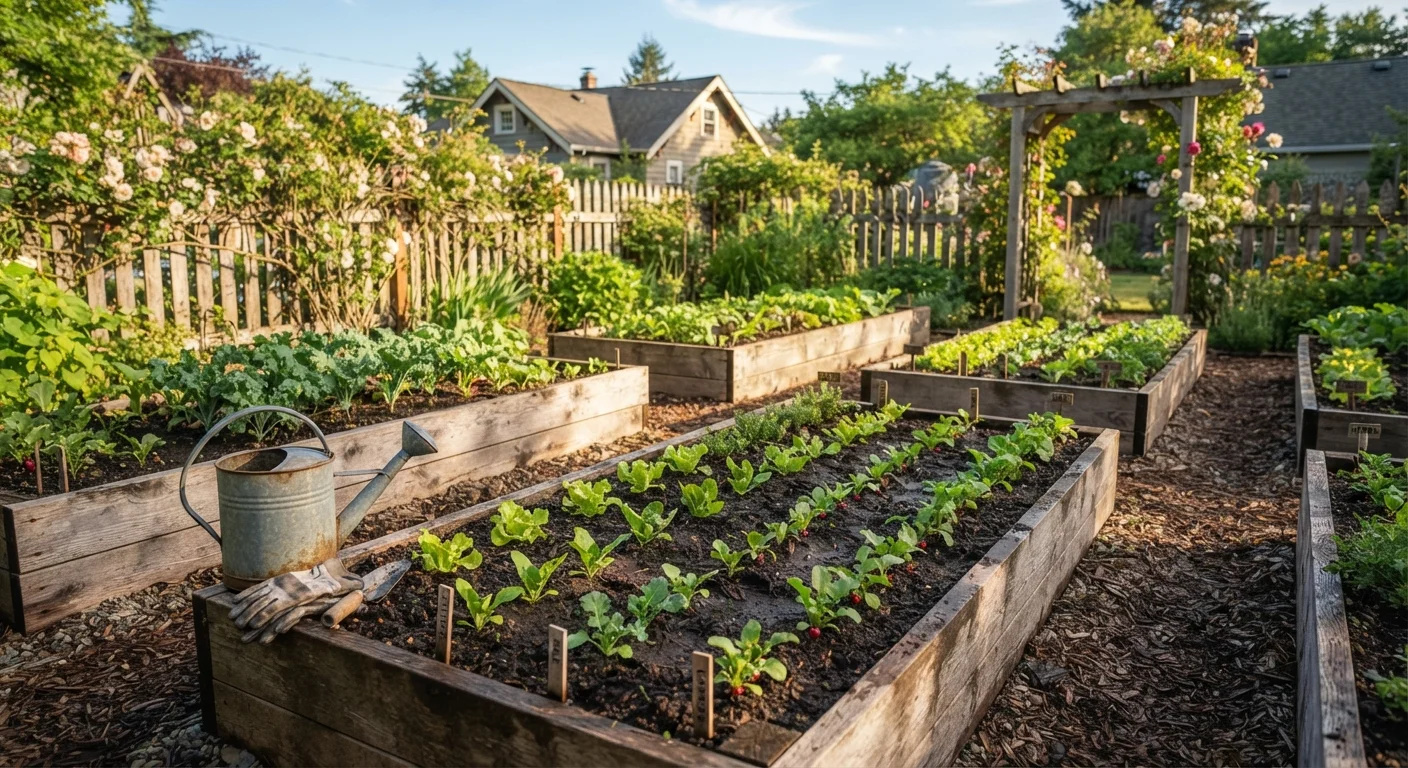
Resist the urge to go big in year one. A 4×8-foot bed is manageable, productive, and large enough to grow a meaningful variety of vegetables without overwhelming you. You can always expand once you understand how much time and attention a garden actually demands.
Sketch your layout on paper before breaking ground. Taller plants like tomatoes or corn belong on the north or east side so they don't shade shorter crops. Group plants with similar water and sun needs together. If you're weighing whether raised beds or in-ground planting better suits your yard, our raised beds vs. in-ground guide walks through the tradeoffs in detail.
Consider companion planting - certain plant pairings naturally deter pests or improve growing conditions. Learn which combinations work best in our companion planting guide.
Preparing Your Soil
Good soil is the single biggest determinant of a successful harvest. Before planting anything, assess what you're working with. Healthy garden soil is dark, crumbly, and smells earthy - not clay-heavy, compacted, or sandy. A simple soil test kit (available at most garden centers) can reveal pH and nutrient levels, helping you amend intelligently rather than guessing.
Work 2-4 inches of compost into the top 8-10 inches of soil. Compost improves drainage in clay soils, helps sandy soils retain moisture, and feeds soil microorganisms that make nutrients available to plant roots. If you want to generate your own compost from kitchen and yard waste, our home composting guide covers everything you need to start.
Soil pH
A measure of how acidic or alkaline your soil is, rated on a scale from 0 to 14. Most vegetables grow best in slightly acidic soil with a pH between 6.0 and 7.0.
Compost
Decomposed organic matter - food scraps, leaves, grass clippings - that enriches soil structure and feeds beneficial microorganisms plants rely on.
Last frost date
The average calendar date after which freezing temperatures are unlikely in your area. Warm-season vegetables should not be planted outdoors before this date.
Days to maturity
The approximate number of days from planting (or transplanting) until a vegetable is ready to harvest, printed on most seed packets.
USDA Hardiness Zone
A geographic classification based on average minimum winter temperatures that helps gardeners understand which plants are likely to survive and thrive in their region.
Mulch
A layer of material - straw, wood chips, or shredded leaves - spread over bare soil to retain moisture, regulate temperature, and suppress weed growth.
Selecting and Planting Your Vegetables
Choose vegetables your household will actually eat, and favor varieties labeled disease-resistant or compact - both traits make life easier for beginners. Start with a short list: lettuce, radishes, bush beans, zucchini, and one or two herbs give you variety without chaos.
Check the seed packet or plant tag for two critical numbers: days to maturity and spacing requirements. Crowding plants is one of the most common first-year mistakes - it reduces airflow, invites disease, and stunts growth. Plant depth also matters; most seeds should be sown at a depth of roughly twice their diameter.
Warm-season crops - tomatoes, peppers, cucumbers - must go in after your area's last frost date. Cool-season crops - peas, spinach, kale - can handle light frost and should be planted earlier. Your local Cooperative Extension service publishes frost date calendars specific to your region.
Watering, Feeding, and Ongoing Care
Most vegetable gardens need about 1 inch of water per week, either from rainfall or supplemental irrigation. Water at the base of plants rather than overhead - wet foliage invites fungal disease. Deep, infrequent watering (every 2-3 days in warm weather) encourages roots to grow downward and makes plants more drought-tolerant.
Feed your garden every few weeks with a balanced fertilizer once plants are established and actively growing. Follow label instructions rather than applying more, since over-fertilizing - especially with nitrogen - produces lush leaves at the expense of fruit. Keep beds weeded; weeds compete directly with your vegetables for water, nutrients, and light. A 2-inch layer of mulch suppresses weeds and helps soil retain moisture between waterings.
Knowing When to Harvest
Harvesting at the right moment is both a skill and a reward. Each crop has its own cues: tomatoes should give slightly to gentle pressure and show full color; zucchini is best picked small (6-8 inches) before it becomes watery and seedy; lettuce can be cut at the outer leaves to keep the plant producing.
One principle applies across the board: harvest regularly. Leaving ripe produce on the plant signals it to stop producing. Frequent picking keeps plants in active fruiting mode and extends your harvest window significantly. Keep a small basket nearby when you visit the garden each day - making it a habit pays off in abundance.
As your confidence grows, you may find yourself tracking garden spending more carefully alongside your household budget. The same disciplined planning that works in the garden applies to your finances - our first monthly budget guide offers a practical starting framework.
Frequently Asked Questions
Most vegetables need at least 6 hours of direct sunlight per day, and many fruiting crops like tomatoes and peppers perform best with 8 or more. Leafy greens such as spinach and lettuce are more tolerant of partial shade. Observe your chosen spot throughout the day before committing.
Radishes, lettuce, bush beans, zucchini, and herbs like basil and chives are reliable beginner choices. They germinate quickly, tolerate minor mistakes, and give you visible progress that keeps motivation high. Avoid starting with notoriously finicky crops like cauliflower or celery.
Both methods work well, and the right choice depends on your existing soil quality, budget, and physical comfort. Raised beds offer better drainage and soil control but involve upfront cost. In-ground planting costs less but may require more soil amendment. See a full comparison in our <a href="/home-garden/garden-yard/raised-beds-vs-in-ground-planting-weighing-the-tradeoffs-for-a-home-garden">raised beds vs. in-ground guide</a>.
Most vegetable gardens need about 1 inch of water per week from rain or irrigation. Water deeply and less frequently rather than a little every day - this encourages roots to grow deeper. Check soil moisture an inch below the surface; if it's dry there, it's time to water.
The right timing depends on your USDA hardiness zone and the specific crops you want to grow. Cool-season crops like peas and lettuce can go in weeks before the last frost date; warm-season crops like tomatoes and peppers should wait until after it. Your local Cooperative Extension office publishes region-specific planting calendars.
Each vegetable has its own harvest cues - size, color, firmness, and ease of separation from the plant. Seed packets and plant tags include specific guidance. As a general rule, harvesting slightly early is better than waiting too long, since overripe produce signals the plant to stop producing.
The content provided on our blog site traverses numerous categories, offering readers valuable and practical information. Readers can use the editorial team’s research and data to gain more insights into their topics of interest. However, they are requested not to treat the articles as conclusive. The website team cannot be held responsible for differences in data or inaccuracies found across other platforms. Please also note that the site might also miss out on various schemes and offers available that the readers may find more beneficial than the ones we cover.