

Why Soil Test Reports Look More Complicated Than They Are
Soil test reports can look intimidating at first glance - columns of numbers, unfamiliar abbreviations, and nutrient names that sound like a chemistry exam. In practice, most home gardeners only need to focus on four or five key values. The rest is context. Once you know what each section is measuring and what the ratings mean, a soil report becomes one of the most useful tools you have for making smart, cost-effective garden decisions.
Think of it like reading a nutrition label - the information is all there, but knowing what to prioritize makes it actionable. This guide walks through each major section of a standard soil test report so you can interpret yours with confidence.
pH: The Number That Controls Everything Else
Soil pH is reported on a scale of 0 to 14, with 7.0 being neutral. Values below 7.0 are acidic; values above 7.0 are alkaline. Most garden plants - vegetables, flowers, and lawn grasses - thrive in the range of 6.0 to 7.0.
Why does pH matter so much? Because it governs how well roots can absorb the nutrients already in the soil. A garden bed with adequate phosphorus in an acidic soil (pH below 5.5) may still show phosphorus deficiency symptoms because the nutrient becomes chemically bound and unavailable. Correcting pH often solves nutrient problems without adding any extra fertilizer.
Match Your Sample to Your Crop
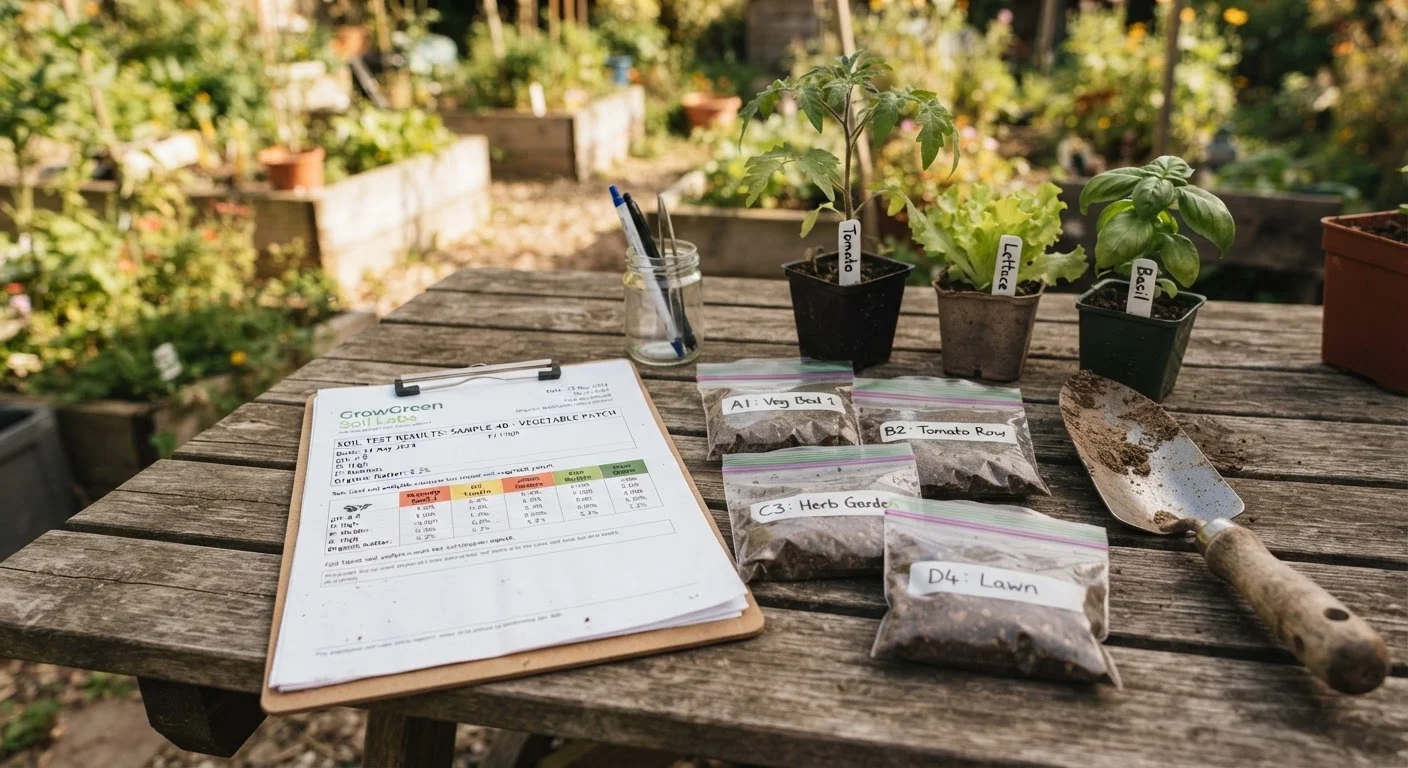
When submitting a soil sample, always indicate what you plan to grow. A lab recommendation for a lawn differs significantly from one for a vegetable bed, even if the soil values are identical. Specifying your crop type ensures the amendment rates reflect the actual nutrient demands of your plants.
If your pH is too low (acidic), lime is typically used to raise it. If it's too high (alkaline), sulfur is the common corrective. Your report will usually specify how many pounds per 100 square feet to apply. Follow those rates carefully - overcorrecting pH is a common and avoidable mistake.
N-P-K: Reading Nutrient Levels Correctly
Nitrogen (N), phosphorus (P), and potassium (K) are the three macronutrients that appear prominently on every soil report - and on every fertilizer bag. Here's what each rating is actually telling you:
- Nitrogen (N): Because nitrogen moves through soil quickly and is affected by rainfall and microbial activity, most labs don't include a static nitrogen number. Instead, they recommend a seasonal application rate based on your crop and existing organic matter. A high organic matter percentage (above 4-5%) often signals that adequate nitrogen is being released naturally.
- Phosphorus (P): Reported in ppm or as a rating (Low / Medium / High / Very High). Phosphorus supports root growth and flowering. A Medium or Adequate rating means no addition is needed. Very High levels can actually suppress the uptake of other nutrients, so more is not better.
- Potassium (K): Also shown in ppm. Potassium regulates water use and disease resistance in plants. Sandy soils lose it faster than clay soils, so testing frequency matters more in light, fast-draining beds.
6.0-7.0
Optimal pH range for most vegetables
This range is widely cited by university cooperative extension programs as the sweet spot where most nutrients are readily available to plant roots.
3-6%
Healthy organic matter percentage for garden soil
Soils within this range typically show better water retention, nutrient availability, and microbial activity, according to soil science literature.
2-3 years
Recommended retesting interval for home gardens
Most cooperative extension services suggest this interval to track how amendments are affecting soil chemistry over time.
Once you understand that the N-P-K values reflect what's already present - not what you should add - the report becomes a practical checklist rather than a mystery. Only values rated Low or Very Low typically call for action.
Secondary Nutrients, Organic Matter, and CEC
Beyond N-P-K, reports often include calcium, magnesium, and sulfur (secondary macronutrients), plus micronutrients like iron, manganese, and zinc. Deficiencies in these are less common but worth noting if your report flags a Low rating alongside visible plant symptoms.
Organic matter percentage is one of the most telling numbers on the page. Most productive garden soils fall in the 3-6% range. Lower percentages indicate soils that benefit from regular additions of compost. This is a slow, long-term metric - don't expect it to jump dramatically after a single season of amendments.
Cation Exchange Capacity (CEC) measures how well your soil holds onto nutrients rather than letting them wash away. Sandy soils have low CEC (around 5-10); clay and loam soils run higher (15-30+). A low CEC means nutrients leach quickly and you may need to fertilize more frequently in smaller amounts.
Once you've read your report, the logical next step is understanding what to do about it. Our guide on soil amendments and when your yard actually needs them explains each corrective option in plain terms, so you can act on your results with confidence.
Putting Your Results to Work
Most reports include a recommendations section at the end - this is often the most practical part. Labs typically tailor suggestions to your stated crop type (vegetables, lawn, ornamentals), which is why it matters to specify what you're growing when you submit your sample.
Soil testing fits naturally into a broader season-prep routine. If you're building out a full spring checklist, the spring garden readiness checklist for homeowners covers where soil prep fits alongside other key tasks. And if you're weighing whether to build raised beds - where you control the starting soil entirely - our comparison of raised beds vs. in-ground planting may help you decide.
A single test is a snapshot in time. Keep a record of each report and retest every two to three years to see whether your amendments are moving the numbers in the right direction. Over time, your soil test history becomes a log of your garden's progress - and a reliable guide for what to do next.
Where to Get a Soil Test Done
Your state's cooperative extension service - typically affiliated with a land-grant university - is one of the most reliable and affordable options for soil testing. Many charge between $10 and $25 per sample and provide crop-specific recommendations. Private labs are also available and may offer faster turnaround or additional tests for micronutrients.
Frequently Asked Questions
Most vegetables perform best in a pH range of 6.0 to 7.0, which is slightly acidic to neutral. Within this range, essential nutrients are most available to plant roots. Crops like blueberries are exceptions and prefer a more acidic range around 4.5 to 5.5.
Collect small plugs of soil from six to ten random spots across your garden bed, then mix them together in a clean bucket. Remove any obvious debris or roots. Most labs require about one cup of this blended sample. Follow your specific lab's instructions, as depth requirements can vary by crop type.
A Low rating means the soil doesn't have enough phosphorus to support strong plant growth, particularly root development and flowering. Your report will usually include a recommended amendment rate to bring it up to an adequate range. Always follow the suggested rate - more is not necessarily better.
For most home gardens, testing every two to three years is sufficient. Test more frequently if you've recently made significant amendments or if plants show persistent signs of stress. Annual testing is rarely needed unless you're managing a large vegetable plot or highly altered soil.
Home kits provide a useful rough estimate of pH and basic nutrient levels, but lab tests are considerably more accurate and include detailed recommendations. If you're making significant changes to your garden - adding lime, sulfur, or large amounts of compost - a lab test is worth the extra cost and precision.
The content provided on our blog site traverses numerous categories, offering readers valuable and practical information. Readers can use the editorial team’s research and data to gain more insights into their topics of interest. However, they are requested not to treat the articles as conclusive. The website team cannot be held responsible for differences in data or inaccuracies found across other platforms. Please also note that the site might also miss out on various schemes and offers available that the readers may find more beneficial than the ones we cover.