

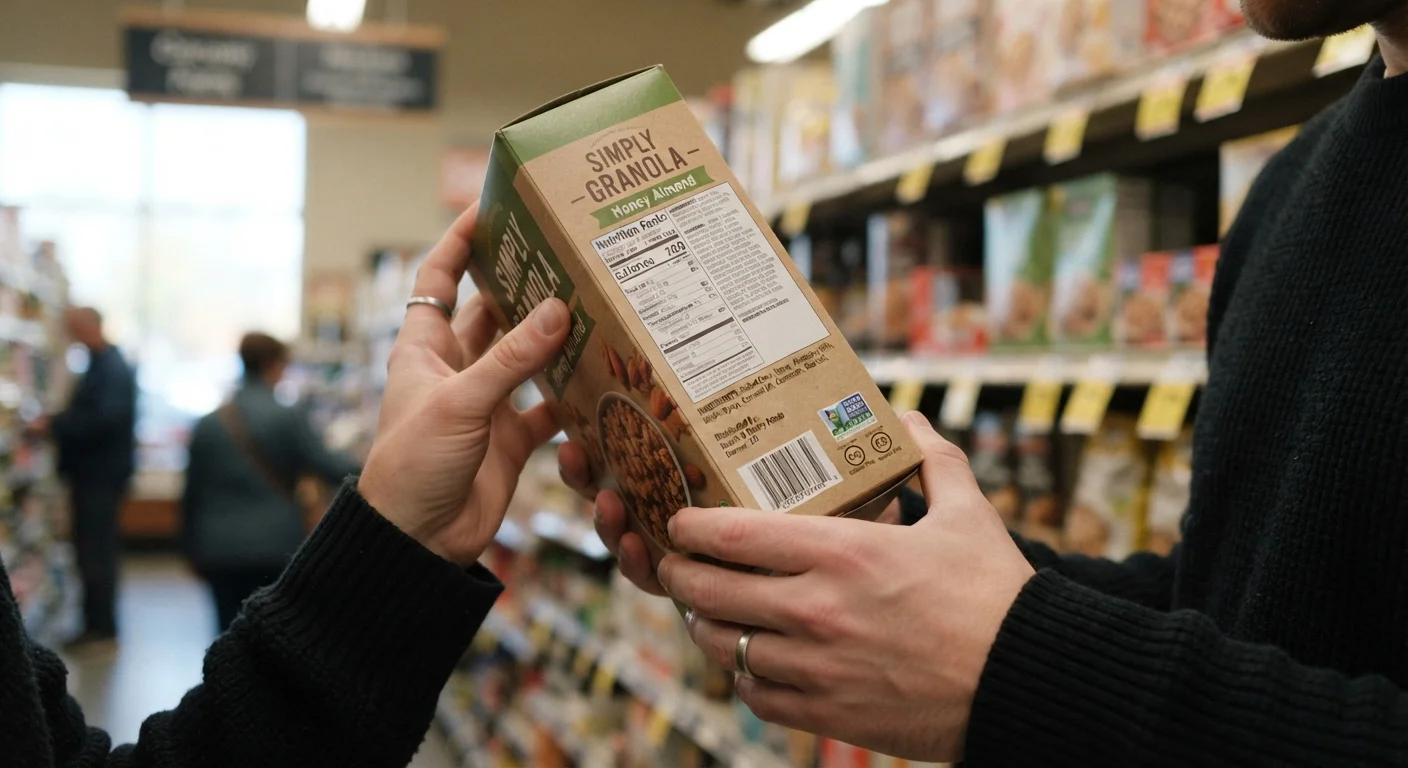
Why Ingredient Lists Feel Confusing
Ingredient lists are regulated by the U.S. Food and Drug Administration (FDA) and follow a consistent set of rules. The confusion most shoppers feel comes not from the list itself but from unfamiliar terminology - multi-syllable chemical names, vague descriptors, and nested parentheses that seem designed to obscure rather than inform.
The good news: once you learn the structural logic, most lists become readable in under a minute. This guide walks through that logic step by step. For a deeper look at how ingredient lists pair with the numbers on the panel itself, see our plain-English breakdown of the Nutrition Facts label.
What you will need
The Core Rules Behind Every Ingredient List
The FDA requires that all ingredients be declared in descending order by weight - meaning the ingredient that weighs the most in the product appears first. This single rule tells you a great deal about what you're actually eating. If water is first and whole wheat flour is fourth, you know the product is predominantly water by weight.
Sub-Ingredients and Parentheses
When a processed ingredient is made from multiple components - say, a sauce or a seasoning blend - those components are listed inside parentheses immediately after the ingredient name. For example: Enriched Flour (Wheat Flour, Niacin, Reduced Iron, Thiamine Mononitrate, Riboflavin, Folic Acid). The items inside the parentheses are the sub-ingredients of enriched flour, not standalone additions.
What Additives Actually Are
Terms like sodium benzoate, carrageenan, or soy lecithin sound alarming but serve specific technical functions - preservation, texture, or emulsification - that keep food stable and safe. The FDA evaluates additives before they're permitted in the food supply. That doesn't mean every additive is appropriate for every person, but it does mean the presence of a long name isn't, by itself, a red flag. Context matters.
Shorter Lists Aren't Always Better
A short ingredient list can mean minimal processing - or it can simply mean the product has few components, some of which may be highly refined. A longer list isn't automatically a warning sign; the type and role of ingredients matter more than the count. Focus on understanding what's there rather than tallying up items.
Step-by-Step: Reading a List in Real Time
Apply the following steps the next time you pick up a packaged product. With a little practice, you'll move through them automatically.
Find the Ingredient List
Ingredient lists are required on most packaged foods sold in the U.S. They typically appear on the back or side panel, below or near the Nutrition Facts box. Single-ingredient foods (plain produce, bulk nuts) usually have no list - that's normal.
Read the First Three Ingredients
Because ingredients appear in descending order by weight, the first three give you a reliable snapshot of what the product is mostly made of. If whole grains, vegetables, or proteins lead the list, those are the dominant components. If refined flour, sugar, or oil appear at the top, they make up the bulk of the product.
Identify Nested Sub-Ingredients
Scan for parentheses and read what's inside them as belonging to the ingredient immediately before. This helps you avoid over-counting - sub-ingredients like niacin and iron inside enriched flour are components of that one ingredient, not separate additions to the overall formula.
Spot the "Contains 2% or Less" Marker
If the phrase "contains 2% or less" appears, note where it falls. Everything listed before it is present in more than trace amounts. Everything after it - however many items - each makes up a very small share of the total product weight.
Check for Allergen Declarations
The FDA requires the eight major food allergens - milk, eggs, fish, shellfish, tree nuts, peanuts, wheat, and soybeans - to be declared either within the ingredient list or in a separate "Contains" statement directly below it. If you or someone in your household has a food allergy, this is a non-negotiable part of label reading.
Cross-Reference with the Nutrition Facts Panel
The ingredient list tells you what's in the product; the Nutrition Facts panel tells you how much of it you're getting per serving. Use both together. A long ingredient list might pair with a reasonable nutrient profile - or a short list might still contain high sodium or saturated fat. Neither panel alone gives the full picture.
Once you've built this habit, it pairs well with a broader understanding of how different foods fit together. Our introduction to balanced eating covers foundational concepts that give ingredient reading more context.
Common Sources of Confusion - Clarified
"Natural Flavors" and "Artificial Flavors"
Both terms refer to flavoring substances added to achieve a specific taste. The distinction between natural and artificial relates to the original source of the flavoring compound, not necessarily its final chemical form or safety profile. Neither term tells you much about the quantity used or its health impact.
Sugar by Many Names
Sugar appears under many aliases: high-fructose corn syrup, dextrose, maltose, cane juice, agave nectar, honey, and more. Because each form counts as a separate ingredient, a product can list several sugar sources without any single one appearing near the top - even if their combined contribution is substantial. The Nutrition Facts panel's "Added Sugars" line is often a more reliable indicator of total added sugar content.
"Contains 2% or Less"
This phrase signals that everything listed after it makes up a very small fraction of the product by weight. It's a useful marker - anything before that phrase is present in meaningful amounts.
Individual Sensitivities Vary
General ingredient literacy doesn't account for personal food sensitivities, allergies, or health conditions. If you have a diagnosed condition, are pregnant, or are managing a chronic illness, work with a qualified healthcare professional or registered dietitian to evaluate which ingredients are relevant to your specific situation. This article provides general nutrition education, not personalized medical advice.
For readers interested in how ingredient patterns connect to broader dietary categories, our article on what ultra-processed food actually means provides a research-grounded framework.
The content provided on our blog site traverses numerous categories, offering readers valuable and practical information. Readers can use the editorial team’s research and data to gain more insights into their topics of interest. However, they are requested not to treat the articles as conclusive. The website team cannot be held responsible for differences in data or inaccuracies found across other platforms. Please also note that the site might also miss out on various schemes and offers available that the readers may find more beneficial than the ones we cover.