

Why the Label Exists and How It's Organized
The Nutrition Facts label is a federal requirement on most packaged foods in the United States, governed by the Food and Drug Administration (FDA). Its purpose is straightforward: give consumers standardized, comparable information so they can make informed choices. The FDA updated the label format in 2016 - the most significant redesign since the original 1990 rules - with changes that reflect current nutrition science.
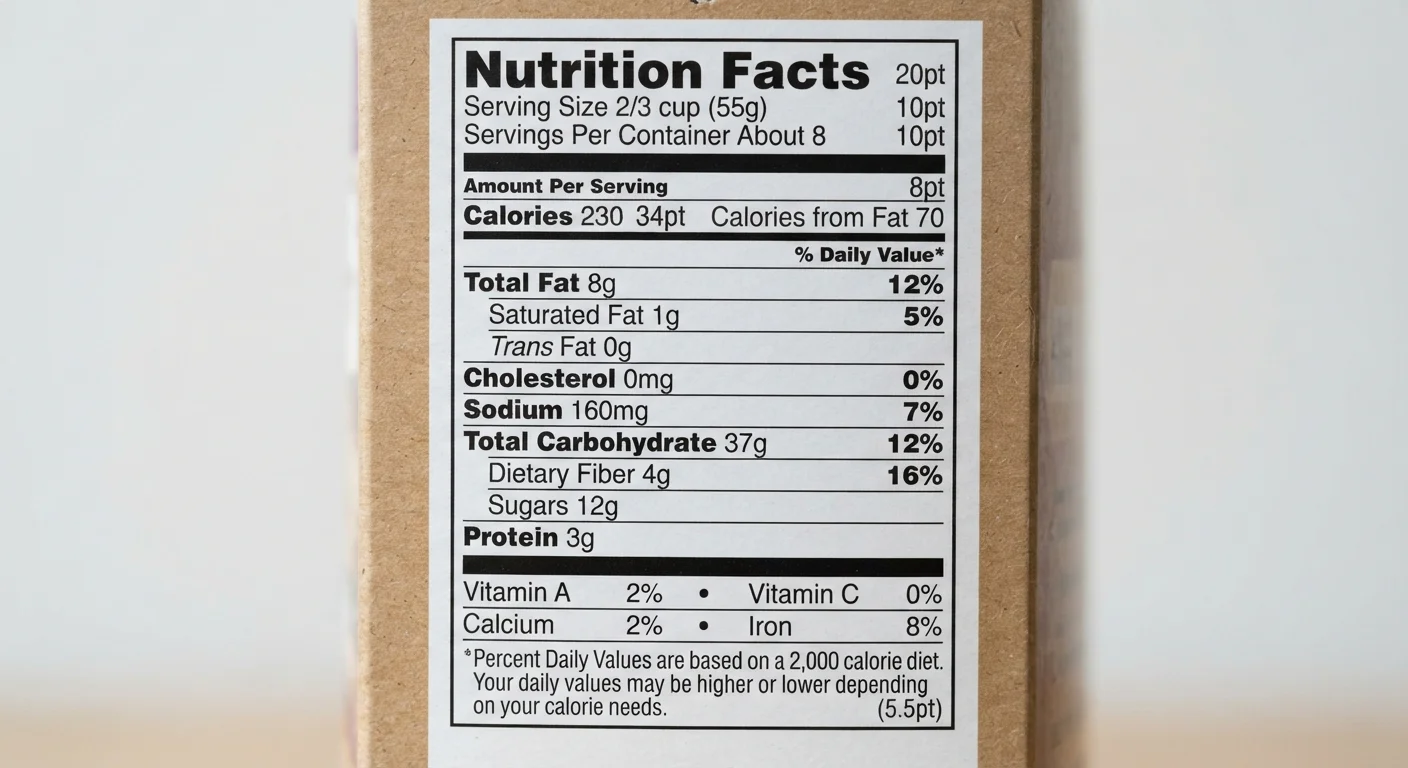
The label reads top to bottom in a deliberate order, moving from serving information (how much the numbers apply to) through macronutrients, then micronutrients, and finally a Daily Values footnote. Understanding that structure makes every row easier to interpret. For a broader foundation on how these nutrients fit together in a healthy diet, see our balanced eating guide.
| Label governed by | U.S. Food and Drug Administration (FDA) |
| Last major redesign | 2016 (fully implemented by 2020) (FDA Nutrition Facts Label Update) |
| Required micronutrients listed | Vitamin D, Calcium, Iron, Potassium (FDA) |
| %DV reference diet | 2,000 calories per day (FDA Daily Value framework) |
| Low %DV threshold | 5% DV or less per serving (FDA consumer guidance) |
| High %DV threshold | 20% DV or more per serving (FDA consumer guidance) |
Serving Size and Calories: The Foundation of Every Number
Serving size appears first and in large, bold print for good reason - every other number on the label applies to that amount, not the entire package. The FDA now requires serving sizes to reflect amounts people realistically eat (called Reference Amounts Customarily Consumed, or RACCs), rather than artificially small portions that made products appear lower in calories. If a package contains two servings and you eat the whole thing, double every value.
Servings per container sits just above the serving size and tells you how many servings the entire package holds. This matters especially for single-serving-looking items like a 20 oz soda, which may list two servings on the label.
Calories is displayed in the largest type on the label. Calories measure the total energy a food provides per serving, combining contributions from fat, carbohydrate, and protein (each gram of fat provides 9 calories; each gram of carbohydrate or protein provides 4).
Serving Size
The standardized amount of food to which all label values apply, set by the FDA based on typical consumption patterns. It is not a dietary recommendation.
% Daily Value (%DV)
A percentage showing how much of a nutrient one serving contributes toward a 2,000-calorie daily reference diet. It helps compare foods and identify high or low sources of a nutrient.
Added Sugars
Sugars and syrups added to a food during processing or preparation, distinct from naturally occurring sugars in fruit or dairy. Excessive added sugar intake is linked to various health concerns.
Saturated Fat
A type of dietary fat found mainly in animal products and some tropical oils. Dietary guidance generally recommends limiting saturated fat intake.
Trans Fat
A type of unsaturated fat, often artificially produced through partial hydrogenation, that dietary guidelines call for avoiding as much as possible.
Reference Amount Customarily Consumed (RACC)
The FDA-established quantity of a food that people typically eat in one sitting, used as the basis for determining serving sizes on the Nutrition Facts label.
Macronutrients: Fat, Carbohydrates, and Protein
Total Fat is broken down into subtypes. Saturated fat and trans fat each have their own line because dietary guidance specifically calls for limiting both. Unsaturated fats (monounsaturated and polyunsaturated) may appear as voluntary disclosures but are not required. Trans fat from partially hydrogenated oils has largely been removed from the US food supply following an FDA determination; however, small amounts can still appear naturally in some meat and dairy products.
Cholesterol follows fat. Current dietary guidelines note that dietary cholesterol's direct effect on blood cholesterol levels is more nuanced than once thought, but individuals with certain health conditions should discuss their intake with a healthcare professional.
Sodium is listed in milligrams. Most Americans consume more sodium than recommended, making this one of the most practically useful rows on the label.
Total Carbohydrate breaks into Dietary Fiber and Total Sugars. The Added Sugars sub-line - new as of the 2016 update - distinguishes sugars manufacturers added during processing from those naturally present in ingredients like fruit or milk. This distinction matters because added sugars contribute calories without additional nutritional benefit.
Protein does not carry a % Daily Value in most cases; the FDA only requires it when a product makes a protein-related claim.
Micronutrients and the Daily Value Footnote
The label is required to list four micronutrients: Vitamin D, Calcium, Iron, and Potassium. These were chosen because Americans broadly under-consume them, according to federal dietary surveys. Manufacturers may voluntarily list additional vitamins and minerals. For a deeper look at what these and other micronutrients actually do in the body, see our micronutrients reference.
Each nutrient's % Daily Value (%DV) tells you how much of the recommended daily amount one serving provides, based on a 2,000-calorie reference diet. A rough guideline from the FDA: 5% DV or less is considered low; 20% DV or more is considered high. Use %DV to compare similar products and to spot whether a food is a meaningful source - or a significant contributor - of any given nutrient.
The footnote at the bottom reminds readers that Daily Values are based on a 2,000-calorie diet and that individual needs vary. It is not a personal prescription - it is a reference framework. Pair what you learn on the label with a clear read of the ingredient list for a fuller picture of what's in your food.
Individual Needs Differ From the Reference
The 2,000-calorie Daily Value framework is a standardized reference point, not a universal recommendation. Calorie and nutrient needs vary based on age, sex, activity level, body size, and health status. If you have specific dietary concerns or a chronic health condition, a registered dietitian can help you interpret label information in the context of your own needs.
This article provides general nutrition education and is not a substitute for personalized dietary advice from a registered dietitian or healthcare provider.
The content provided on our blog site traverses numerous categories, offering readers valuable and practical information. Readers can use the editorial team’s research and data to gain more insights into their topics of interest. However, they are requested not to treat the articles as conclusive. The website team cannot be held responsible for differences in data or inaccuracies found across other platforms. Please also note that the site might also miss out on various schemes and offers available that the readers may find more beneficial than the ones we cover.