

Start here
What Balanced Eating Actually Means
Next
The Core Food Groups and What They Do
Then
Portion Awareness Without Obsessing
Also essential
Hydration: The Overlooked Foundation
Finally
Building Habits That Actually Stick
What Balanced Eating Actually Means
For many Americans, "eating healthy" carries a weight of rules, restrictions, and guilt that makes it feel unachievable. The evidence-based reality is far more accessible: balanced eating simply means consuming a variety of foods across major food groups in proportions that support your body's needs over time. No single meal defines your nutrition, and no food group is inherently the enemy.
The U.S. Dietary Guidelines for Americans - developed by the Department of Health and Human Services and the USDA - frame healthy eating as an overall pattern rather than a checklist. This distinction matters. It shifts the focus from perfection at every meal to the cumulative effect of your daily and weekly choices.
Macronutrients
The three main categories of nutrients that provide energy: carbohydrates, proteins, and fats. Your body needs all three in varying amounts every day.
Micronutrients
Vitamins and minerals your body needs in smaller amounts - such as vitamin C, calcium, and iron - to carry out essential functions like immune support and bone health.
Dietary fiber
A type of carbohydrate found in plant foods that the body cannot fully digest. It supports digestion, helps you feel full, and is linked to lower risk of several chronic conditions.
Whole grain
A grain that contains all three parts of the original kernel - bran, germ, and endosperm - preserving more fiber and nutrients than refined grains.
Added sugar
Sugars and syrups added to foods during processing or preparation, as opposed to sugars naturally present in fruit or milk. High intake is associated with various health risks.
Serving size
A standardized amount of food used as a reference on nutrition labels. It reflects a typical portion - not necessarily how much you should eat - and is the basis for all other label values.
Understanding a few foundational concepts makes the rest of this guide much easier to follow - and helps you evaluate the nutrition advice you encounter elsewhere.
The Core Food Groups and What They Do
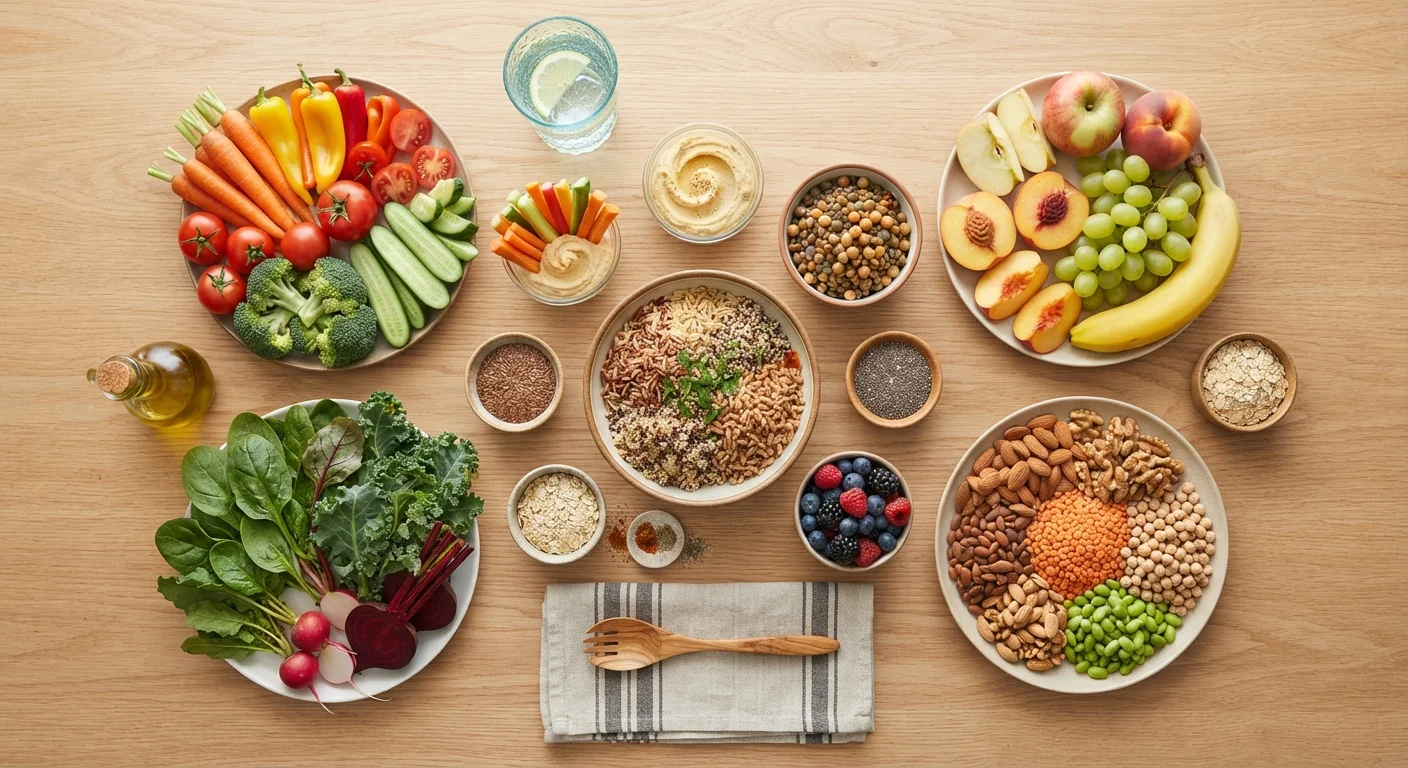
Five broad food groups form the backbone of most evidence-based eating frameworks in the United States. Each one contributes something distinct.
- Vegetables and fruits: Rich in vitamins, minerals, and dietary fiber, these form the largest portion of a balanced plate. Variety in color is a practical proxy for nutrient diversity. For a deeper look at one of vegetables' most important contributions, see how fiber works in the body.
- Grains: Whole grains - such as oats, brown rice, whole-wheat bread, and barley - retain their fiber and nutrients. Refined grains have been processed to remove the bran and germ, reducing their nutritional value.
- Protein foods: This group includes meat, poultry, seafood, eggs, beans, peas, lentils, nuts, and seeds. Plant-based and animal-based sources each have nutritional trade-offs worth understanding. See protein sources compared for a practical breakdown.
- Dairy and fortified alternatives: Milk, yogurt, cheese, and fortified plant-based alternatives (such as soy or oat milk) provide calcium, vitamin D, and protein for most people.
- Healthy fats and oils: Though not a traditional food group, unsaturated fats from sources like olive oil, avocados, and nuts play essential roles in brain function, hormone production, and nutrient absorption.
When reading packaged foods, the Nutrition Facts label breaks down how a product fits into these categories. The Nutrition Facts label, line by line explains exactly what each row means in plain English.
Portion Awareness Without Obsessing
Portion size is one of the most practical levers in everyday eating - and one of the most misunderstood. Awareness does not require weighing food or downloading a tracking app. It means developing a general sense of what a reasonable serving looks like.
A few low-effort reference points that nutrition educators often use:
- A serving of cooked grains or pasta is roughly the size of a clenched fist.
- A serving of protein (meat, fish, tofu) is roughly the size of your palm.
- A serving of cheese is about the size of two dice stacked.
- A serving of healthy fat (like nut butter) is roughly one thumb.
Use Your Plate as a Visual Guide
A simple mental image many nutrition educators recommend is dividing a standard dinner plate roughly in half - filling one half with vegetables and fruit, one quarter with lean protein, and one quarter with whole grains. This approach requires no measuring tools and adapts easily to most meal types, including mixed dishes like stir-fries or grain bowls.
These are rough guides, not precise prescriptions. The goal is calibration - noticing when typical restaurant portions or packaged servings far exceed a single serving, which is common in the U.S. food environment. Over time, this awareness tends to happen naturally without active measurement.
Understanding ingredient lists on packaged foods also supports portion awareness. Reading ingredient lists without getting confused helps you understand what is actually in a food before deciding how much to eat.
Hydration: The Overlooked Foundation
Water is involved in nearly every physiological process - digestion, temperature regulation, joint lubrication, and nutrient transport among them. Yet surveys consistently suggest many American adults fall short of adequate fluid intake on a daily basis.
Most fluids count toward hydration, including water, herbal teas, and the water content found in fruits and vegetables. Beverages high in added sugar, while hydrating to some degree, can add significant calories and contribute to blood sugar fluctuations when consumed in large amounts.
Thirst is generally a reliable signal for most healthy adults, though it can lag slightly behind need during exercise, hot weather, or illness. Practical signs of adequate hydration include pale yellow urine and infrequent headaches that do not have another obvious cause. If you have kidney disease, heart conditions, or take medications that affect fluid balance, discuss individual fluid targets with your healthcare provider.
Building Habits That Actually Stick
The most nutritionally sound eating pattern is one you can realistically maintain. Research on behavior change consistently finds that gradual, specific adjustments outperform dramatic overhauls for long-term adherence.
A few evidence-informed starting points:
- Add before subtracting. Rather than eliminating foods, try adding one serving of vegetables to meals you already enjoy. This expands the nutritional quality of your diet without triggering deprivation.
- Anchor changes to existing routines. Pairing a new habit (like drinking a glass of water) with something you already do every day (like morning coffee) reduces the mental effort required.
- Plan loosely, not rigidly. Having a rough idea of meals for the week reduces impulsive choices without requiring rigid meal prep. Even knowing two or three reliable "go-to" dinners reduces decision fatigue.
Nutrition also connects to broader wellness habits. Movement and eating patterns reinforce each other - if you are new to building an active routine, physical activity for absolute beginners covers the foundations without pressure or jargon. Similarly, mental wellness from the ground up explores how emotional health and daily habits are closely linked.
This article is for general informational and educational purposes only and does not constitute medical or dietary advice. For guidance specific to your health status, conditions, or goals, please consult a qualified healthcare professional or registered dietitian.
Frequently Asked Questions
Calorie counting is one tool, but it is not required for most people trying to eat more balanced. Focusing on food variety, portion awareness, and limiting heavily processed foods often produces meaningful improvements without tracking numbers. A registered dietitian can help you decide if closer tracking is useful for your specific goals.
Current U.S. dietary guidelines generally suggest adults aim for about 2 to 3 cups of vegetables per day, depending on age, sex, and activity level. Variety matters as much as quantity - different vegetables provide different nutrients. These are general guidelines, so consult a healthcare provider for personalized targets.
Yes. Very few people eat only whole, unprocessed foods, and that is a realistic expectation for most American adults. The goal is to ensure highly processed, nutrient-poor items do not dominate your overall pattern. Learning to read labels - including ingredient lists - can help you make more informed choices when buying packaged foods.
General guidance from health organizations often references roughly 8 cups (about 2 liters) per day for adults, though actual needs vary with body size, activity, climate, and health status. Thirst is a useful signal for most healthy adults, but it can lag behind need in some cases, especially during exercise or heat.
Yes - staples like beans, lentils, eggs, frozen vegetables, oats, and brown rice are nutritionally dense and generally cost-effective. Planning meals ahead and minimizing food waste can stretch a grocery budget further. For additional strategies, exploring general budgeting resources alongside nutrition education can be helpful.
No. This article provides general nutrition education only. It is not personalized medical or dietary advice. For guidance tailored to your health conditions, medications, or specific goals, please consult a qualified healthcare professional or registered dietitian.
The content provided on our blog site traverses numerous categories, offering readers valuable and practical information. Readers can use the editorial team’s research and data to gain more insights into their topics of interest. However, they are requested not to treat the articles as conclusive. The website team cannot be held responsible for differences in data or inaccuracies found across other platforms. Please also note that the site might also miss out on various schemes and offers available that the readers may find more beneficial than the ones we cover.