

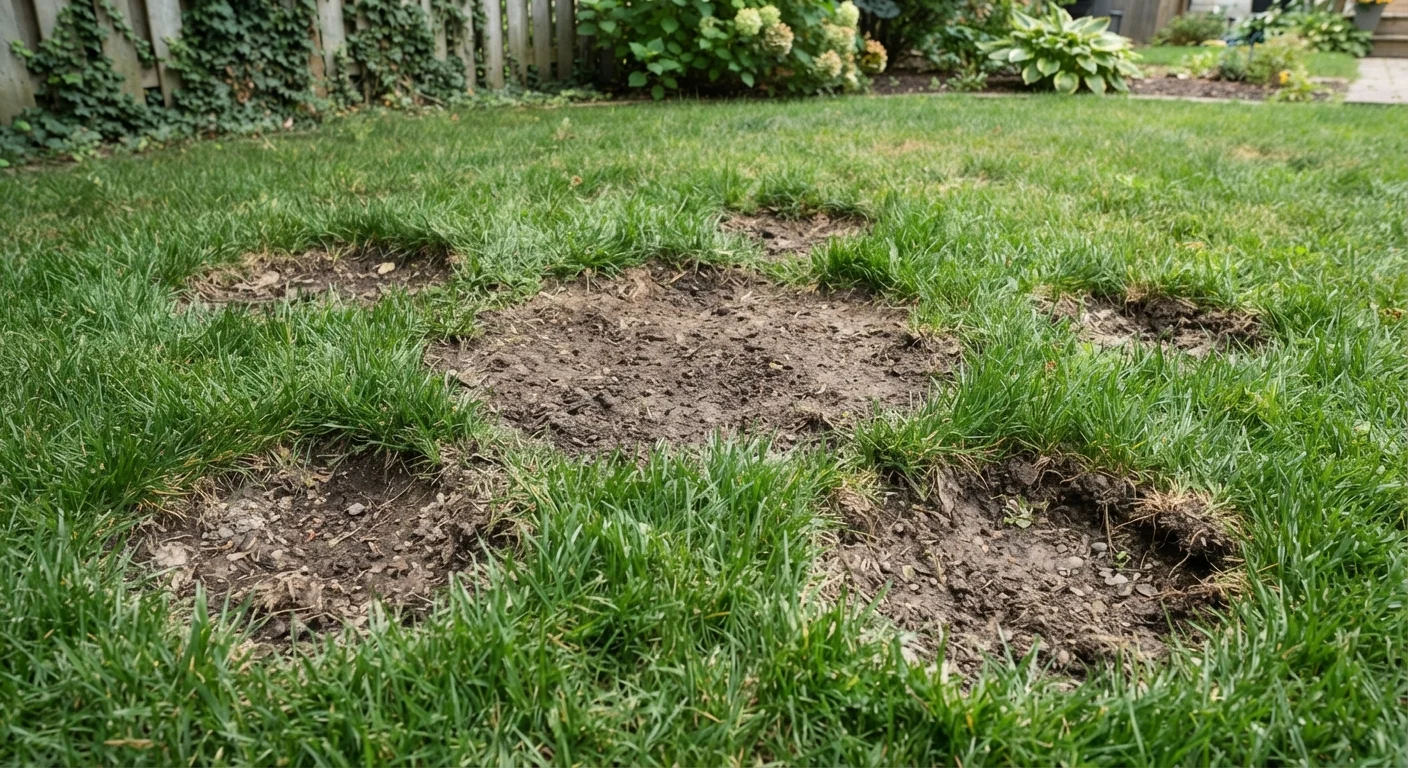
Why Diagnosing First Matters More Than Fixing Fast
A bare patch in an otherwise healthy lawn is frustrating, and the instinct is to grab a bag of grass seed and cover it up. But reseeding without understanding what killed the grass in the first place is one of the most common - and costly - lawn care mistakes homeowners make. New seed sown into the same hostile conditions will fail just as the original turf did.
Bare spots develop for a range of reasons: compacted soil that suffocates roots, fungal disease, insect damage, chemical burns, shade stress, or simply the wear of repeated foot traffic. Each cause looks slightly different and demands a different response. Taking a few minutes to observe the patch - its shape, its edges, any soil texture, and where it falls relative to trees or paths - can tell you a great deal before you spend a dollar.
The sections below walk through the most common mistakes homeowners make when dealing with bare patches, and how to course-correct before putting in the effort of repair.
Reseeding immediately without diagnosing what caused the bare patch.
Why it happens: Homeowners see a problem and want a quick fix. Grass seed feels like the obvious solution since the grass is gone.
Ignoring soil compaction as a root cause of recurring bare areas.
Why it happens: Compaction is invisible at the surface, so it's easy to overlook. Many homeowners don't realize that hard, dense soil prevents roots from getting the air and water they need.
Overlooking lawn pests such as grubs, chinch bugs, or sod webworms as the source of damage.
Why it happens: The insects themselves are often underground or microscopic in effect, and the damage they cause looks similar to drought stress or disease.
Applying too much fertilizer or herbicide near bare patches, burning out remaining grass.
Why it happens: Homeowners trying to fix a weak lawn sometimes over-apply products, assuming more is better. Herbicide drift during spot treatments is also a common, accidental cause of new bare spots.
Trying to grow grass in conditions it cannot survive - deep shade or heavily rooted soil under trees.
Why it happens: Homeowners want a uniform green lawn and assume any bare spot can be seeded into full coverage, regardless of what's overhead or underground.
Getting the Soil Right Before You Reseed
Once you've identified what caused the bare spot, soil preparation is the next critical step. Compacted soil should be aerated or loosened with a garden fork to a depth of at least three inches before seeding. If the area has a drainage problem, consider whether a soil amendment like compost or gypsum might improve the structure long-term rather than just filling the gap with seed.
A basic soil pH test - available at most garden centers - can reveal whether your soil is too acidic or too alkaline for the grass species you're growing. Most cool- and warm-season lawn grasses prefer a pH between 6.0 and 7.0. Outside that range, nutrients become less available to roots even if they're present in the soil.
Fungal Disease Can Spread If Mishandled
If your bare patches have a bleached, straw-colored appearance with a roughly circular outline and are spreading outward, fungal lawn disease may be the cause. Avoid watering in the evening, as moisture sitting on blades overnight encourages fungal growth. Do not rake or till an actively diseased area without cleaning your tools afterward - doing so can spread spores to healthy turf. Consult your local cooperative extension office for region-specific guidance on identification and management.
For high-traffic corridors that keep going bare no matter what you plant, it's worth rethinking the layout entirely. Stepping stones, a gravel path, or even ground cover plants are more durable solutions than repeatedly reseeding a path that people will keep walking on. Similarly, a consistently shaded bare zone under a dense tree canopy may be better served by shade-tolerant low-maintenance plants than by struggling turf grass.
Patience matters after repair. Newly seeded areas need consistent moisture and protection from foot traffic for several weeks. Rushing back to normal use before the grass establishes is another way homeowners end up back at square one.
The content provided on our blog site traverses numerous categories, offering readers valuable and practical information. Readers can use the editorial team’s research and data to gain more insights into their topics of interest. However, they are requested not to treat the articles as conclusive. The website team cannot be held responsible for differences in data or inaccuracies found across other platforms. Please also note that the site might also miss out on various schemes and offers available that the readers may find more beneficial than the ones we cover.