

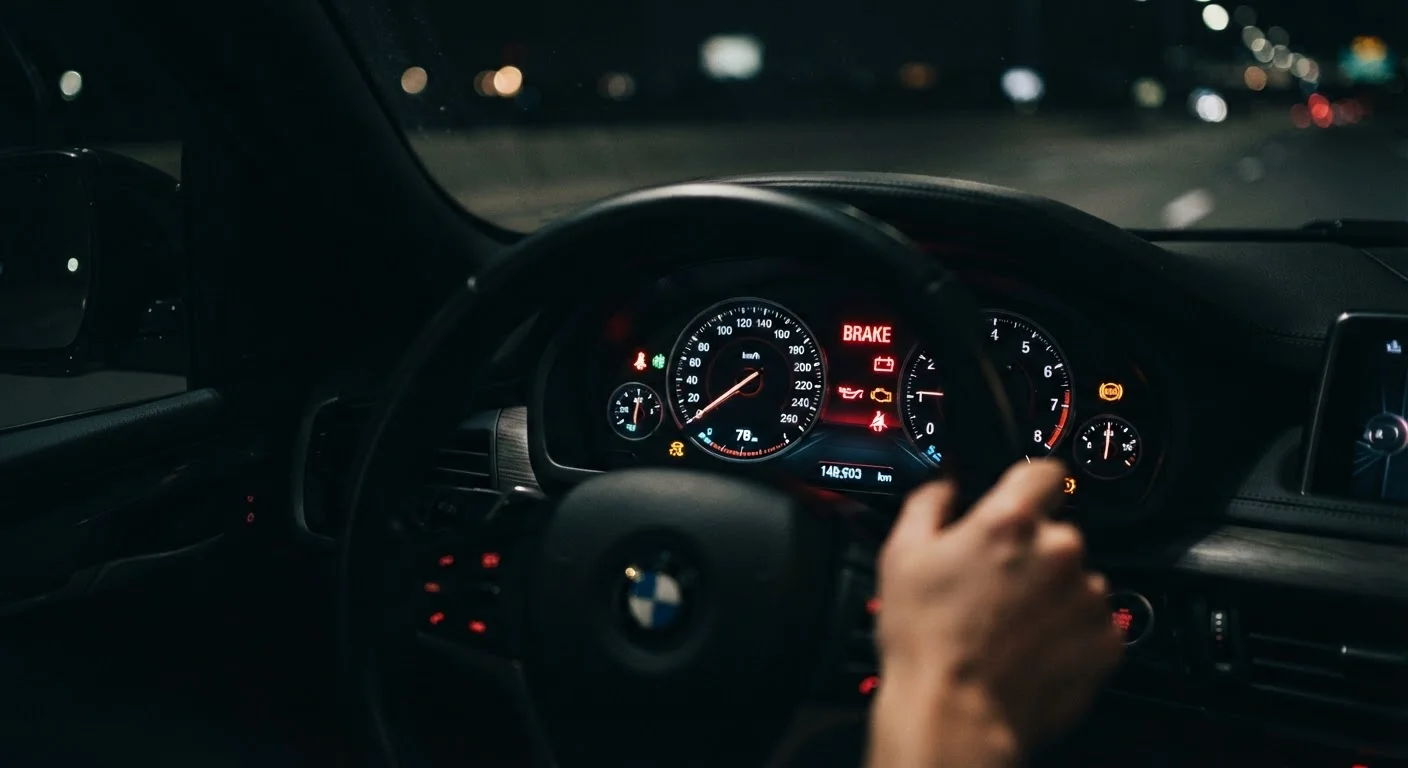
How the Warning Light System Works
Modern vehicles are equipped with an onboard diagnostics system (OBD-II) that continuously monitors hundreds of sensors throughout the car. When a sensor detects a reading outside the normal range, it triggers a warning light on your instrument cluster. These lights are color-coded by urgency: red signals stop-and-act-immediately severity, amber or yellow means investigate soon, and green or blue indicates a system is actively on - not a problem.
Understanding the color hierarchy alone can save you from panic - or from ignoring something serious. For a broader look at the physical warning signs your car may also be sending, see Warning Signs Your Car Is Trying to Tell You Something.
| Standard color for urgent warnings | Red |
| Color for advisory / schedule-service warnings | Amber or Yellow |
| OBD-II required on US vehicles since | 1996 (US EPA / CARB regulation) |
| TPMS required on new US passenger vehicles since | 2008 (NHTSA TREAD Act mandate) |
| Flashing check engine light means | Active misfire or serious fault - reduce speed, seek service promptly |
| First step for any red warning light | Pull over safely and turn off the engine |
The Most Common Warning Lights Decoded
Below is a plain-English breakdown of the warning lights most drivers encounter. Always consult your owner's manual for symbols specific to your vehicle - not every car uses identical icons.
OBD-II
Onboard Diagnostics II - the standardized system used in most US vehicles since 1996 that monitors engine and emissions-related components and stores fault codes that mechanics can read with a diagnostic scanner.
Instrument Cluster
The panel directly behind the steering wheel that houses your speedometer, fuel gauge, and all warning indicator lights.
TPMS
Tire Pressure Monitoring System - a sensor-based system required on US passenger vehicles since 2008 that alerts drivers when tire pressure drops significantly below the recommended level.
Fault Code (DTC)
A Diagnostic Trouble Code stored by the OBD-II system when a sensor reading is out of range. Mechanics retrieve these codes to pinpoint the source of a warning light.
Coolant
A liquid circulated through the engine to regulate temperature. Low coolant levels or a failing cooling system can trigger the engine temperature warning light.
Charging System
The combination of the alternator, battery, and related components that keeps a vehicle's electrical systems powered while the engine runs.
Red Lights: Act Immediately
- Oil Pressure Warning (oil can icon): Oil pressure has dropped critically. Pull over safely, turn off the engine, and check the oil level before driving further. Continuing to drive risks severe engine damage.
- Engine Temperature Warning (thermometer in liquid): Your engine is overheating. Stop driving as soon as it is safe. Check coolant levels once the engine has cooled - do not open the radiator cap while hot. Learn more about car fluid checks and intervals.
- Battery / Charging System (battery icon): The vehicle's electrical charging system is not functioning properly. Limit electrical use and head to a mechanic promptly - the car may not restart if the battery drains fully.
- Brake Warning Light (exclamation mark in circle): Can indicate the parking brake is engaged, low brake fluid, or a fault in the braking system. If the parking brake is off and the light stays on, treat it as urgent. See how your braking system works for context on wear and failure signs.
Amber Lights: Schedule Attention Soon
- Check Engine (engine outline icon): One of the most misunderstood lights on any dashboard. It can range from a loose gas cap to a misfiring cylinder. A solid amber light usually means schedule a diagnostic; a flashing check engine light typically means a more active fault - reduce speed and seek service promptly. For a full breakdown, see what your check engine light is actually telling you.
- Tire Pressure Monitoring System / TPMS (flat tire icon): One or more tires is significantly under- or over-inflated. Check pressures at your earliest opportunity - proper inflation directly affects handling and fuel efficiency. For PSI targets and inflation guidance, refer to tire pressure and tread depth explained.
- Traction Control / Stability Control (car with skid lines): Flashing briefly during acceleration on slippery roads is normal. A steady light means the system has been deactivated or has a fault.
- Transmission Temperature (thermometer over gear): Transmission fluid is running hot. Reduce load (avoid towing if applicable), allow the vehicle to cool, and have the transmission fluid checked.
When to Pull Over vs. When to Drive On
Not every warning light demands an immediate roadside stop - but some do. Use this decision framework:
- Any red warning light: Pull over safely and turn off the engine as soon as possible. Do not continue driving until the cause is diagnosed, unless it is confirmed to be the parking brake indicator.
- Flashing amber check engine light: Reduce speed, avoid hard acceleration, and seek a mechanic the same day if possible.
- Solid amber lights: Safe to drive home or to a nearby shop, but do not delay scheduling service by more than a few days.
- Green or blue indicator lights: No action needed - these confirm active features like high beams, cruise control, or eco mode.
Developing the habit of glancing at your instrument cluster during every drive is a low-effort safety practice. Pairing dashboard awareness with broader attentive driving habits helps reduce risk on the road - explore habits that quietly erode your safety behind the wheel for more.
Your Owner's Manual Is the Authoritative Source
Warning light icons are largely standardized, but variations exist across manufacturers and model years. Some vehicles use additional proprietary indicators not covered in generic references. Keep your owner's manual in the glove box or bookmark the digital version - it lists every symbol specific to your car and the recommended response for each.
This article is for general informational purposes only. Always consult a qualified mechanic for diagnosis and repair of your specific vehicle. Warning light meanings can vary by make, model, and model year - refer to your owner's manual for authoritative guidance.
The content provided on our blog site traverses numerous categories, offering readers valuable and practical information. Readers can use the editorial team’s research and data to gain more insights into their topics of interest. However, they are requested not to treat the articles as conclusive. The website team cannot be held responsible for differences in data or inaccuracies found across other platforms. Please also note that the site might also miss out on various schemes and offers available that the readers may find more beneficial than the ones we cover.