

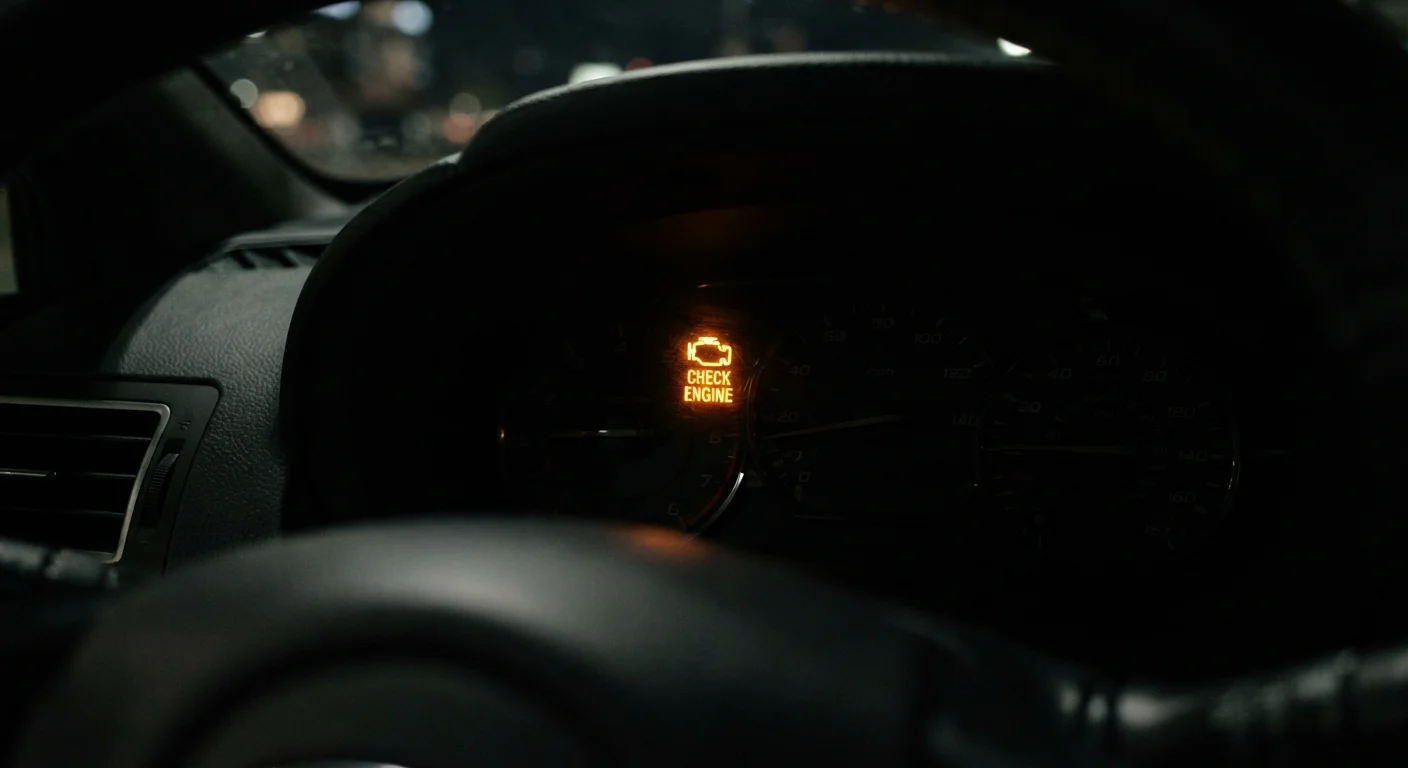
What the Light Is Actually Monitoring
Your car's engine control module (ECM) - the onboard computer - constantly monitors dozens of sensors across the engine, transmission, and emissions systems. When a sensor reading falls outside an acceptable range, the ECM logs a diagnostic trouble code and lights the MIL on your dashboard.
The systems most commonly flagged include:
- Oxygen sensors - measure exhaust gases to help regulate fuel mixture
- Catalytic converter - converts harmful exhaust pollutants into less toxic emissions
- Evaporative emission control (EVAP) system - prevents fuel vapors from escaping into the atmosphere
- Mass airflow sensor - measures the volume of air entering the engine
- Spark plugs and ignition coils - responsible for combustion timing and efficiency
- Transmission sensors - monitor gear shifts and fluid temperature
Because the light covers such a wide range of systems, it cannot tell you what is wrong on its own - only that something has been flagged. Retrieving the stored code is always the necessary first step. For a broader look at what your dashboard indicators mean, see our full dashboard warning lights guide.
~40%
Of check engine codes linked to O2 sensors or EVAP faults
Industry diagnostic data consistently identifies oxygen sensor and evaporative emission faults among the most frequently retrieved OBD-II codes in the US vehicle fleet.
1 in 3
US vehicles on the road with an active check engine light
Estimates from automotive research organizations suggest a substantial portion of registered vehicles have an illuminated check engine light at any given time, many unaddressed for extended periods.
Solid vs. Flashing: A Critical Difference
Not all check engine lights carry the same urgency. Learning to distinguish between the two states can help you make a smarter decision about how quickly to act.
Solid (steady) light
A continuously lit but non-flashing check engine light indicates a stored fault that the ECM has detected across multiple drive cycles. The vehicle is generally drivable in the short term, but the issue should be diagnosed promptly. Continuing to drive without investigation risks converting a manageable problem into a more expensive one.
Flashing (blinking) light
A flashing check engine light is a more serious signal. It typically indicates an active engine misfire - a condition where fuel is not combusting properly in one or more cylinders. Unburned fuel entering the exhaust can rapidly overheat and damage the catalytic converter, turning a moderate repair into a significantly costlier one. If your light is flashing, reduce your speed, avoid hard acceleration, and arrange service as soon as safely possible.
Act Faster on a Flashing Light
If your check engine light is flashing, treat it as you would a temperature warning or oil pressure alert - reduce speed, avoid heavy acceleration, and get the vehicle inspected the same day if possible. Misfires that persist can destroy a catalytic converter in a matter of miles, turning a moderate repair bill into a much larger one.
Common Causes - From Minor to Serious
Knowing the range of typical triggers helps set realistic expectations before you see a mechanic. The causes span from trivially simple to genuinely complex:
- Loose or faulty gas cap
- One of the most frequent - and easiest - triggers. The EVAP system detects a pressure loss and flags a fault. Check and firmly tighten your gas cap first.
- Faulty oxygen (O2) sensor
- O2 sensors degrade over time and are among the most commonly replaced parts linked to check engine faults. A failing sensor can reduce fuel efficiency and increase emissions.
- Catalytic converter failure
- Often a downstream consequence of other ignored issues (such as bad O2 sensors or prolonged misfires). Catalytic converter replacement is among the more costly repairs.
- Spark plug or ignition coil failure
- Worn spark plugs or a failed coil cause misfires, rough idling, and reduced power - and are a common cause of a flashing check engine light.
- Mass airflow sensor fault
- A dirty or failing MAF sensor disrupts the air-fuel ratio, reducing performance and economy.
For insight into other warning signs beyond dashboard lights - such as unusual sounds and smells - our guide to warning signs your car is trying to tell you something covers those symptoms in detail.
What to Do When the Light Comes On
A methodical response prevents panic and unnecessary expense. Here's a practical sequence to follow:
- Check the gas cap. Remove it, inspect the seal, reattach it firmly. If the cap was loose, monitor the light over the next few drive cycles.
- Note any symptoms. Is the car running differently? Rough idle, reduced power, unusual smells, or stalling all add important context for a technician.
- Get the code read. Many auto parts retailers will read your OBD-II codes at no charge. Write down the exact code (e.g., P0420, P0171) - this helps you research the fault and understand a mechanic's diagnosis.
- Assess urgency. Steady light with no drivability symptoms: schedule service within a few days. Flashing light or noticeable performance issues: seek service promptly and drive conservatively in the meantime.
- See a qualified mechanic. A code is a starting point, not a complete diagnosis. A professional can perform live sensor tests, inspect components, and confirm the actual cause. Knowing the code beforehand helps you ask informed questions and understand the estimate you receive.
Understanding how fluid levels and system health connect can also help - our guide to car fluids explains what to check and how often. For context on which maintenance tasks are appropriate to handle yourself versus when to call a professional, see DIY car maintenance: what's safe to do yourself.
Code Readers Are a Starting Point, Not the Whole Answer
Reading an OBD-II code tells you which system flagged a fault - not necessarily which specific component has failed. For example, a P0420 code (catalytic converter efficiency below threshold) could stem from a failing converter, a bad oxygen sensor, or an exhaust leak. A qualified mechanic uses the code as a starting point and performs additional tests to confirm the true cause before recommending repairs.
Frequently Asked Questions
If the light is solid and your car feels normal, it is generally safe to drive for a short time while you arrange a diagnostic check. If the light is flashing, or if you notice rough running, loss of power, or unusual smells, reduce speed and get the vehicle inspected as soon as possible to avoid further damage.
Sometimes - if the triggering condition resolves itself (for example, a momentary sensor glitch), the light may extinguish after several successful drive cycles. However, the underlying fault code remains stored. It's still worth retrieving the code to confirm the issue has fully cleared.
An OBD-II scan tool plugs into a port usually located under the dashboard near the steering column. It reads the stored diagnostic trouble code (DTC) and displays a description of the fault. Many auto parts retailers offer free code reads, and affordable handheld scanners are widely available.
Yes - a loose or missing gas cap is one of the most common triggers. The fuel system is sealed, and a gap allows fuel vapors to escape, which the evaporative emissions system detects as a fault. Tightening or replacing the cap often resolves it, though the light may take a few drive cycles to go out.
Costs vary enormously depending on the root cause. A gas cap replacement may cost just a few dollars, while a catalytic converter repair can run into hundreds or more. Getting a proper diagnosis first prevents paying for unnecessary repairs. See our <a href="/cars-driving/car-maintenance/reading-a-mechanics-estimate-without-feeling-lost">guide to reading a mechanic's estimate</a> for help understanding repair quotes.
You can clear the code using an OBD-II scanner, which will turn off the light. However, if the underlying problem hasn't been fixed, the light will return. Clearing codes without addressing the root cause also temporarily wipes emissions readiness data, which can cause a vehicle to fail an emissions inspection.
The content provided on our blog site traverses numerous categories, offering readers valuable and practical information. Readers can use the editorial team’s research and data to gain more insights into their topics of interest. However, they are requested not to treat the articles as conclusive. The website team cannot be held responsible for differences in data or inaccuracies found across other platforms. Please also note that the site might also miss out on various schemes and offers available that the readers may find more beneficial than the ones we cover.