

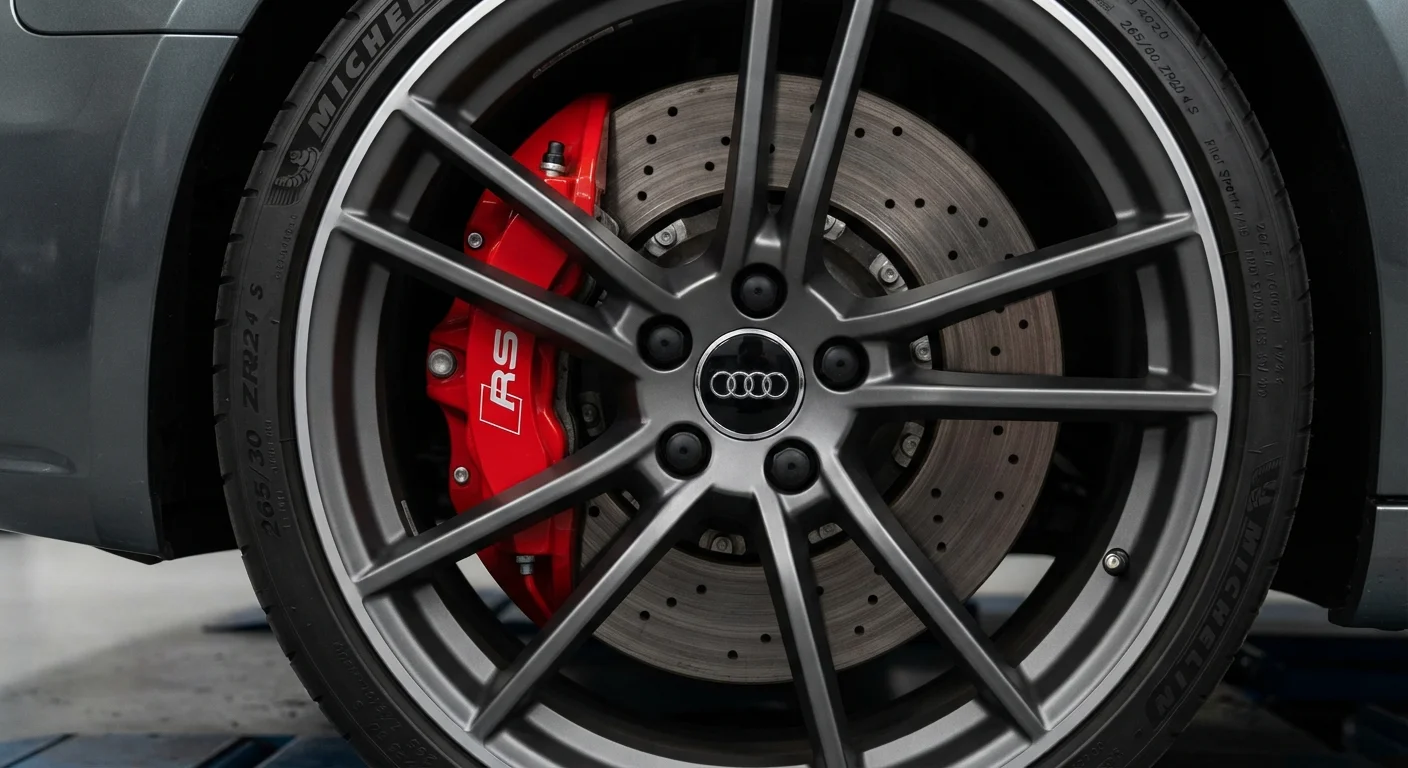
The Three Core Components Explained
Your vehicle's braking system is built around three parts that work together every single time you slow down or stop. Understanding what each one does makes it far easier to recognize when something isn't right.
Brake Pads
Brake pads are flat friction material blocks that press against the rotor surface to slow the wheel. They are the most wear-prone part of the system because they sacrifice themselves through friction. A new pad typically starts at around 10-12mm of material; once it wears down to approximately 2-3mm, replacement is needed. Driving style has a significant effect on pad life - frequent hard braking or stop-and-go city driving can cut pad life considerably compared to steady highway use.
Rotors
Rotors (also called brake discs) are the large metal discs clamped by the pads. They must dissipate enormous amounts of heat with each stop. Over time, rotors can develop surface grooves from worn pads, or warp slightly from repeated heat cycling. A warped rotor often produces a noticeable pulsation or vibration through the brake pedal. Each rotor has a minimum thickness specification - once worn below that mark, it must be replaced.
Calipers
The caliper is the hydraulic clamp that houses the brake pads and squeezes them against the rotor when brake pressure is applied. Most vehicles use floating or sliding calipers, where one or two pistons push the pads inward. Calipers are generally long-lasting components, but the slide pins can corrode and seize, causing a pad to drag continuously against the rotor even when you're not braking - generating heat and uneven wear.
Brake Fluid Is Part of the System Too
The hydraulic pressure that activates your calipers is carried by brake fluid. Over time, brake fluid absorbs moisture from the air, which lowers its boiling point and can lead to reduced braking performance - particularly during heavy use. Most manufacturers recommend flushing brake fluid every two to three years, though your owner's manual is the best reference for your specific vehicle.
Warning Signs of Brake Wear
Your brakes communicate wear in several recognizable ways. Knowing what to listen and feel for can help you catch problems early - before they become a safety issue or a more expensive repair.
- Squealing or squeaking: A high-pitched sound when braking is the most common early warning. Most pads include a metal wear indicator tab designed to make this noise when the pad material runs low.
- Grinding: A harsh metal-on-metal grinding sound usually means the pad has worn through completely. This can rapidly damage the rotor surface and warrants immediate attention.
- Vibration or pulsation: A pulsing sensation in the brake pedal or steering wheel during braking often points to a warped rotor.
- Pulling to one side: If your vehicle drifts left or right under braking, a sticking caliper or uneven pad wear is a likely cause.
- Burning smell: A sharp, acrid odor after driving - especially on hills - can indicate an overheated caliper or dragging brake.
- Soft or spongy pedal: If the pedal travels further than usual before engaging, air in the lines or low brake fluid may be the cause. This is also worth checking in our guide to car fluids.
If you notice any of these symptoms, consider getting a professional inspection promptly. Some brake warning lights on your dashboard may also illuminate - see our dashboard warning lights guide for what those symbols mean. You can also review other warning signs your car may be signaling.
Ask for a Brake Inspection at Every Tire Rotation
Most shops will visually inspect your brake pads and rotors as part of a tire rotation service, often at no extra cost. This gives you a regular snapshot of remaining pad life and rotor condition without waiting for symptoms to appear. Keeping a simple record of what the technician reports each visit helps you track wear trends over time.
Typical Service Intervals and What to Expect
There is no single mileage number that applies to every driver's brake service, because wear depends heavily on driving conditions, vehicle weight, and braking habits. That said, general guidelines exist as a useful starting point.
25,000-65,000 mi
Typical brake pad lifespan
Industry estimates vary widely based on driving style, vehicle type, and whether city or highway miles dominate usage.
70%
Braking force handled by front brakes
Front brakes shoulder the majority of stopping work due to weight transfer during deceleration, which is why front pads usually wear faster.
~50,000-70,000 mi
Common rotor replacement interval
Rotor lifespan depends on pad type, driving conditions, and whether rotors were machined at a previous service interval.
Brake pads on the front axle typically wear faster than rear pads because front brakes handle a greater share of stopping force. When visiting a mechanic for brake work, ask for a written estimate that clearly itemizes pads, rotors, and labor separately. Our article on reading a mechanic's estimate can help you understand what you're being charged for before you approve any work.
When rotors are replaced, mechanics generally recommend doing both wheels on the same axle together - mismatched rotor conditions can cause the vehicle to pull during braking. Similarly, replacing pads in axle pairs maintains balanced stopping performance.
Brake system work involves safety-critical components. While general maintenance education can help you ask better questions and recognize warning signs, any brake repair or inspection should be performed by or verified by a qualified mechanic, particularly if you are not confident in your own mechanical experience.
Frequently Asked Questions
Most brake pads include a small metal wear indicator that produces a high-pitched squeal when the pad material gets low. A persistent grinding noise typically means the pad has worn through completely, allowing metal-on-metal contact with the rotor. Many mechanics also inspect pad thickness during routine oil changes, so asking for a brake check at that time is a straightforward way to stay ahead of wear.
Not always, but it depends on the condition of your rotors. If a rotor still has adequate thickness and no deep grooves or warping, new pads can often be installed against it. However, if the rotor surface is scored or below the minimum thickness specification, replacing both components together is the safer and more cost-effective approach, since bedding new pads onto a damaged rotor reduces braking performance.
Pulling during braking is often a sign that a caliper is sticking - either applying pressure unevenly or not fully releasing. A seized caliper can cause one brake to engage more aggressively than the other, pulling the vehicle in that direction. Uneven pad wear or a warped rotor on one side can also contribute to this symptom.
Yes - a spongy pedal is usually a sign of air in the brake lines or low brake fluid, both of which compromise your stopping ability. It can also indicate a failing master cylinder or a brake fluid leak. This should be evaluated by a mechanic promptly, as it directly affects how quickly and reliably your car can stop.
A general industry guideline is to have brake components visually inspected at least once a year or every 12,000 miles - whichever comes first. City drivers who brake frequently may need inspections more often. Many tire shops and service centers will inspect brakes as part of a tire rotation at no additional charge.
Brake pad replacement is a task some mechanically experienced drivers perform at home with the right tools, but it involves safety-critical components and proper torque specifications. If you are unsure of your skill level or lack the correct equipment, it is strongly recommended to have a qualified mechanic handle the job. Our <a href="/cars-driving/car-maintenance/diy-car-maintenance-whats-safe-to-do-yourself-and-what-isnt">DIY car maintenance guide</a> covers which tasks are appropriate for home mechanics.
The content provided on our blog site traverses numerous categories, offering readers valuable and practical information. Readers can use the editorial team’s research and data to gain more insights into their topics of interest. However, they are requested not to treat the articles as conclusive. The website team cannot be held responsible for differences in data or inaccuracies found across other platforms. Please also note that the site might also miss out on various schemes and offers available that the readers may find more beneficial than the ones we cover.