

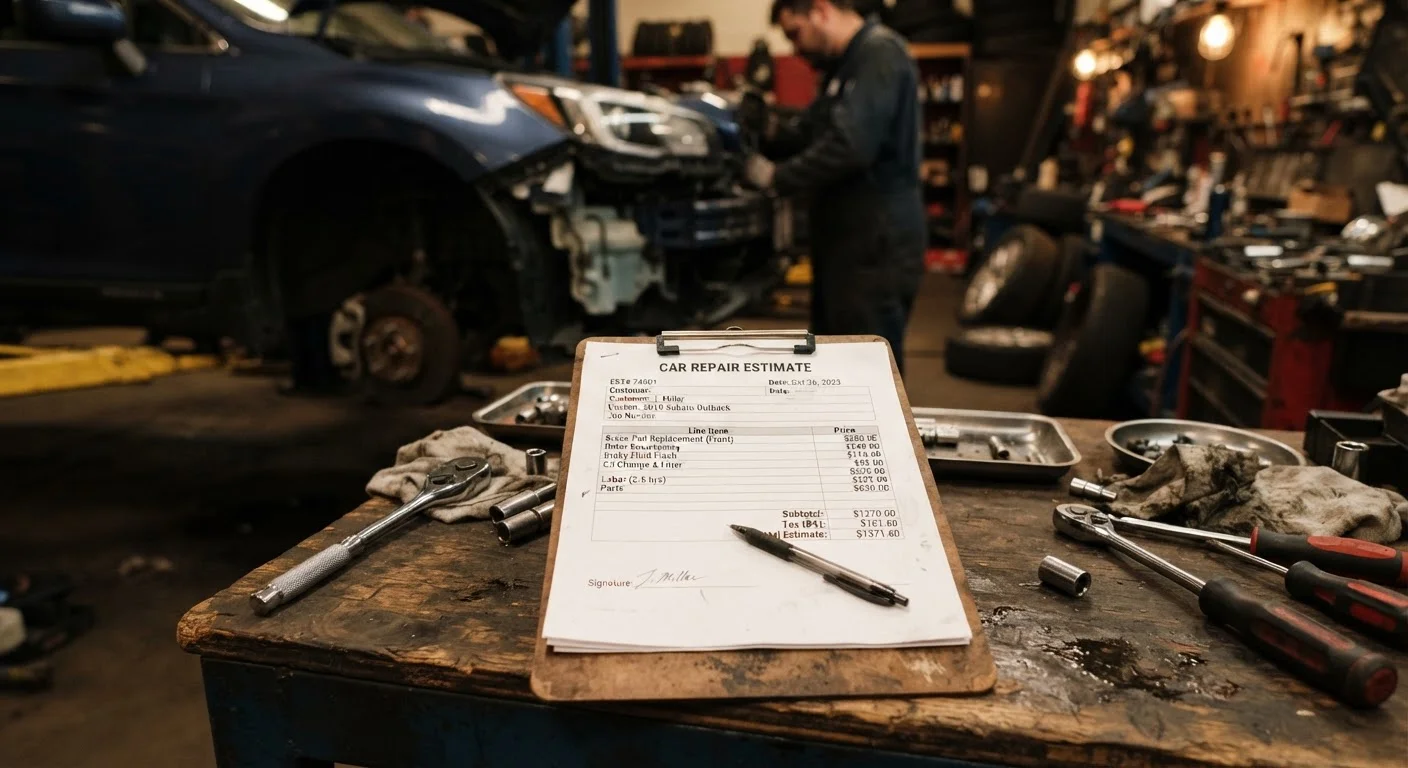
Why Estimates Feel Confusing - and How to Approach Them
Most drivers hand over their keys with little idea what the paperwork in return actually says. A repair estimate can look like a foreign language - rows of part numbers, labor codes, and fees that seem designed for industry insiders. The good news is that every estimate follows a predictable structure once you know what to look for.
Estimates are typically divided into three cost categories: labor, parts, and shop fees. Each line item in those categories represents a specific task or component. Understanding the categories - not every technical detail - is usually enough to ask the right questions and decide whether to proceed.
If you're also thinking through the broader picture of what your vehicle costs you over time, the hidden expenses of car ownership article is a useful companion read.
Decoding Labor Charges
Labor is almost always the largest line on any estimate. Shops charge labor by the hour, but the hours aren't necessarily tracked with a stopwatch. Instead, most shops use a flat-rate guide - an industry reference (such as those published by Chilton or Mitchell) that assigns a standard time to each repair task. A brake job on your specific vehicle might be rated at 1.5 hours regardless of whether the technician finishes in 75 minutes or two hours.
The estimate will show the labor rate (dollars per hour) multiplied by the flat-rate time. Rates vary significantly by region and shop type. Dealership service departments typically charge higher hourly rates than independent shops, though neither is automatically a better or worse value. For a fuller look at that trade-off, see how to think through dealer vs. independent mechanic.
$100-$200
Typical hourly labor rate range at US auto shops
Labor rates vary by region, shop type, and vehicle complexity; dealerships often sit at the higher end of this range.
~40%
Share of a typical repair bill that is labor
Industry data consistently shows labor is the single largest cost category on most repair invoices, often comprising a substantial share of the total.
Parts: OEM, Aftermarket, and Remanufactured
The parts section lists each component that will be replaced, along with its price. You'll commonly see three types of parts referenced:
- OEM (Original Equipment Manufacturer): Made by or to the specifications of your vehicle's manufacturer. Generally the most expensive option and often required to maintain a warranty.
- Aftermarket: Produced by a third party. Quality ranges enormously - some aftermarket parts match or exceed OEM standards; others do not. Price is not always a reliable indicator of quality.
- Remanufactured: Used parts that have been rebuilt to meet certain performance standards. Common for components like alternators and brake calipers. Often less expensive than new OEM parts.
You can ask your shop which type of part they plan to use and why. Choosing aftermarket parts to reduce cost is reasonable for many repairs; for others - particularly safety-critical systems - OEM may be worth the premium. A shop should be transparent about this choice.
Common Fees and Line Items Explained
Beyond labor and parts, estimates often include additional charges that can catch drivers off guard:
- Diagnostic fee
- Covers the time and equipment used to identify the problem. Ask whether it's credited toward the repair if you proceed.
- Shop supplies fee
- A charge for consumables like rags, lubricants, and disposal materials. Often listed as a percentage of the total rather than a fixed amount.
- Hazardous waste disposal
- Covers the regulated disposal of fluids like motor oil, coolant, or refrigerant. This is a legitimate cost governed by environmental regulations.
- Sublet repairs
- Work outsourced to a specialist (such as a transmission rebuilder or glass shop). The original shop typically marks up this cost.
If any fee is unclear, ask for a plain-language explanation. A reputable shop will provide one without hesitation. This kind of line-item thinking is similar to understanding any complex bill - much like decoding deductions on your paycheck, the goal is simply to know what you're paying for.
Ask for a Written Estimate Before Any Work Starts
Verbal quotes are difficult to dispute after the fact. Always ask for a written, itemized estimate and keep a copy. If the shop requires a diagnostic before quoting a repair, confirm in writing what the diagnostic will cost and under what conditions it will be credited toward the repair total.
What to Do Before You Sign
Before authorizing any repair, take a few practical steps to protect yourself:
- Read every line. Don't assume identical work orders are identical in scope. Confirm what is and isn't included.
- Ask about authorization thresholds. If the shop discovers additional problems, at what dollar amount will they call you before continuing? Get that in writing.
- Clarify the warranty on parts and labor. Most reputable shops offer at least a 12-month/12,000-mile warranty on repairs, though this varies.
- Consider a second estimate for large jobs. For repairs above a few hundred dollars, a second opinion is a sound and widely accepted practice.
Understanding repair costs fits into the larger picture of managing your automotive budget accurately. Drivers who skip this step often find themselves blindsided - a pattern explored in depth in common car budgeting mistakes.
For those comfortable handling smaller tasks themselves, a guide to DIY car maintenance outlines which jobs you can safely take on versus which require a professional.
This article is for general informational purposes only and does not constitute legal or financial advice. Regulations governing repair estimates vary by state - consult your state's consumer protection office or a qualified professional for guidance specific to your situation.
Frequently Asked Questions
Labor hours refer to the amount of time a shop charges to complete a specific repair task, based on a flat-rate guide used industrywide. This rate is set regardless of how quickly the actual technician finishes the job. The shop's hourly labor rate is multiplied by the flat-rate hours to produce the labor charge on your estimate.
OEM (Original Equipment Manufacturer) parts are made by or for the vehicle's manufacturer and match factory specifications. Aftermarket parts are produced by third-party companies and can vary widely in quality and price. Neither is universally superior - the right choice depends on the repair, your budget, and whether your car is under warranty.
In most states, shops cannot exceed a written estimate without your approval. If technicians discover additional problems during the repair, the shop is generally required to contact you with a revised estimate before proceeding. Review your state's consumer protection rules for specific limits and requirements.
Getting a second estimate is particularly worthwhile for large or unexpected repairs. It helps you verify that the recommended work is necessary and that the pricing is reasonable for your area. Reputable shops generally welcome this practice and won't pressure you to decide immediately.
A diagnostic fee pays for the technician's time and equipment used to identify what is wrong with your vehicle. Some shops apply this fee toward the final repair cost if you proceed with the work; others do not. Ask about this policy upfront before authorizing a diagnostic.
A written estimate creates a baseline that most state consumer protection laws require shops to honor within a defined threshold. However, an estimate is not the same as a final contract - unforeseen issues may change the total. Always request written authorization requirements in writing before work starts.
The content provided on our blog site traverses numerous categories, offering readers valuable and practical information. Readers can use the editorial team’s research and data to gain more insights into their topics of interest. However, they are requested not to treat the articles as conclusive. The website team cannot be held responsible for differences in data or inaccuracies found across other platforms. Please also note that the site might also miss out on various schemes and offers available that the readers may find more beneficial than the ones we cover.