

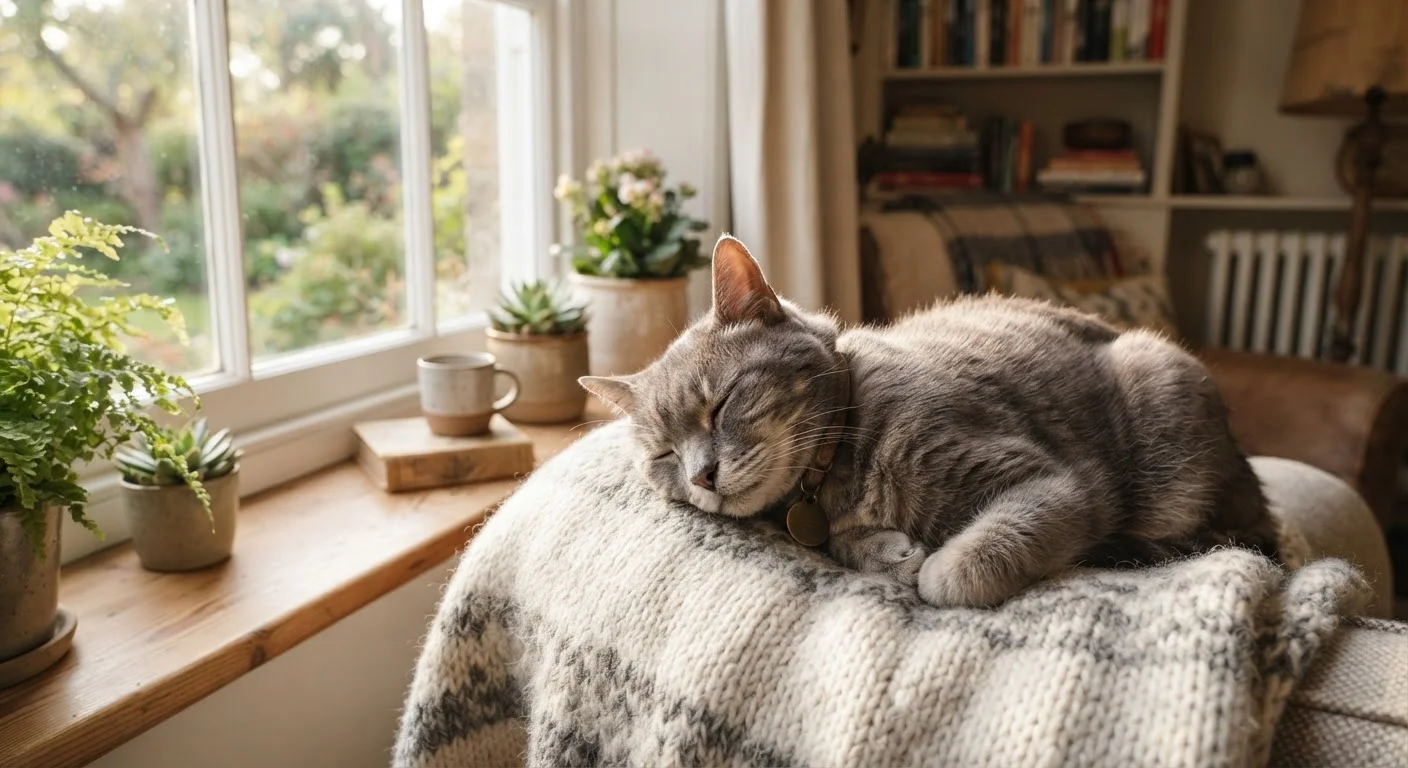
What Actually Changes in an Aging Cat's Body
Aging in cats isn't just a slower version of adulthood. Starting around age 11, many cats experience measurable changes in kidney filtration, thyroid regulation, digestive efficiency, and immune response. Muscle mass tends to decline even when food intake stays the same - a process called sarcopenia - making adequate dietary protein more important, not less.
The senses dull gradually. Cats may develop partial hearing loss, reduced vision in low light, or a diminished sense of smell that affects their interest in food. Arthritis, which is considerably underdiagnosed in cats because they hide discomfort well, affects a large proportion of cats over age 10 according to veterinary research. A cat that has stopped jumping onto a favorite chair may not be lazy - she may be in pain.
Internally, kidney disease is one of the most prevalent conditions in older cats. Because the kidneys have significant reserve capacity, signs of impairment often don't appear until a substantial portion of kidney function is already lost. This is one reason routine bloodwork matters - it can detect early changes before clinical symptoms emerge. See our annual vet visit prep guide for what to track and ask at each checkup.
Behavioral Shifts That Deserve Attention
Changes in behavior are often the first thing owners notice - and they're easy to misread as personality quirks or age-related slowdown. In senior cats, behavioral shifts frequently have a medical root.
Track Changes Over Time, Not Just Today
A single observation - sleeping more, eating a little less - may not mean much in isolation. But the same pattern repeated over two to three weeks often signals something worth investigating. Keep a simple weekly note on your senior cat's appetite, water intake, and energy level so your vet has concrete data to work with at each visit.
Increased vocalization, especially at night, is common in cats with hyperthyroidism, high blood pressure, or cognitive dysfunction syndrome (CDS) - a condition loosely analogous to dementia in humans. Cats with CDS may appear disoriented, stare into space, or seem less responsive to their surroundings. These aren't signs of a grumpy old cat; they're clinical signals.
Litter box changes deserve particular attention. A senior cat that starts missing the box, going more frequently, or straining may have urinary tract disease, kidney issues, or arthritis that makes climbing into a high-sided box painful. Understanding what your cat's behavior communicates is essential - our guide to reading your cat's body language can help you interpret subtle cues more accurately.
Adjusting the Environment and Routine
Small physical modifications make a meaningful difference in a senior cat's daily comfort. Low-entry litter boxes reduce the effort required for arthritic cats. Ramps or pet stairs near furniture they used to leap onto help preserve access without the joint strain. Warm, padded sleeping areas - ideally in draft-free spots - support cats whose thermoregulation is less efficient than it once was.
Food and water placement matters too. Raised food dishes can ease neck and joint strain during eating. Many senior cats benefit from wet food or water added to dry food to support kidney health and hydration, though any dietary shift should be discussed with a veterinarian first. For a broader look at how nutritional needs evolve, see what cats actually need to eat at every life stage.
Mental engagement shouldn't be abandoned just because a cat has slowed down. Puzzle feeders, window perches with outdoor views, and short interactive play sessions all support cognitive health. The keeping a cat mentally engaged guide offers practical ideas that work for low-energy seniors too.
Senior Cats and Indoor Living
Most senior cats do best as indoor-only pets, where environmental risks are controlled and subtle health changes are easier to notice. If your older cat has previously had outdoor access, transitioning to primarily indoor living - with enrichment to compensate - is generally considered the safer choice by most feline health practitioners. Our indoor cat care roadmap covers the full picture of keeping an indoor cat healthy at any age.
Grooming and Monitoring at Home
Senior cats often groom themselves less effectively - partly from reduced flexibility, partly from dental pain, and sometimes from general malaise. Matted fur, an unkempt coat, or grease buildup near the tail can indicate your cat needs help. Regular, gentle brushing removes loose fur and gives you a chance to feel for lumps, skin changes, or areas of sensitivity your cat may not visibly react to.
Dental disease, extremely common in older cats, contributes to pain during eating and can have systemic effects on organ health. Weight loss in a senior cat that appears to be eating normally often points to dental pain, hyperthyroidism, or poor nutrient absorption. Our home grooming guide covers what you can reasonably handle yourself and when to involve a professional.
Keep a simple log of your cat's weight (most vets can weigh your cat between appointments), water intake, litter box output, and appetite. Trends over weeks and months are more informative than any single observation - and they give your veterinarian useful data to work with.
This article is for general informational purposes only and is not veterinary medical advice. Always consult a licensed veterinarian for guidance specific to your cat's health and condition.
Frequently Asked Questions
Most veterinarians and feline health organizations classify cats as senior starting at age 11. Cats 15 and older are typically called geriatric or super-senior. These life stages carry distinct health and care implications.
Twice a year is the general recommendation for cats aged 11 and older. More frequent visits allow vets to catch early signs of kidney disease, hyperthyroidism, dental disease, and arthritis - conditions that progress quickly in older cats.
Watch for increased thirst or urination, weight loss despite a normal appetite, changes in litter box habits, excessive vocalization, reluctance to jump, or changes in coat quality. Any of these warrants a vet visit rather than a wait-and-see approach.
Often, yes. Older cats may need higher-quality protein to maintain muscle mass, and many benefit from increased moisture intake to support kidney health. A veterinarian can recommend adjustments based on bloodwork and your cat's specific conditions.
Absolutely. Mental and physical engagement remains important into old age, though the type and intensity should match the cat's ability. Shorter, gentler play sessions and puzzle feeders can support cognitive health without straining aging joints.
Senior cats do sleep more than younger adults, and this is generally normal. However, a sudden, dramatic increase in sleep accompanied by other changes - appetite loss, hiding, or disorientation - can signal a health issue worth discussing with a vet.
The content provided on our blog site traverses numerous categories, offering readers valuable and practical information. Readers can use the editorial team’s research and data to gain more insights into their topics of interest. However, they are requested not to treat the articles as conclusive. The website team cannot be held responsible for differences in data or inaccuracies found across other platforms. Please also note that the site might also miss out on various schemes and offers available that the readers may find more beneficial than the ones we cover.