

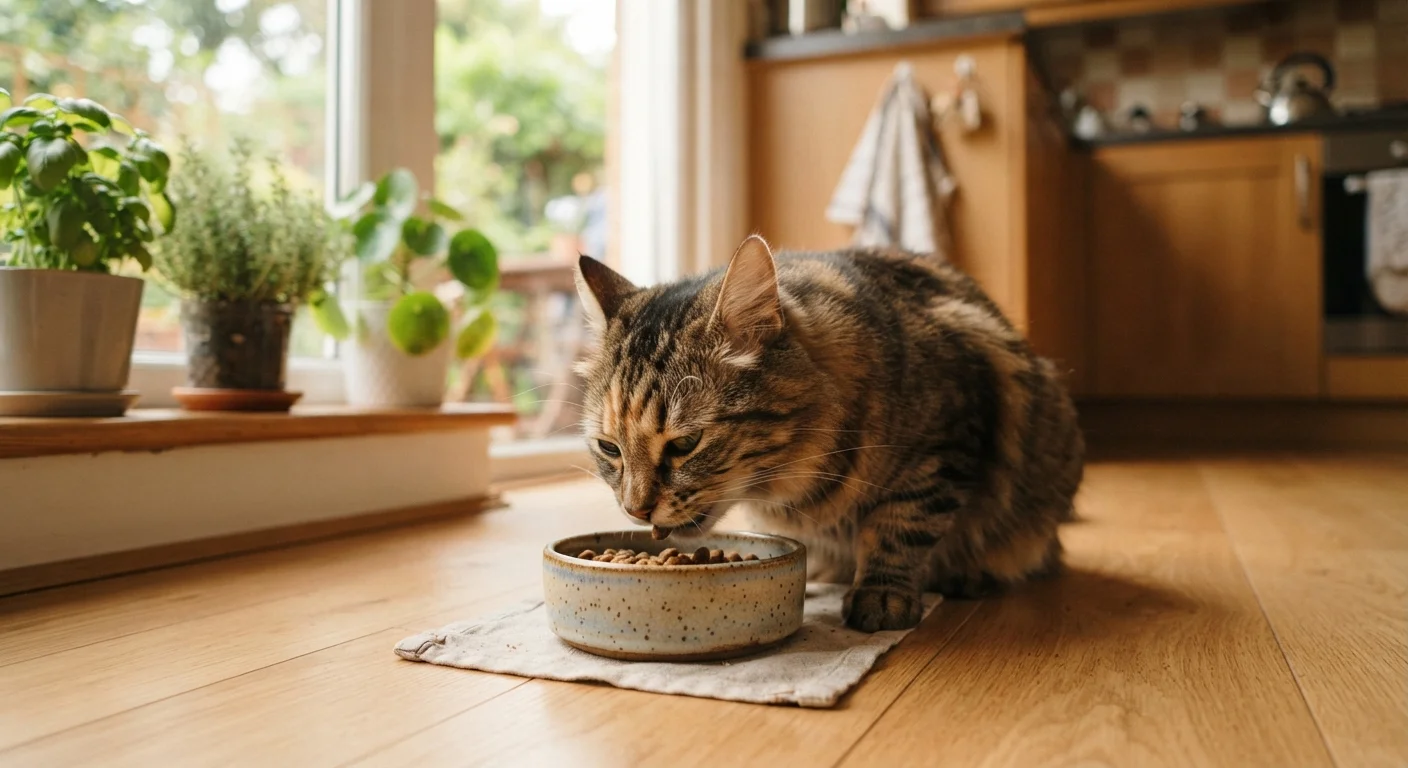
Why Feline Nutrition Isn't One-Size-Fits-All
Cats are obligate carnivores - meaning their bodies are physiologically designed to derive essential nutrients exclusively from animal tissue. Unlike dogs or humans, cats lack certain metabolic pathways that would allow them to synthesize key nutrients from plant sources. This fundamental biology holds true across every life stage, but the amounts and ratios of nutrients a cat needs shift considerably from kittenhood through the senior years.
Understanding these shifts isn't just academic. Feeding a kitten-formula food to a sedentary adult cat, or skimping on protein for a growing kitten, can have real consequences for long-term health. A complete approach to indoor cat care covers more of these foundations, but nutrition is arguably the most immediate lever an owner can pull.
~50-60%
Protein calories kittens need daily
Veterinary nutritionists generally recommend that kittens obtain at least half their daily calories from protein to support rapid growth and development.
59%
US cats estimated overweight or obese
According to the Association for Pet Obesity Prevention's national surveys, more than half of domestic cats in the United States are carrying excess weight.
11+ years
Age cats are classified as senior
The American Association of Feline Practitioners uses 11 years as the threshold for the senior life stage, with cats 15 and older considered geriatric.
Kittens: Building a Body From Scratch
From birth to about 12 months, kittens are in rapid-growth mode. Muscle, bone, organ, and neurological development all happen simultaneously, and the nutritional demands are steep. Kittens need roughly two to three times more calories per pound of body weight than adult cats, along with elevated levels of protein, fat, calcium, and phosphorus.
Taurine - an amino acid found only in animal tissue - is especially critical during this phase for healthy heart and eye development. Fortunately, any food labeled complete and balanced for the growth life stage (per AAFCO guidelines) will include adequate taurine. What to watch: kittens should gain weight steadily without becoming visibly overweight. Free-choice feeding works for many young kittens because they self-regulate well, but portion feeding may be better once a kitten approaches four to six months and growth begins to stabilize.
Check the AAFCO Statement on Every Bag or Can
The AAFCO nutritional adequacy statement on pet food packaging tells you which life stage the food is formulated for. Look for wording like "formulated to meet the nutritional levels established by AAFCO for growth" (kittens) or "adult maintenance." If the label says "all life stages," it meets kitten requirements - which may provide more calories than an adult or senior cat actually needs.
Adult Cats: Maintenance and Preventing Overweight
The adult phase - roughly 1 to 10 years - is about maintaining a healthy body weight and supporting organ systems that are now fully developed. Caloric needs drop compared to kittenhood, and overfeeding becomes the primary risk. Obesity in cats is linked to diabetes, joint stress, and hepatic lipidosis (a serious liver condition), making portion control genuinely important.
Protein remains essential - cats require a higher dietary protein percentage than most mammals to fuel basic metabolic functions. Healthy adult cats don't need grain-free or exotic-ingredient formulas unless a veterinarian has identified a specific health reason. Many popular beliefs about cat food ingredients aren't supported by evidence; see what veterinary science actually supports for more context.
Hydration also matters here. Cats have a naturally low thirst drive, and many adult cats on dry-food-only diets drink less water than is ideal. Understanding the trade-offs between wet and dry food can help owners make an informed choice for this life stage.
Senior Cats: Adjusting for an Aging Body
Cats are generally considered seniors at around 11 years, though some veterinarians use 7-8 years as a starting point for more frequent health monitoring. The physiological changes at this stage are real: kidney function often declines, digestive efficiency can decrease, and some cats lose lean muscle mass even when calorie intake seems adequate.
Contrary to older advice, senior cats typically need high-quality, highly digestible protein - not less protein. Muscle wasting (sarcopenia) is a genuine concern in older cats, and inadequate protein accelerates it. Phosphorus restriction may be appropriate for cats with diagnosed kidney disease, but should be guided by a veterinarian rather than assumed for all seniors.
Calories may need adjustment in either direction: some seniors become less active and gain weight, while others with dental disease, hyperthyroidism, or digestive changes lose weight. Regular weigh-ins and vet visits are the best way to catch these shifts early. For a broader look at age-related changes, why senior cats need a different kind of attention covers the full picture.
Making Transitions Smoothly
Whenever you shift between life stage foods - or change formulas for any reason - a gradual transition over 7 to 10 days helps prevent digestive upset. Start by mixing roughly 25% new food with 75% old food, then shift the ratio progressively. Cats can be particular about texture and flavor, so patience matters.
If a cat refuses the new food entirely, try warming wet food slightly to enhance aroma, or mix a small amount of a preferred food as a transitional bridge. Sudden food refusals lasting more than 24 to 48 hours in an adult cat warrant a call to the vet - cats can develop hepatic lipidosis relatively quickly when they stop eating.
This article is for general educational purposes and does not constitute veterinary advice. Always consult a licensed veterinarian for guidance specific to your cat's health and nutritional needs.
Frequently Asked Questions
Most cats are ready to transition to adult food around 12 months of age. Large or slow-developing cats may benefit from staying on kitten food until 18 months. Your veterinarian can confirm the right timing based on your cat's size and growth.
Many senior cats benefit from food formulated for older cats, which often features highly digestible protein and adjusted phosphorus levels to support kidney health. However, needs vary - some seniors need fewer calories while others need more to maintain weight. A vet checkup helps determine what's right.
Technically, "all life stages" foods meet minimum kitten nutrient requirements, but they may provide excess calories for adult or senior cats. Life-stage-specific formulas are generally a more precise fit for each phase of a cat's life.
Portion sizes depend on the food's calorie density, your cat's weight, and activity level. Always follow the feeding guide on the food packaging as a starting point, and adjust based on body condition. Your veterinarian can provide individualized guidance.
Both can be nutritionally complete, and each has trade-offs around hydration, calorie density, and cost. See our <a href="/pets-animals/cat-care/wet-food-dry-food-or-both-understanding-the-trade-offs-for-your-cat">guide to wet food vs. dry food</a> for a full breakdown.
Cats require taurine, arachidonic acid, preformed vitamin A, and niacin from animal-sourced ingredients because they cannot synthesize adequate amounts on their own. This is why dog food is never appropriate for cats - it does not meet feline-specific requirements.
The content provided on our blog site traverses numerous categories, offering readers valuable and practical information. Readers can use the editorial team’s research and data to gain more insights into their topics of interest. However, they are requested not to treat the articles as conclusive. The website team cannot be held responsible for differences in data or inaccuracies found across other platforms. Please also note that the site might also miss out on various schemes and offers available that the readers may find more beneficial than the ones we cover.