

Why Home Grooming Matters (and Where Its Limits Are)
Cats are famously self-cleaning, but that doesn't mean they're maintenance-free. Regular grooming at home helps reduce shedding, prevents hairballs, and gives you a routine opportunity to notice lumps, skin changes, or parasites early. The Annual Vet Visit Prep for Cat Owners is a good companion to this - many of the things you notice during grooming are worth mentioning at your cat's yearly exam.
Home grooming is genuinely valuable for a range of routine tasks. But some jobs require professional tools, training, or a clinical setting - and attempting them incorrectly can cause real harm. Knowing which category each task falls into is where most owners benefit from a clearer roadmap.
What You Can Reasonably Do at Home
The following tasks are appropriate for most owners to handle themselves with a little practice and the right approach. Success depends heavily on starting gradually, keeping sessions short, and paying close attention to your cat's body language. Our guide to reading your cat's body language can help you recognize when a grooming session should stop.
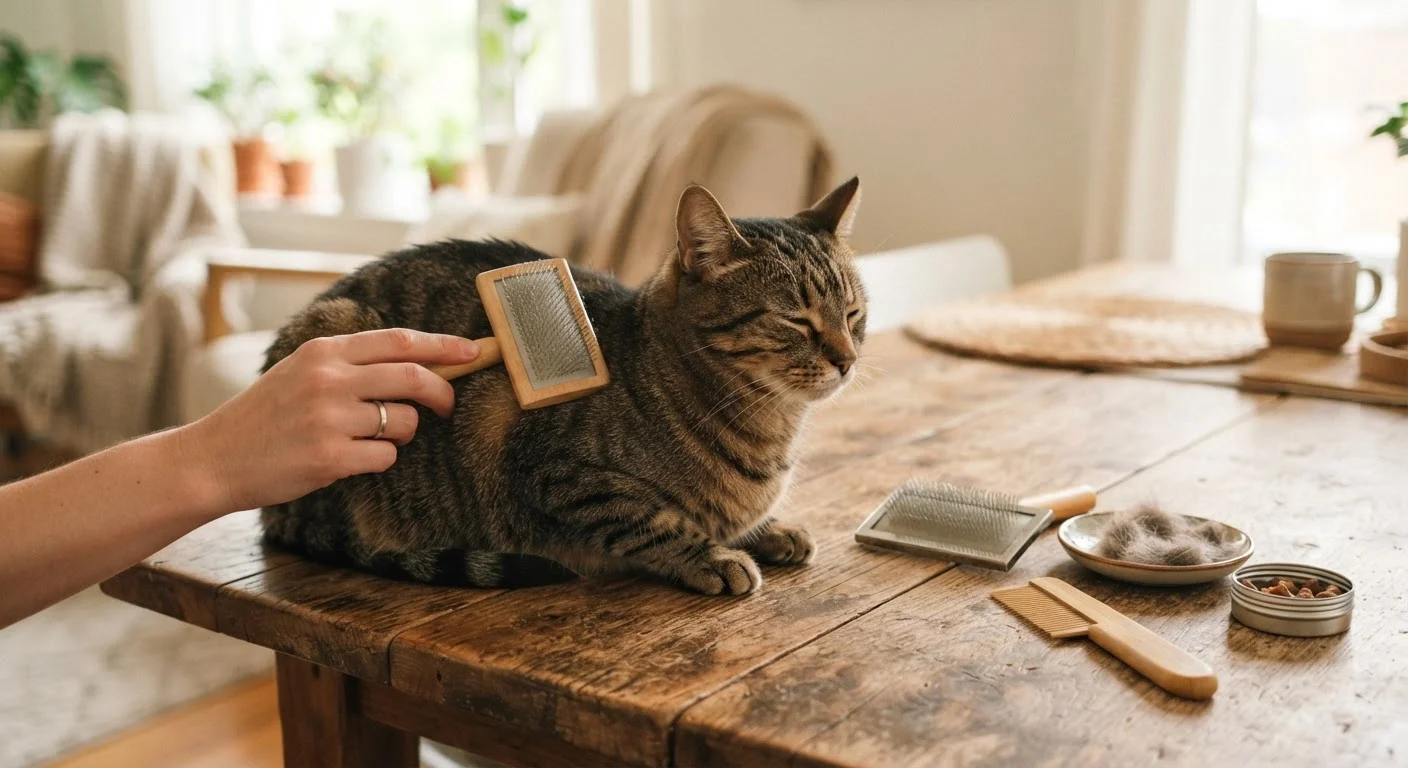
Brushing is the cornerstone of at-home grooming. Short-haired cats typically benefit from brushing once or twice a week; long-haired breeds may need daily attention to prevent tangles. Nail trimming - using proper pet nail clippers and only removing the clear tip, well above the pink "quick" - is manageable once you know what you're doing. Ear inspections (looking for redness, odor, or dark debris) are straightforward, though cleaning should only happen when there's visible buildup, using a veterinarian-recommended solution and a cotton ball - never a cotton swab inserted into the ear canal.
Tasks That Belong With a Professional
Some grooming needs are genuinely beyond what most owners can safely manage, no matter how experienced they are with their cat.
- Matted fur removal: Severe mats sit close to the skin and are easily mistaken for loose fur. Cutting them out with scissors is a leading cause of accidental skin lacerations. A professional groomer or veterinary clinic with proper tools - sometimes including clippers or sedation - handles this far more safely.
- Dental cleaning: Wiping teeth with a finger brush is a reasonable home habit, but true plaque and tartar removal requires anesthesia and veterinary-grade equipment. Skipping professional dental care contributes to periodontal disease, which is common and painful in cats. Your vet can advise on appropriate cleaning frequency.
- Anal gland expression: Most cats never need this, but those who do require a veterinarian or trained groomer - doing it incorrectly risks injury or infection.
- Shaving: Unless medically indicated, shaving a cat is rarely necessary and can disrupt the coat's natural temperature regulation. If shaving is needed (often for matting or surgery prep), a professional should perform it.
When Grooming Resistance Is a Warning Sign
A cat that suddenly resists being touched in areas they previously tolerated may be signaling pain rather than stubbornness. This is especially common in older cats dealing with arthritis, dental pain, or skin conditions. If your cat's tolerance for grooming changes notably, mention it to your veterinarian - it's a useful diagnostic detail. Never force a painful grooming session; this erodes trust and can lead to defensive biting or scratching.
If your cat resists grooming to the point of aggression or significant distress, that itself is worth discussing with your vet. Underlying pain - arthritis is common in older cats - can make handling uncomfortable. See our guide on caring for senior cats for more on age-related changes that affect handling.
Building a Grooming Routine That Actually Works
The most common grooming mistake isn't technique - it's forcing too much too fast. Cats that experience grooming as stressful will resist it more over time, creating a cycle that makes basic care harder. A consistent, low-pressure routine is far more effective than infrequent marathon sessions.
Start by simply handling your cat's paws daily, without any trimming, until they're comfortable. Introduce the brush for a few strokes and stop before resistance builds. Pair each session with something positive - a treat or brief play afterward. Over weeks, most cats become noticeably more tolerant. Regular brushing also directly reduces hairball frequency, since less ingested loose fur means less buildup in the digestive tract - something worth considering alongside your cat's overall diet. Our piece on hairballs and digestive upset covers when those issues warrant a vet visit.
For a broader picture of keeping an indoor cat healthy, the Indoor Cat Care Owner's Roadmap covers grooming in context alongside nutrition, enrichment, and veterinary care.
This article is for general informational purposes only and is not a substitute for professional veterinary advice. Always consult a licensed veterinarian for guidance specific to your cat's health and care needs.
The content provided on our blog site traverses numerous categories, offering readers valuable and practical information. Readers can use the editorial team’s research and data to gain more insights into their topics of interest. However, they are requested not to treat the articles as conclusive. The website team cannot be held responsible for differences in data or inaccuracies found across other platforms. Please also note that the site might also miss out on various schemes and offers available that the readers may find more beneficial than the ones we cover.