

Our Verdict
Hairballs are a normal - if unpleasant - part of life for many cats, but they are frequently confused with vomiting caused by dietary intolerance, infection, or more serious illness. The key distinction lies in what comes up, how often it happens, and what other symptoms accompany the episode. When in doubt, a veterinarian is always the right call.
| Best for | Recommended |
|---|---|
| Occasional, isolated hairball episodes in healthy cats | Monitor at home with grooming and dietary support |
| Vomiting that recurs multiple times per week | Schedule a veterinary evaluation promptly |
| Retching with no output, blood, or signs of distress | Treat as an emergency - contact a vet immediately |
| Long-haired or heavy-shedding cats with frequent hairballs | Increase regular brushing and consult a vet about fiber-based support |
Why This Distinction Actually Matters
Cat owners often treat every retching episode as just another hairball moment - a gross but unremarkable part of feline life. That assumption, while understandable, can lead to delayed care when something more serious is happening. Vomiting in cats has a wide range of causes, from genuinely harmless fur accumulation to inflammatory bowel disease, intestinal obstruction, kidney disease, or pancreatitis. Knowing what you're looking at can meaningfully change how quickly you act.
This guide breaks down the three most commonly confused presentations - hairballs, acute vomiting, and chronic digestive upset - so you can respond appropriately rather than automatically. For a broader look at keeping your cat healthy at home, see our complete indoor cat care roadmap.
| Hairball | Acute Vomiting | Chronic Digestive Upset | |
|---|---|---|---|
| What is produced | Tubular fur mass, possibly with bile | Food, bile, foam - little to no fur | Variable; may include all of the above |
| Typical frequency | 1-2 times per month | Isolated single episodes | More than twice per week, ongoing |
| Cat's behavior after | Returns to normal quickly | Usually normal; monitor closely | Often lethargic, withdrawn, or off food |
| Common causes | Ingested fur during grooming | Dietary change, eating too fast, mild irritation | IBD, kidney disease, hyperthyroidism, parasites |
| Urgency level | Low if infrequent | Medium - monitor for recurrence | High - vet evaluation needed |
| At-home management | Regular brushing, high-fiber diet support | Withhold food briefly; reintroduce slowly | Not appropriate without diagnosis |
What a True Hairball Looks Like
The word "hairball" is casually applied to almost any vomiting episode in cats, but a true hairball is a specific thing. It's a compact, elongated - often cylindrical - mass of swallowed fur that has been lubricated by digestive fluids. It does not look like a ball. It typically looks like a slender tube or log of matted hair, sometimes surrounded by a small amount of bile or mucus.
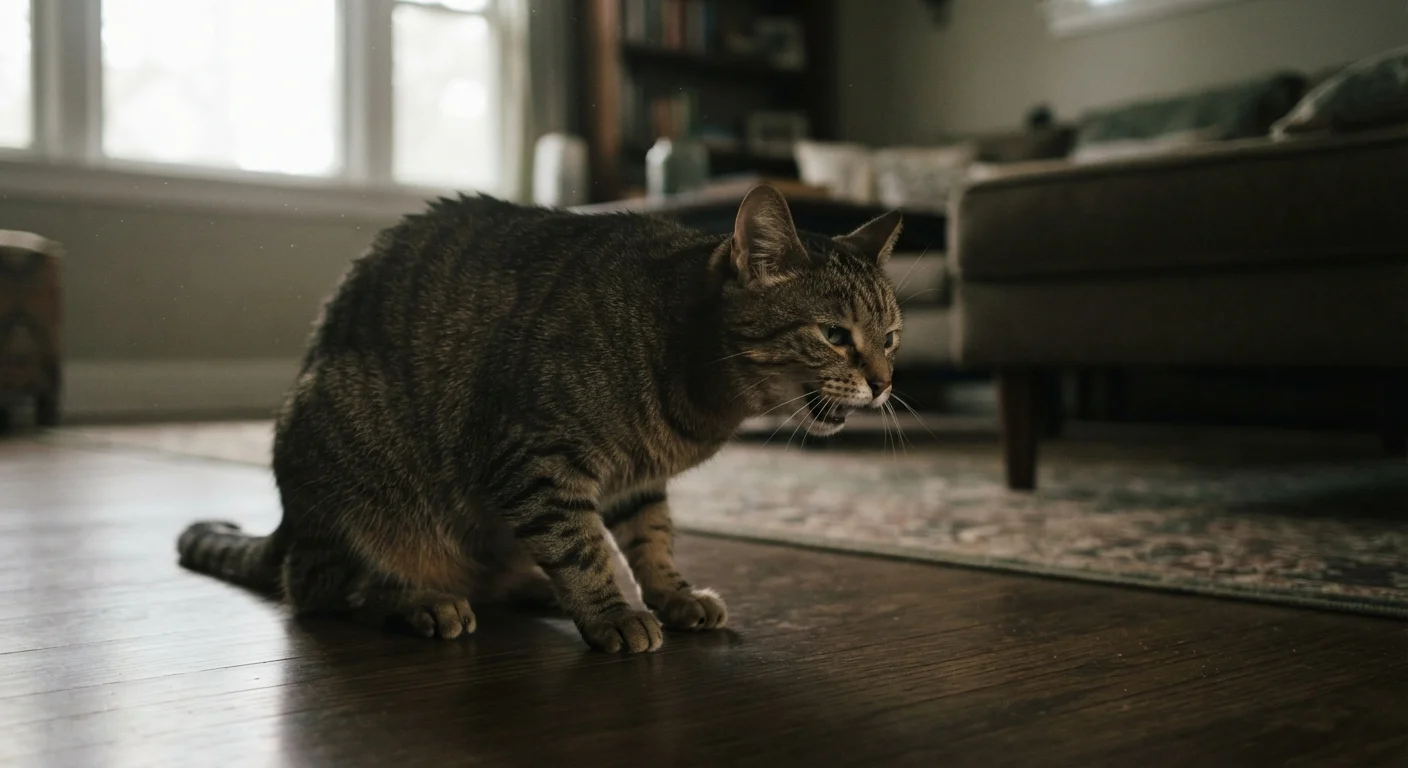
Cats produce hairballs because their barbed tongues collect loose fur during grooming, which is then swallowed. Most fur passes through the digestive tract without issue, but some accumulates in the stomach. The retching and heaving motion you see before a hairball is produced can look distressing, but if the cat brings something up and then returns to normal behavior, eating, and litter box use, the episode is likely routine.
Occasional hairballs - roughly one to two times per month for a healthy adult cat - are generally not a medical concern. Long-haired breeds (Maine Coons, Persians, Ragdolls) and cats that over-groom tend to produce them more frequently. Regular brushing reduces the volume of fur a cat swallows, which is one of the most practical preventive steps an owner can take. Our guide on grooming a cat at home covers what's realistic to do yourself and when professional help is worth it.
Brush More, Hork Less
Regular brushing - daily for long-haired cats, a few times per week for short-haired breeds - removes loose fur before your cat swallows it during self-grooming. This is consistently cited by veterinarians as the most effective preventive measure for hairball reduction. Some cats also benefit from a diet higher in digestive fiber, which helps move fur through the GI tract more efficiently. Talk to your vet before adding any supplements or switching foods specifically for hairball management.
Vomiting vs. Hairballs: Key Differences
Vomiting that does not produce a hairball is often mistaken for a failed hairball attempt, but the two involve different physiological processes. Vomiting is an active, forceful expulsion of stomach contents - typically undigested or partially digested food, yellow-tinged bile, or white foam. Hairball production is more of a passive heaving, and the cat usually produces the fur mass fairly quickly.
Some key distinguishing features to note:
- What comes up: Hairballs contain visible fur. Vomit typically contains food, bile, or foam with little to no fur.
- Frequency: Vomiting more than once or twice per week is not normal and should prompt a vet visit.
- Timing relative to meals: Vomiting shortly after eating may suggest food sensitivity, eating too fast, or a motility issue.
- Cat's condition afterward: A cat that vomits and then acts completely normal is very different from one that remains lethargic, hunched, or refuses food.
Diet plays a more significant role in vomiting than many owners realize. Sudden food changes, low-quality protein sources, or food sensitivities can all trigger recurring vomiting episodes. Our article on wet food vs. dry food trade-offs explores how food format affects feline digestion.
Chronic Digestive Upset: A Different Category Entirely
Chronic digestive upset is a pattern, not a single event. It encompasses recurring vomiting (regardless of what comes up), intermittent diarrhea, changes in appetite, weight loss, and behavioral shifts like hiding or irritability. Unlike isolated hairball or vomiting episodes, chronic digestive issues often signal an underlying condition that requires diagnosis - not just management at home.
Conditions commonly associated with chronic digestive upset in cats include inflammatory bowel disease (IBD), hyperthyroidism, chronic kidney disease, pancreatitis, and intestinal parasites. Some of these are manageable long-term with proper veterinary care; others require urgent intervention.
Don't Dismiss Frequent Vomiting as Normal
It's a common misconception that cats are simply "prone to vomiting" and that frequent episodes don't need attention. Vomiting more than once or twice a week is considered clinically significant by most veterinarians and can indicate conditions like inflammatory bowel disease, hyperthyroidism, or other treatable disorders. Waiting too long to investigate recurring vomiting can allow underlying conditions to progress. If your cat vomits regularly, schedule a veterinary evaluation rather than managing it at home indefinitely.
One area that complicates diagnosis is that some owners assume frequent vomiting is just "what cats do," especially if the cat otherwise seems functional. Veterinary gastroenterologists generally consider any vomiting more than once or twice per week as clinically significant. If you're unsure what's normal for your specific cat, tracking episodes in a simple log - noting date, time, what was produced, and any behavioral changes - gives your vet useful diagnostic information. Our annual vet visit prep guide has a practical checklist for exactly this kind of tracking.
When to Contact a Veterinarian
Some situations require prompt veterinary attention rather than a wait-and-see approach. Contact your vet or an emergency animal clinic if your cat shows any of the following:
- Retching or heaving repeatedly without producing anything (could indicate an obstruction or, in some cases, conditions similar to GI distress)
- Blood in vomit - either bright red or dark and coffee-ground in appearance
- Vomiting combined with lethargy, pale gums, or collapse
- Loss of appetite lasting more than 24 hours
- Noticeable abdominal distension or pain when the belly is touched
- Concurrent diarrhea, especially if bloody
- Any vomiting episode in a kitten or a senior cat with known health conditions
It's also worth noting that some popularly held beliefs about cat vomiting - such as the idea that "cats just vomit sometimes" and it's never worth investigating - are not supported by current veterinary understanding. Our piece on common cat myths veterinary science doesn't support addresses several of these misconceptions directly.
This article is for general informational purposes only and is not a substitute for professional veterinary advice, diagnosis, or treatment. Always consult a licensed veterinarian for concerns about your cat's health.
The content provided on our blog site traverses numerous categories, offering readers valuable and practical information. Readers can use the editorial team’s research and data to gain more insights into their topics of interest. However, they are requested not to treat the articles as conclusive. The website team cannot be held responsible for differences in data or inaccuracies found across other platforms. Please also note that the site might also miss out on various schemes and offers available that the readers may find more beneficial than the ones we cover.