

Summary
22 items · 20-40 minutes
Why Annual Visits Matter More Than You Might Think
Cats are skilled at masking discomfort - a survival instinct that can work against them medically. By the time a health issue becomes obvious to an owner, it may have been developing quietly for months. Annual vet visits break that cycle, giving a veterinarian the chance to catch weight changes, dental disease, early kidney markers, or behavioral shifts before they escalate.
The yearly exam is also your clearest opportunity to get personalized guidance on nutrition, parasite prevention, and enrichment - topics that shift as your cat ages. If your cat is 11 or older, ask your vet whether twice-yearly visits make sense. Senior cats experience real physiological changes that are easy to miss without routine monitoring.
Preparing ahead of time means the appointment can focus on your cat rather than administrative catch-up. Use this checklist to walk in ready.
Before the Appointment
Carrier and Transport
During the Exam
Before You Leave the Clinic
What to Bring and How to Prepare
The practical side of prep starts well before you load the carrier. Gather documentation, note recent observations, and give your cat the best possible chance of arriving calm.
Pet carrier (hard-sided or soft-sided)
Safely transports your cat to and from the clinic; should be large enough for the cat to stand and turn around.
Vaccination and health records
Gives your vet an accurate history of prior vaccines, diagnoses, and treatments without relying on memory.
Written list of current medications and supplements
Ensures the vet knows exactly what your cat is taking so interactions or duplications can be flagged.
Stool sample container
Holds a fresh fecal sample for parasite screening - ask your clinic whether to bring one before the visit.
Written question list
Keeps your concerns organized so nothing is forgotten during a time-limited appointment.
Familiar blanket or worn clothing item
Lines the carrier with a comforting scent to reduce travel-related anxiety.
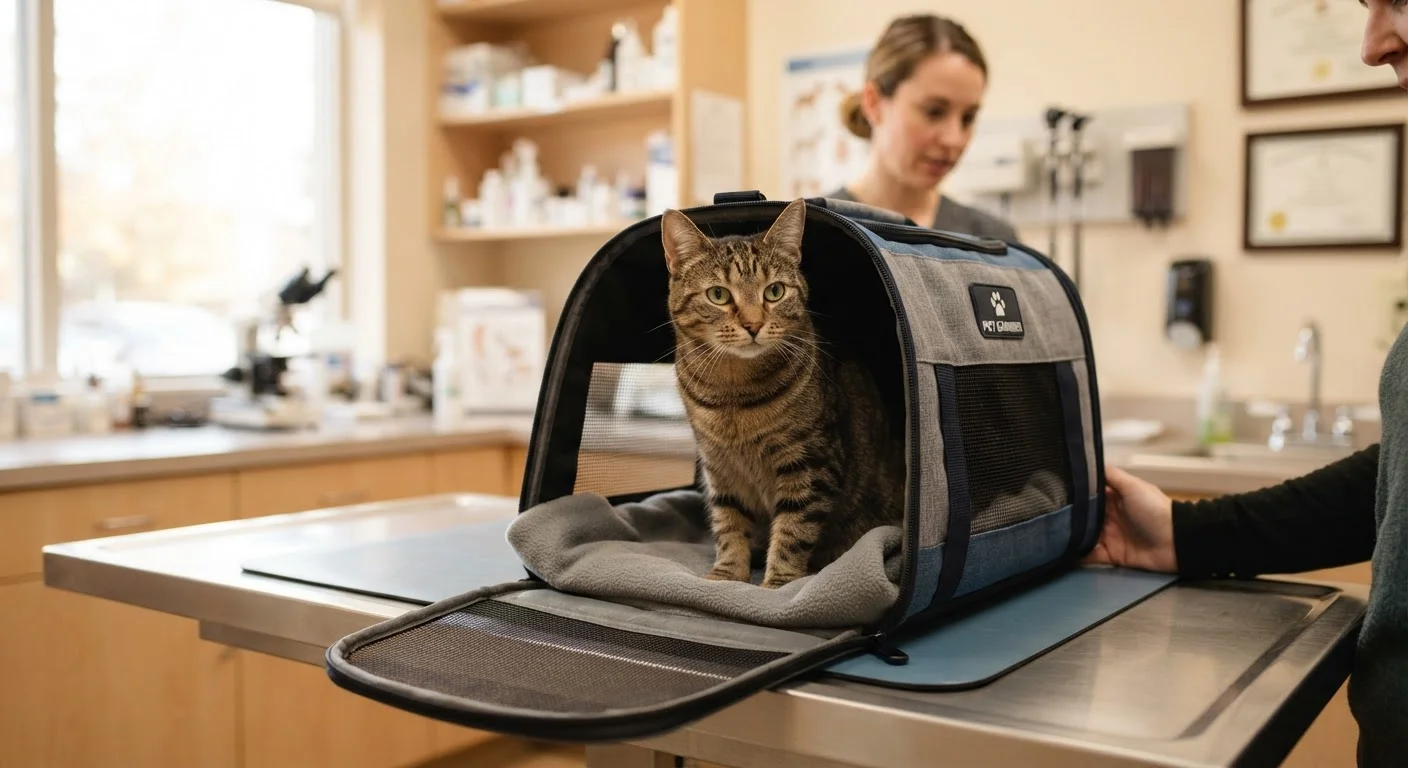
On the carrier itself: leave it out in your home for several days before the appointment with a familiar blanket inside. Cats that associate the carrier only with vet visits become anxious the moment they see it. A carrier that smells like home is meaningfully less stressful. For a broader look at manageable home care tasks - including coat and nail maintenance your vet may ask about - see our guide to grooming a cat at home.
Don't Wait for Obvious Symptoms
Because cats hide illness so effectively, the absence of visible symptoms does not mean everything is fine. Subtle signs - slightly reduced appetite, drinking a bit more water, or grooming less - can indicate early-stage conditions that are far more manageable when caught promptly. If something feels off between annual visits, contact your vet rather than waiting for the next scheduled appointment.
If this is your first cat or you're curious how feline checkups compare to canine ones, our piece on what happens at a dog's annual vet visit offers a useful contrast. The structure is similar, but the focus areas differ in important ways.
This article provides general educational information for cat owners and is not a substitute for professional veterinary advice. Always consult a licensed veterinarian for guidance specific to your cat's health and history.
The content provided on our blog site traverses numerous categories, offering readers valuable and practical information. Readers can use the editorial team’s research and data to gain more insights into their topics of interest. However, they are requested not to treat the articles as conclusive. The website team cannot be held responsible for differences in data or inaccuracies found across other platforms. Please also note that the site might also miss out on various schemes and offers available that the readers may find more beneficial than the ones we cover.