

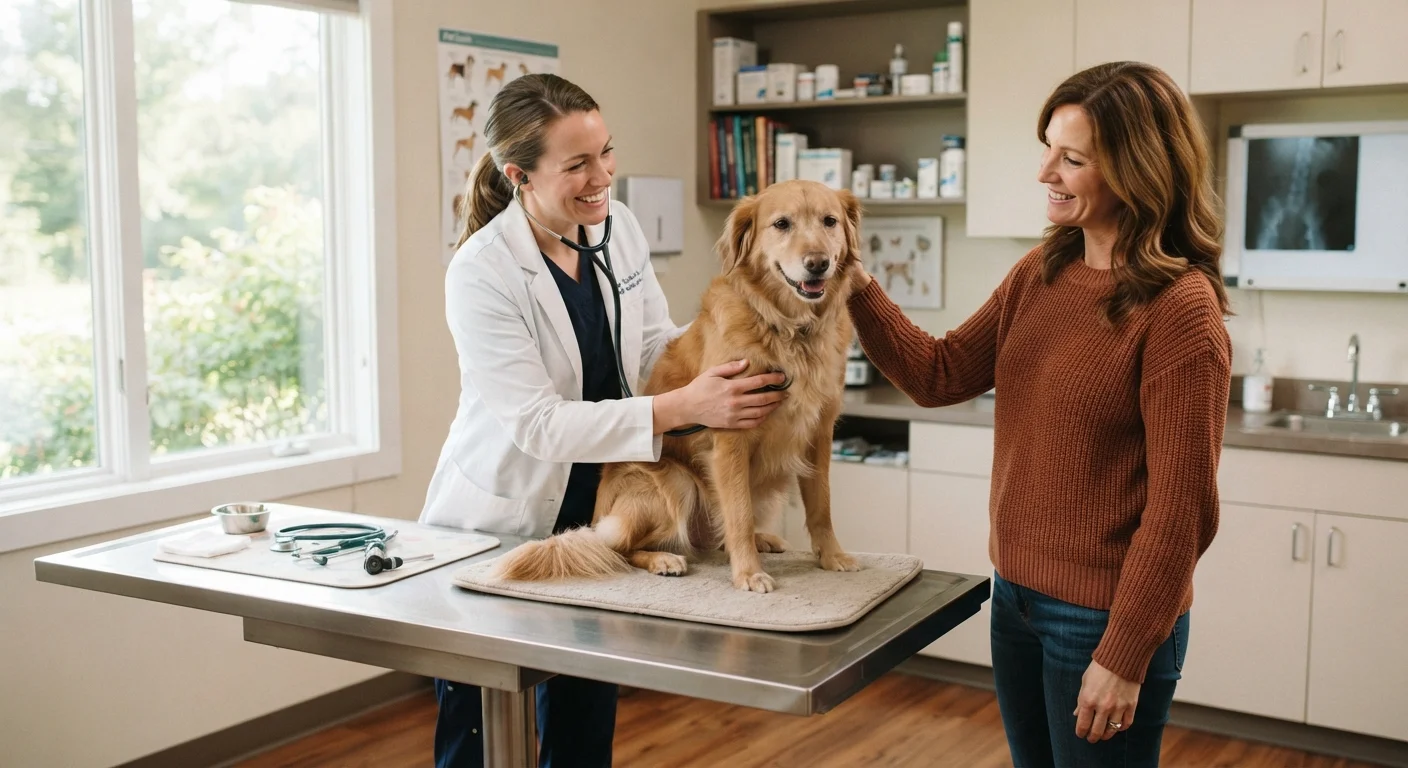
The Physical Exam: What Your Vet Is Looking For
The centerpiece of every annual visit is the hands-on physical examination - a systematic check that takes most vets eight to fifteen minutes but covers a remarkable amount of ground. Starting at the head, your vet will look into your dog's eyes for cloudiness, redness, or discharge; inspect the ear canals for infection or mites; and examine the teeth and gums for tartar buildup, gum inflammation, or loose teeth. Dental disease is one of the most commonly missed health issues in dogs - affecting the majority of dogs over age three - and a quick oral check often reveals it before pain becomes obvious.
Moving down the body, the vet will feel the lymph nodes for swelling, listen to the heart and lungs with a stethoscope, and palpate the abdomen to assess organ size and feel for unusual masses. Skin and coat condition give clues about nutrition, allergies, and hormonal health. Joints are checked for stiffness or swelling, and your dog's gait may be observed as they move around the room. The vet also records body weight and body condition score - a standardized scale used to assess whether your dog is at a healthy weight, underweight, or obese.
Bring Notes, Not Just Your Dog
Write down any changes in your dog's behavior, appetite, water intake, or energy level in the weeks before the appointment. Even details that seem trivial - like occasional limping after a walk or sneezing fits - give your vet valuable diagnostic context that a physical exam alone cannot provide.
Vaccines, Parasite Prevention, and Bloodwork
Vaccination review is a core part of every annual visit, but the specific shots your dog needs depend on age, prior history, local disease prevalence, and lifestyle. Core vaccines - rabies and the combination vaccine protecting against distemper, adenovirus, and parvovirus - are recommended for virtually all dogs. Non-core vaccines, such as Bordetella (kennel cough), leptospirosis, and Lyme disease, are recommended based on risk: a dog who frequents dog parks or boarding facilities has different exposure risks than one who rarely leaves the backyard.
Parasite screening is equally important. A fecal exam checks for intestinal worms like roundworms, hookworms, and giardia - parasites that owners rarely detect on their own. Heartworm testing is typically performed annually, even in dogs on monthly preventatives, because no preventative is 100% effective and early detection improves outcomes. Your vet may also recommend bloodwork - particularly a basic metabolic panel and complete blood count - for dogs entering middle age or older, to screen for kidney disease, liver issues, thyroid dysfunction, and diabetes before clinical signs appear.
~80%
Dogs with dental disease by age three
According to the American Veterinary Medical Association, the majority of dogs show signs of periodontal disease by age three, making oral exams a critical part of annual wellness visits.
1 in 200
US dogs test positive for heartworm annually
The American Heartworm Society reports that heartworm disease is diagnosed in dogs across all 50 US states, underscoring the value of annual testing even for dogs on preventatives.
2×
Recommended vet visit frequency for senior dogs
Many veterinary organizations recommend that dogs over age seven be seen twice per year rather than once, given the accelerated pace at which age-related conditions can develop and progress.
Why Life Stage Changes Everything
What a vet looks for - and how often they want to see your dog - shifts considerably across life stages. Puppies need a series of visits in their first year to complete their primary vaccine schedule and be screened for congenital conditions. Adult dogs in their prime years (roughly ages two through six, though this varies by breed size) are generally examined once annually. But as dogs age, that frequency often increases.
Senior dogs, typically considered those over age seven for most breeds, are more vulnerable to conditions that develop gradually - arthritis, cognitive decline, heart disease, and certain cancers among them. Many vets recommend twice-yearly exams for older dogs precisely because six months can represent a significant portion of a dog's remaining healthy life. Understanding how your dog's age compares to human aging can help frame this urgency - the relationship is more nuanced than the old "one year equals seven" rule suggests. See how dog age actually translates to human years for context.
Making the Most of Your Appointment
An annual vet visit is a two-way conversation, not a passive procedure. You have information your vet cannot get from an exam alone: whether your dog is drinking more water than usual, seems reluctant to climb stairs, has had changes in appetite, or behaves oddly at certain times. These observations, which often seem too minor to mention, are frequently the earliest indicators of conditions worth investigating.
Come prepared with a fresh stool sample, a list of current medications and supplements, and any questions you've been saving. If you've recently switched vets, bring prior medical records so baseline comparisons are possible. Ask your vet to walk you through what they found, what they're watching, and what you should monitor at home before the next visit. If you have a cat in the household, similar preparation applies - see our annual vet visit prep for cat owners for a parallel checklist.
Ultimately, the annual exam is less about a single visit and more about building a longitudinal picture of your dog's health - one that makes year-over-year comparisons possible and gives your vet the data they need to catch changes early, when intervention is most effective.
This article is for general informational purposes only and is not a substitute for professional veterinary advice. Always consult a licensed veterinarian for guidance specific to your dog's health needs.
Frequently Asked Questions
Vets perform a systematic head-to-tail physical: checking eyes, ears, teeth, skin, coat, lymph nodes, heart, lungs, abdomen, joints, and weight. They also review vaccination records, run parasite screening if indicated, and discuss diet, exercise, and any behavioral concerns you've noticed.
Healthy adult dogs generally need one wellness visit per year. Puppies under one year typically visit every three to four weeks for their initial vaccine series. Dogs over age seven may benefit from twice-yearly checkups because age-related conditions can progress quickly.
Core vaccines - including rabies and the distemper-parvo combination (often called DA2PP) - are required or strongly recommended for all dogs, though boosters may be every one to three years depending on the product and local regulations. Non-core vaccines like Bordetella or leptospirosis are given based on your dog's lifestyle and risk exposure.
Bring a fresh stool sample (collected within 24 hours), any previous medical records if you've switched vets, a list of current medications or supplements, and a written list of questions or changes you've observed. Notes on appetite, water intake, or behavior shifts are especially useful.
Skipping is generally not recommended. Dogs instinctively mask early illness, so symptoms are often absent until a condition has progressed. Annual exams establish a health baseline and allow vets to spot subtle changes - weight fluctuations, heart murmurs, early dental disease - that owners may not notice at home.
Costs vary widely by region, clinic type, and what services are included, but a basic wellness exam in the US commonly ranges from roughly $50 to $250, with vaccines, bloodwork, and parasite testing adding to the total. Veterinary costs have risen in recent years, so it is worth asking your clinic for an itemized estimate in advance.
The content provided on our blog site traverses numerous categories, offering readers valuable and practical information. Readers can use the editorial team’s research and data to gain more insights into their topics of interest. However, they are requested not to treat the articles as conclusive. The website team cannot be held responsible for differences in data or inaccuracies found across other platforms. Please also note that the site might also miss out on various schemes and offers available that the readers may find more beneficial than the ones we cover.