

Summary
28 items · 30-90 minutes per season
Why a Seasonal Maintenance Routine Pays Off
Most vehicle problems don't appear without warning - they build gradually through neglect, wear, and seasonal stress. A structured quarterly inspection catches small issues before they strand you roadside or trigger an expensive shop bill. Spending 30 to 90 minutes each season reviewing the items below is one of the most cost-effective habits any driver can develop.
This checklist is organized by season, but geography matters. Drivers in Sun Belt states face different stresses (intense UV, heat soak) than those in the upper Midwest (road salt, deep cold). Adjust your priorities accordingly, and always consult your owner's manual - it is the authoritative source for your specific vehicle's service intervals.
For tasks that go beyond a quick visual check - especially anything involving brakes, suspension, or electrical systems - see our guide to DIY car maintenance to know when to hand the job to a qualified mechanic.
Spring (Post-Winter Recovery)
Summer (Heat and Long-Drive Prep)
Fall (Winter Preparation)
Winter (Ongoing Cold-Weather Checks)
Tools and Resources to Have Ready
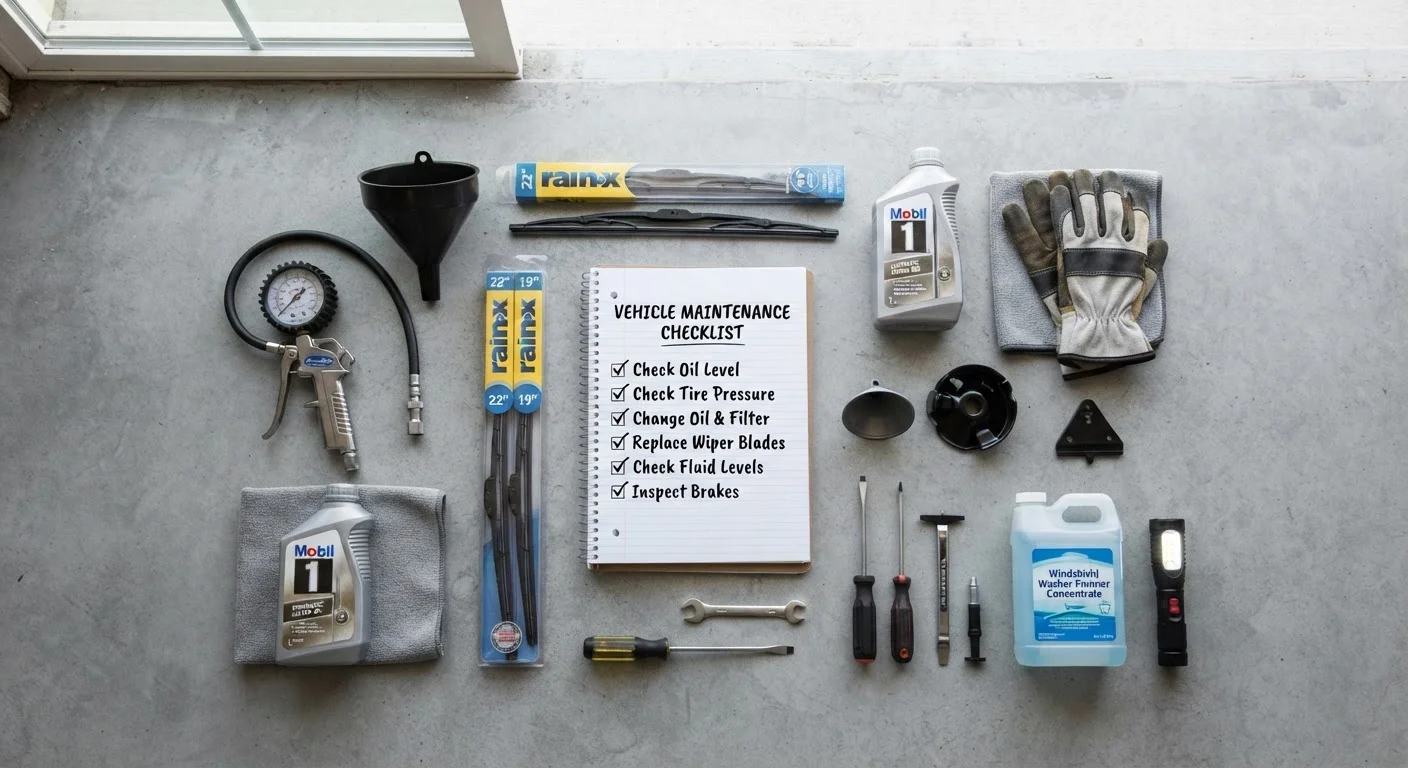
You don't need a professional garage to complete most of these checks. The tools below cover the majority of items on this list and can live in your trunk or garage shelf.
Tire Pressure Gauge
Accurately check tire pressure against the recommended PSI listed in your door jamb sticker.
Battery Load Tester
Assess battery health under real-world load conditions, not just resting voltage.
Tread Depth Gauge
Measure remaining tire tread to determine whether tires are still safe for wet or winter driving.
Flashlight or Inspection Light
Illuminate engine bay, undercarriage, and wheel wells during visual inspections.
Coolant Test Strips
Quickly verify that antifreeze concentration is adequate for expected low temperatures.
Owner's Manual
Confirm manufacturer-recommended service intervals and fluid specifications for your exact vehicle.
Once you've completed each seasonal pass, record what you found and what was serviced. Our vehicle maintenance log guide explains exactly how to set one up - it takes only minutes and pays dividends at trade-in time.
Don't Skip Brake and Suspension Inspections
Brake pads, rotors, and suspension components affect your ability to control the vehicle in an emergency - they are not suitable for guesswork. If you hear grinding, feel vibration through the pedal, or notice pulling to one side, have a qualified mechanic inspect the system promptly. Delaying brake service is one of the most dangerous forms of deferred maintenance.
Making This Checklist Work Year-Round
Print this checklist and fold it into your glove box, or photograph it and save it to your phone. Before any extended drive, cross-reference it with our pre-road-trip checklist to add trip-specific items like emergency kit contents and route planning.
Drivers heading into cold months should treat the Fall section as a priority - battery failure and tire pressure loss are the leading causes of winter breakdowns. For a deeper dive on cold-weather readiness, see cold-weather car care. And if your odometer is approaching six figures, the standard intervals in this checklist may need to be shortened - consult our high-mileage vehicle guide for adjusted recommendations.
Safe driving in any season also depends on adapting your habits to conditions, not just your hardware. Adjusting your driving for rain, snow, and fog is a skill that works alongside - not instead of - good vehicle maintenance.
This article provides general vehicle maintenance information for educational purposes only. Always follow your vehicle manufacturer's recommended service schedule and consult a qualified mechanic for any repair or inspection beyond your comfort level.
The content provided on our blog site traverses numerous categories, offering readers valuable and practical information. Readers can use the editorial team’s research and data to gain more insights into their topics of interest. However, they are requested not to treat the articles as conclusive. The website team cannot be held responsible for differences in data or inaccuracies found across other platforms. Please also note that the site might also miss out on various schemes and offers available that the readers may find more beneficial than the ones we cover.