

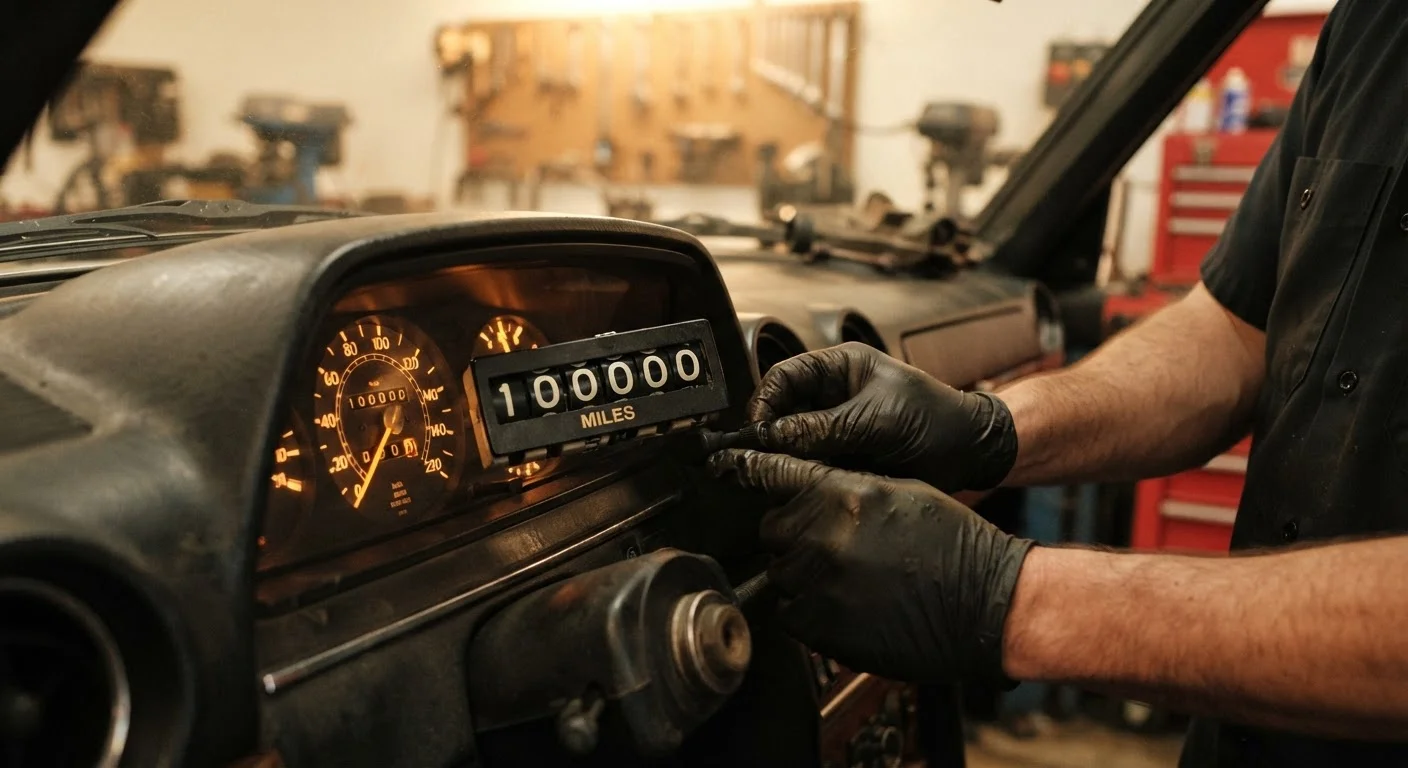
Why 100,000 Miles Is a Turning Point
Crossing 100,000 miles doesn't mean your vehicle is worn out - many modern cars run reliably well past 200,000 miles with proper care. What it does mean is that a new set of maintenance priorities comes into focus. Components that were built to last roughly this long begin entering the zone where failure risk rises meaningfully. Rubber degrades, metal fatigues, and fluids that have been heat-cycled thousands of times lose their protective properties.
The good news: most of what a high-mileage vehicle needs is predictable. Manufacturers publish recommended service intervals, and understanding those intervals empowers you to stay ahead of problems rather than react to them. This guide walks through every major system - what to inspect, what to replace, and when to call in a professional.
For ongoing road readiness, also see the pre-trip checklist that applies to any vehicle, high-mileage or not.
Fluids and Filters: The Foundation
Fluids are the lifeblood of any engine, and by 100,000 miles many of them need more than a simple top-off - they need a full flush and replacement.
200,000+
Miles modern vehicles can achieve with proper care
Industry data and automaker longevity studies consistently show well-maintained vehicles regularly exceeding 200,000 miles.
~$1,200
Average annual maintenance cost for high-mileage vehicles
According to AAA's annual vehicle cost studies, older vehicles tend to incur higher average annual maintenance and repair costs than newer ones.
60K-105K
Typical timing belt replacement interval (miles)
Manufacturer recommendations vary widely; consult your owner's manual, as failure in an interference engine can cause catastrophic damage.
- Engine oil: Switch to a high-mileage-formula oil if your vehicle qualifies. These formulations typically contain seal conditioners that help reduce minor leaks from aging gaskets. Review your manufacturer's current guidance on intervals - the old 3,000-mile rule is largely outdated for modern engines. See our article on oil change intervals for a full breakdown.
- Coolant (antifreeze): Coolant degrades chemically and loses its corrosion inhibitors. Most manufacturers recommend a full flush between 60,000 and 100,000 miles. Neglecting this accelerates rust inside the cooling system and can lead to overheating.
- Transmission fluid: Automatic transmission fluid darkens and breaks down under sustained heat. Many manufacturers recommend a drain-and-fill or flush by 100,000 miles, though interval recommendations vary - always consult your owner's manual.
- Brake fluid: Brake fluid is hygroscopic, meaning it absorbs moisture over time. This lowers its boiling point and can cause spongy pedal feel. A bleed and replacement every two to three years is commonly recommended.
- Power steering fluid and differential fluid (on applicable vehicles) should also be inspected for condition and level.
Air and cabin air filters should be checked annually and replaced when dirty - a clogged air filter measurably reduces engine efficiency.
Belts, Hoses, and Seals
Rubber and elastomer components degrade from heat cycles, ozone exposure, and age - often independently of mileage. At 100,000 miles, several of these become priority inspections.
Timing Belt Failure Can Total Your Engine
If your vehicle has an interference engine and a timing belt, a belt failure at speed can cause pistons and valves to collide - resulting in repairs that often exceed the vehicle's value. This is not a service to defer. Check your owner's manual for the exact replacement interval and treat it as a hard deadline, not a suggestion.
- Timing belt: If your engine uses a timing belt (rather than a timing chain), this is arguably the single most critical high-mileage replacement. A snapped timing belt can cause catastrophic engine damage in interference engines. Most manufacturers recommend replacement between 60,000 and 105,000 miles. Check your owner's manual for the specific interval and do not defer this service.
- Serpentine belt: This single belt drives the alternator, power steering pump, air conditioning compressor, and more. Inspect for cracking, fraying, or glazing. Replacement is typically recommended every 60,000-100,000 miles.
- Radiator and heater hoses: Squeeze hoses when cold - they should feel firm but pliable. Soft, mushy, or cracked hoses are at risk of failing under pressure. Replace hoses showing any deterioration.
- Gaskets and valve cover seals: Oil seepage around the valve cover or at the front crankshaft seal is common at high mileage. Small leaks may be manageable with monitoring; significant leaks warrant professional attention.
Our DIY vs. professional maintenance guide can help you decide which of these jobs to tackle yourself and which to hand to a mechanic.
Brakes, Suspension, and Steering
High-mileage vehicles accumulate stress in their chassis and stopping systems. These components directly affect safety, so they deserve careful, regular inspection.
- Brake pads and rotors: Pads should be replaced when friction material reaches approximately 2-3mm. Rotors that are deeply grooved, warped, or below minimum thickness should be replaced rather than resurfaced at this mileage.
- Calipers: Caliper pistons can seize on high-mileage vehicles, causing uneven braking and premature pad wear. A mechanic should inspect caliper function whenever pads are replaced.
- Shocks and struts: These components control ride quality and, critically, tire contact with the road. Worn shocks increase stopping distances and reduce stability. Common signs of wear include excessive bouncing, nose-dive under braking, and uneven tire wear.
- Ball joints, tie rods, and control arm bushings: Play or looseness in these components affects steering precision and can become a safety hazard. A suspension inspection at 100,000 miles is a sensible baseline.
When replacing brake pads on a high-mileage vehicle, always have the calipers inspected for sticking pistons at the same time - a seized caliper will destroy new pads within weeks.
Caliper pistons corrode and seize on vehicles with accumulated mileage and age, leading to uneven braking force and accelerated pad wear that's easy to misdiagnose as a pad-quality issue.
If your vehicle has a timing belt, replace the water pump at the same service interval - the labor cost is nearly the same, and a failed water pump shortly after a belt replacement is an expensive missed opportunity.
The water pump is driven by the timing belt on many engines and has a similar service life; combining the replacement minimizes total labor cost and eliminates redundant teardown.
Keep a consistent record of brake and suspension work - patterns like recurring uneven wear often point to an alignment or mechanical issue worth investigating early.
Tires and Wheel Health
Tires are the only contact point between your vehicle and the road, and their condition is non-negotiable for safety. At high mileage, tread depth, age, and condition all require attention.
- Tread depth: The legal minimum in most US states is 2/32 of an inch, but safety experts generally recommend replacement at 4/32. Use a tread depth gauge or the quarter test (insert a quarter upside down - if you can see above Washington's head, it's time to replace).
- Tire age: Most manufacturers recommend inspecting tires older than five years and replacing those older than ten, regardless of tread remaining. Check the DOT code on the sidewall - the last four digits indicate the week and year of manufacture.
- Wheel alignment: Misalignment causes rapid, uneven tread wear. Have alignment checked annually or whenever you notice your vehicle pulling to one side.
- Wheel bearings: A humming or growling noise that changes with vehicle speed often indicates a worn wheel bearing. This is a safety item - a failed wheel bearing can cause loss of vehicle control.
The seasonal maintenance checklist includes tire pressure and condition checks that are especially important for high-mileage vehicles facing winter or summer extremes.
Electrical and Ignition Systems
Electrical gremlins are among the most frustrating issues on aging vehicles, but several common failure points are straightforward to address proactively.
- Spark plugs: Standard copper spark plugs typically need replacement every 30,000 miles; iridium or platinum plugs can last 60,000-100,000 miles. Worn plugs reduce fuel efficiency, cause misfires, and can stress ignition coils. Replace per manufacturer interval.
- Ignition coils and wires: On vehicles with individual coil packs, a failing coil triggers a misfire code. Inspect wires (on older systems) for cracking or arcing and replace any coil showing erratic performance.
- Battery: Most automotive batteries last three to five years. At 100,000 miles, the battery may be on its second or third replacement cycle. Have it load-tested annually - a battery can pass a simple voltage check but still fail under starting load.
- Oxygen sensors: O2 sensors degrade over time and affect fuel trim accuracy. A failing sensor can reduce fuel economy and increase emissions. Most manufacturers recommend replacement in the 60,000-100,000 mile range; a persistent check-engine light often points here first.
Don't ignore the check-engine light. On a high-mileage vehicle, fault codes provide early warning of developing issues that are far less expensive to address before they cascade.
Keeping Records and Planning Ahead
Maintenance history is one of the most underrated assets of a high-mileage vehicle. A well-documented service record helps you track what's been done, anticipate upcoming needs, and provide evidence of care when it's time to sell.
Start or continue a vehicle maintenance log that includes dates, mileage, parts used, and the shop or technician involved. Over time, patterns emerge - a wheel bearing replaced at 90,000 miles on one side often signals its counterpart will follow. A log turns reactive repairs into proactive planning.
Financially, understanding the cost landscape of high-mileage ownership is equally important. The car costs and finance hub offers resources for budgeting repair reserves and evaluating the total cost of keeping a vehicle versus replacing it.
High-mileage ownership rewards consistency. Vehicles that receive regular, documented attention routinely outlast those that don't - often by tens of thousands of miles. Work through the systems covered in this guide methodically, use your owner's manual as a baseline, and don't hesitate to consult a qualified mechanic for tasks that carry safety implications or require specialized tools.
This article is for general informational purposes only. Always consult your vehicle's owner's manual and a qualified mechanic for service decisions specific to your vehicle's make, model, and condition.
The content provided on our blog site traverses numerous categories, offering readers valuable and practical information. Readers can use the editorial team’s research and data to gain more insights into their topics of interest. However, they are requested not to treat the articles as conclusive. The website team cannot be held responsible for differences in data or inaccuracies found across other platforms. Please also note that the site might also miss out on various schemes and offers available that the readers may find more beneficial than the ones we cover.