

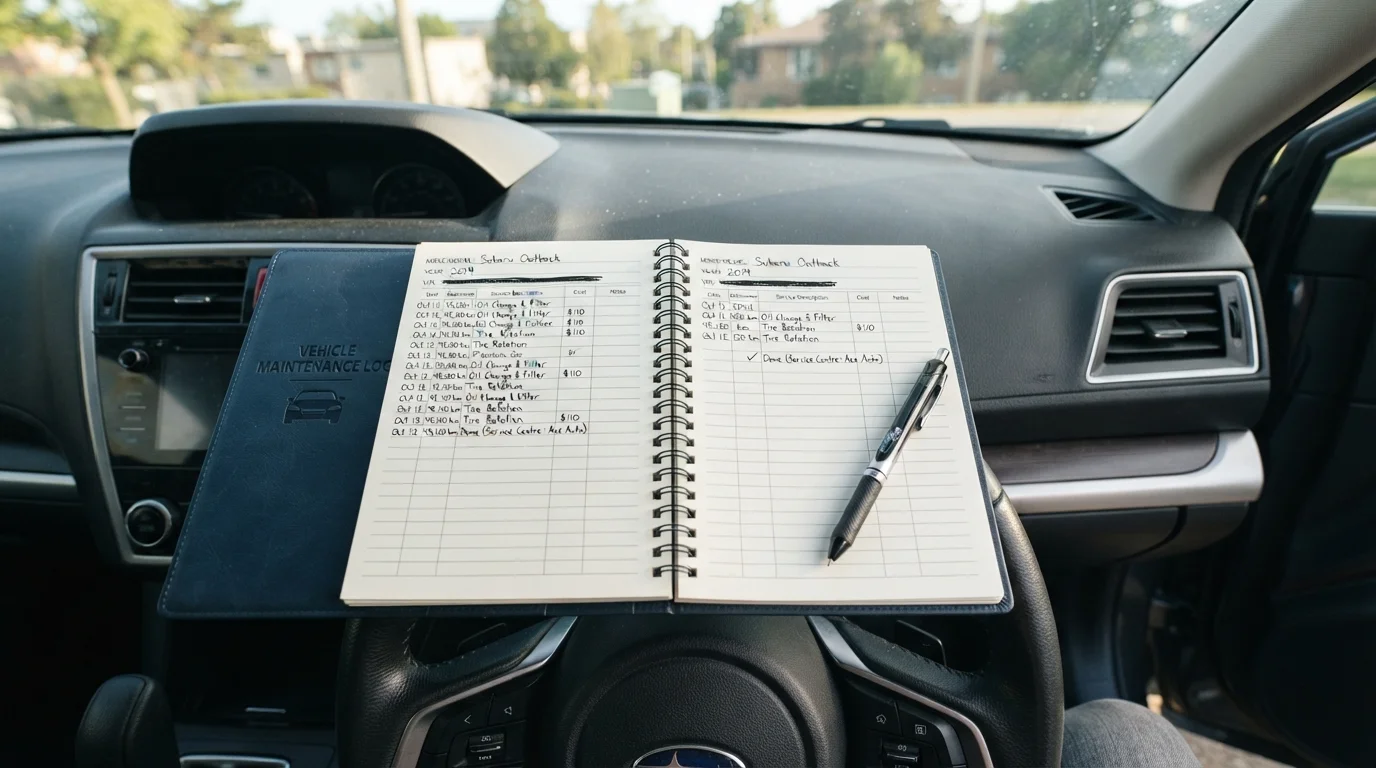
Why a Maintenance Log Is Worth the Effort
Most drivers know roughly when they last changed their oil, but few could tell you the exact mileage, the grade of oil used, or whether the technician flagged anything else during the visit. That gap in memory is precisely where a maintenance log pays off.
A well-kept log serves three concrete purposes. First, it protects you during warranty disputes. If a manufacturer or dealer questions whether a required service was performed on schedule, a dated, mileage-stamped record shifts the burden of proof in your favor. Second, it supports resale value. Buyers and dealerships frequently pay a premium for vehicles with documented service histories because the guesswork is removed. Third - and most overlooked - a log helps you recognize patterns. If your brakes have been flagged at every oil change for two years, that pattern is easy to miss in memory but impossible to ignore on paper.
Understanding the full cost of vehicle ownership goes hand in hand with tracking maintenance. The Car Costs & Finance hub covers the broader financial picture, from depreciation to insurance, which makes a useful complement to what you capture in your log.
What to Record in Every Entry
The value of any log comes from the consistency of its entries. Before you start, gather the basics: your owner's manual (for recommended service intervals), your current odometer reading, and any receipts from recent work.
What you will need
Every entry should capture the following fields:
- Date of the service
- Odometer reading at time of service
- Service performed (e.g., oil change, tire rotation, brake inspection)
- Parts or fluids used, including specifications where relevant (e.g., 5W-30 synthetic oil)
- Who performed the work - shop name or "self" for DIY tasks
- Cost, including parts and labor separately if available
- Notes or flags - anything the technician mentioned that may need attention later
Odometer readings matter more than dates alone because service intervals are defined in miles, not months. A car driven 5,000 miles in two months needs an oil change sooner than one driven the same distance over six months, regardless of what the calendar says.
If you handle any tasks yourself, our guide to DIY car maintenance explains which jobs are appropriate for home mechanics and which genuinely require a professional.
Setting Up and Maintaining Your Log
The format matters less than the habit. Choose whichever method fits your routine.
Choose your format
Decide between a physical logbook and a digital option. A dedicated spiral notebook or a pre-printed auto log book (available at most office supply stores) works well. Digital options include spreadsheet apps, notes apps, or purpose-built tools like AUTOsist or Fuelly. Either works - pick the one you'll actually open after every service visit.
Create your entry template
Set up a repeating template with the fields listed above: date, odometer, service type, parts or fluids, who performed the work, cost, and notes. In a notebook, rule out a simple table. In a spreadsheet, create column headers once and add rows for each service. Consistency in structure makes the log easy to scan later.
Back-fill recent history
Gather any receipts, invoices, or dealer records you have on hand and enter them in chronological order. If you don't have paperwork, write down what you can reasonably recall and mark those entries as estimates. Even imperfect historical entries give you a baseline to build from.
Set your next service reminder
Look up the next recommended service in your owner's manual - typically an oil change, tire rotation, or filter replacement. Calculate the target mileage and add a reminder to your phone or calendar. Recording the due date or mileage directly in your log as a forward-looking entry keeps everything in one place.
Update the log after every service
Make adding a log entry part of your post-service routine - do it before you leave the shop parking lot or within 24 hours at most. Attach or photograph any receipts. Note any items the technician flagged for future attention, even if no action was taken today.
Once your log is running, pair it with a seasonal checklist to make sure you're not missing interval-based services. The Seasonal Car Maintenance Checklist is a practical companion - keep a printed copy in your glove box alongside your log if you go the paper route.
When a mechanic hands you an estimate, your log also gives you context for evaluating it. Knowing when a part was last serviced lets you ask sharper questions. See how to read a mechanic's estimate for guidance on decoding labor hours and parts line items before you approve any work.
Review Your Log Before Winter
Cold weather puts extra strain on batteries, tires, and fluids. Reviewing your log in autumn lets you spot services that are overdue before temperatures drop. Pair this with our cold-weather car care guide for a complete pre-winter check.
Keeping the Habit Going
Starting a log is straightforward; maintaining it consistently is where most drivers slip. A few simple practices help.
Log every service the same day it happens - receipts have a way of disappearing from cup holders. If you use a smartphone app, take a photo of the receipt and attach it to the entry directly. If you use paper, staple or tape receipts into the notebook chronologically.
Set a calendar reminder at the beginning of each season to review your log. This review takes five minutes and often surfaces upcoming services before they become overdue. The high-mileage vehicle maintenance guide is a particularly useful reference during these reviews if your vehicle is approaching six-figure mileage, since the service priorities shift noticeably.
Finally, treat your log as a financial document as much as a mechanical one. Totaling annual maintenance costs helps you budget realistically and compare years. That practice connects directly to broader personal finance habits - the Budgeting Basics hub offers straightforward strategies for incorporating car costs into a monthly spending plan.
The content provided on our blog site traverses numerous categories, offering readers valuable and practical information. Readers can use the editorial team’s research and data to gain more insights into their topics of interest. However, they are requested not to treat the articles as conclusive. The website team cannot be held responsible for differences in data or inaccuracies found across other platforms. Please also note that the site might also miss out on various schemes and offers available that the readers may find more beneficial than the ones we cover.