

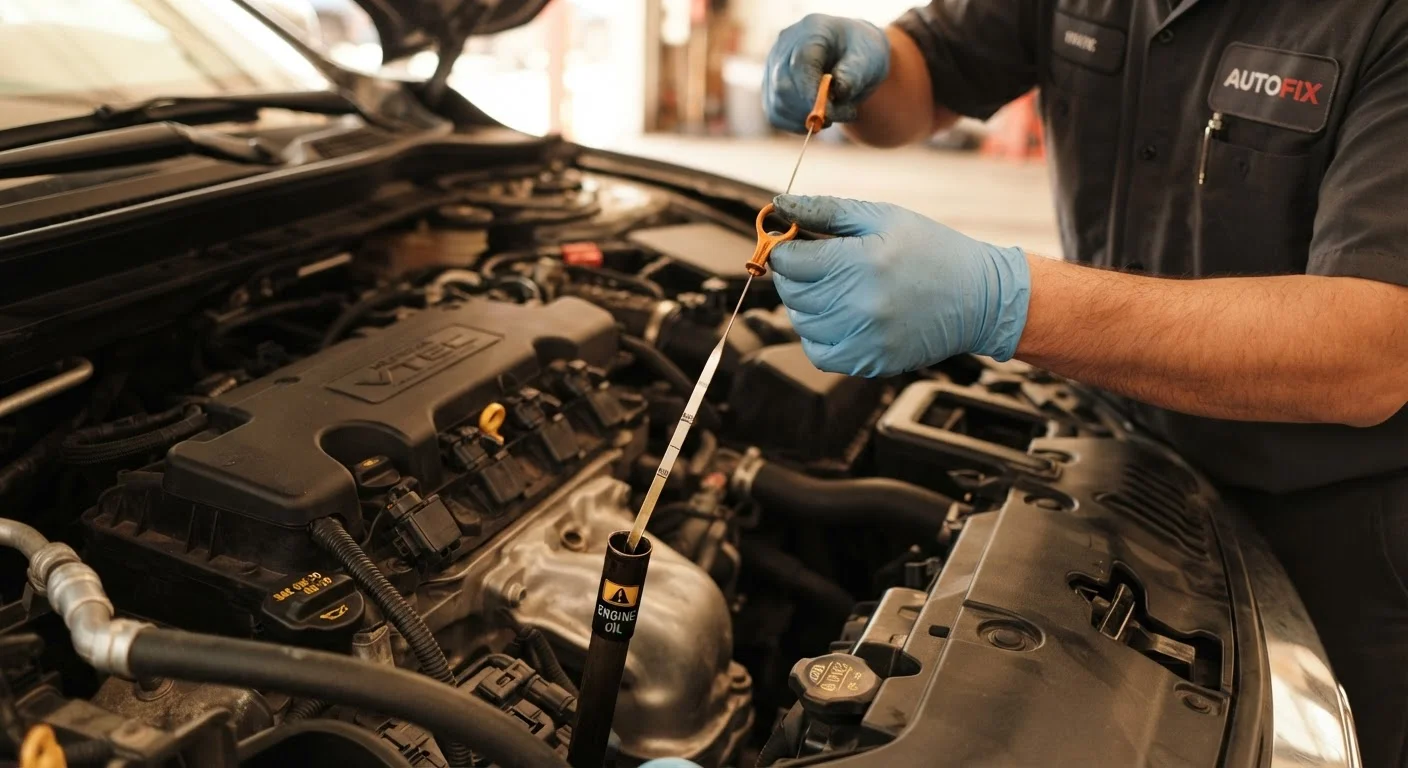
Where the 3,000-Mile Rule Came From
The 3,000-mile oil change interval traces back to an era when engines ran on conventional petroleum-based oil and manufacturing tolerances were far less precise than they are today. Through much of the mid-20th century, 3,000 miles was a reasonable, even conservative, guideline - and quick-lube chains reinforced it heavily because more frequent changes meant more business.
But engine technology, oil chemistry, and quality control have all advanced dramatically since then. Tighter tolerances mean less internal contamination, and modern lubricants are engineered to maintain their protective properties far longer than oils from decades past. The 3,000-mile rule persisted mostly through habit and marketing, not engineering necessity.
Understanding where the myth came from helps drivers feel confident questioning it - and that confidence is worth real money over a vehicle's lifetime.
What Manufacturer Guidelines Actually Say
For most passenger vehicles built in the last 15 years, automakers specify oil change intervals of 5,000 to 10,000 miles under normal driving conditions. Many vehicles equipped with full synthetic oil and an oil life monitoring system are approved for intervals up to 10,000 or even 15,000 miles, depending on conditions and the specific engine.
The single most reliable source for your vehicle's interval is the owner's manual. It accounts for your engine design, the oil viscosity required, and the conditions the vehicle was engineered to handle. No generic rule - including 3,000 miles - can substitute for that specification.
Myth
You should change your oil every 3,000 miles to protect your engine.
Fact
Most modern engines require oil changes every 5,000 to 10,000 miles; changing sooner wastes money without adding protection.
The 3,000-mile standard was appropriate for older engine designs and conventional oils with shorter service lives. Today's engines are built to tighter tolerances and paired with lubricants - especially full synthetics - engineered to maintain viscosity and protection far longer. Following the manufacturer's specified interval, rather than an outdated rule of thumb, is both mechanically sound and cost-effective.
Myth
Dark oil means it's dirty and must be changed immediately.
Fact
Oil darkens naturally as it does its job; color alone is not a reliable indicator of whether an oil change is needed.
Motor oil picks up combustion byproducts and microscopic contaminants during normal operation, which causes it to darken. This darkening is expected and doesn't mean the oil has lost its lubricating properties. Actual oil condition depends on additive depletion and viscosity breakdown - factors that can't be assessed by eye. Trust your OLM or your manufacturer's mileage/time interval instead.
Myth
Synthetic oil causes engine leaks in older vehicles.
Fact
Modern synthetic oils are compatible with the seals used in most vehicles; switching does not cause leaks in a properly functioning engine.
This concern originated decades ago when early synthetic formulations used different ester-based chemistries that could interact with certain older rubber seals. Contemporary synthetic oils are formulated to be compatible with modern seal materials. If an older engine develops a leak after switching, the leak was likely already present - synthetics may simply be better at finding existing weak points due to their lower viscosity at cold temperatures.
Myth
You must change your oil every six months even if you haven't driven much.
Fact
Time-based intervals matter, but most manufacturers set them at 12 months when mileage hasn't been reached first.
Oil does degrade over time due to oxidation and moisture absorption - so a purely time-based change is not entirely without merit. However, many automakers specify an annual interval, not every six months, as the time-based trigger. Check your owner's manual for the combined mileage-or-time guideline that applies to your vehicle specifically.
Myth
Quick-lube shop stickers are the official maintenance schedule for your vehicle.
Fact
Those reminder stickers are set by the shop, often at 3,000 miles, and do not reflect your vehicle manufacturer's actual recommendation.
Quick-lube stickers serve as a convenient reminder but are typically pre-printed with a conservative interval chosen by the service provider, not your automaker. Your owner's manual - or the built-in maintenance reminder system in your vehicle - reflects the engineering reality of your specific engine, oil type, and use case. Always cross-reference the sticker against your manual before scheduling a change early.
For a deeper look at how oil type affects how long you can go between changes, see our guide to synthetic vs. conventional oil.
How Oil Life Monitoring Systems Work
Many modern vehicles include an Oil Life Monitoring (OLM) system - a software-based tool that estimates oil degradation based on real driving inputs such as engine temperature cycles, RPM patterns, idle time, and trip length. It does not physically test the oil; instead, it uses algorithms validated against laboratory oil analysis data.
When the OLM triggers a change reminder, that signal is based on calculated oil condition relative to your actual driving behavior - not a fixed mileage countdown. Short city trips, for example, cause oil to degrade faster than highway miles, and a good OLM reflects that difference.
Don't Ignore the OLM - But Know Its Limits
Oil life monitors are a useful tool, but they rely on algorithms, not a direct chemical test of your oil. If you use an oil type or viscosity not specified in your owner's manual, the OLM's estimates may not be accurate. Always use the oil grade your manufacturer recommends to keep the system's predictions reliable.
Drivers who reset the OLM without changing the oil are defeating its purpose entirely. Use it as intended: change oil when it signals, then reset.
Keeping up with oil and other fluid health is part of a broader maintenance picture. Our Car Fluids Demystified guide covers what else deserves regular attention under the hood.
When to Change More - or Less - Frequently
Manufacturer intervals assume normal driving conditions. Certain situations qualify as severe service and can shorten the practical life of your oil:
- Frequent short trips under five miles, especially in cold weather
- Extended idling (delivery drivers, rideshare, towing)
- Dusty or extreme-temperature environments
- Towing or hauling heavy loads regularly
Drivers logging mostly highway miles in moderate climates may safely reach the higher end of their manufacturer's recommended range. When in doubt, err toward the shorter interval specified for severe conditions - but don't drop below 3,000 miles unless your owner's manual explicitly calls for it, which is rare on modern vehicles.
Severe Service Can Cut Intervals Significantly
If your driving involves frequent short trips, heavy towing, extreme heat or cold, or extended idling, your oil degrades faster than the standard interval assumes. In these cases, follow the severe-service interval listed in your owner's manual - which may be meaningfully shorter than the standard recommendation. Ignoring severe-service conditions is one of the most common ways drivers unknowingly accelerate engine wear.
For a detailed look at what happens inside your engine when intervals are stretched too far, see Why Skipping Oil Changes Costs More Than You Think.
The content provided on our blog site traverses numerous categories, offering readers valuable and practical information. Readers can use the editorial team’s research and data to gain more insights into their topics of interest. However, they are requested not to treat the articles as conclusive. The website team cannot be held responsible for differences in data or inaccuracies found across other platforms. Please also note that the site might also miss out on various schemes and offers available that the readers may find more beneficial than the ones we cover.