

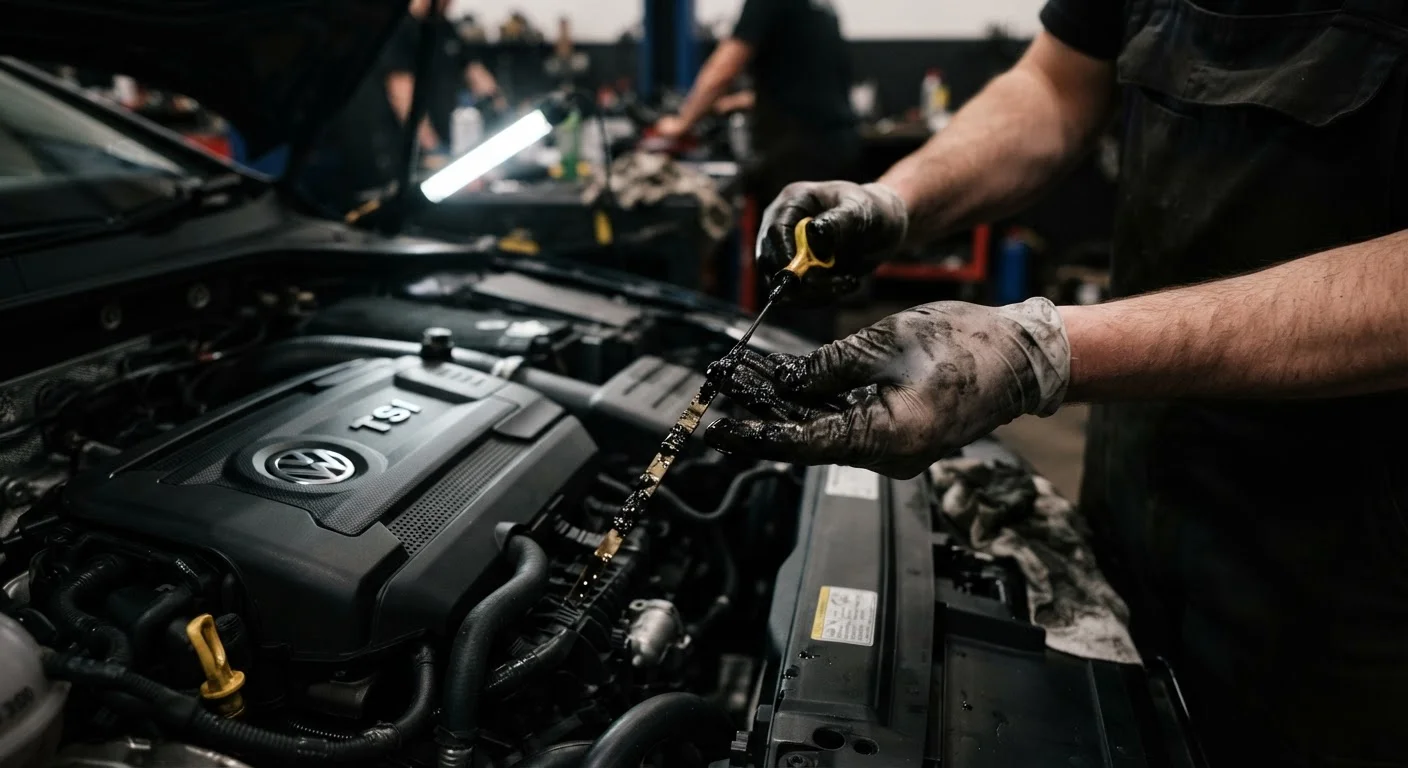
What Actually Happens When Oil Ages Inside Your Engine
Engine oil does two critical jobs: it lubricates moving metal surfaces to prevent friction damage, and it carries heat and contaminants away from those surfaces. Fresh oil handles both tasks efficiently. As miles accumulate, however, the oil's additive package depletes, the base oil oxidizes, and combustion byproducts - acids, soot particles, and moisture - accumulate in the fluid.
The result is oil that thickens, loses its lubricating film strength, and begins to form varnish and sludge deposits on internal surfaces. Those deposits can block narrow oil passages, starve components like camshaft lobes and crankshaft bearings of lubrication, and generate friction-induced heat that compounds the damage further. What starts as degraded fluid becomes a self-reinforcing cycle of wear.
$4,000+
Typical engine repair or replacement cost
Industry repair data consistently shows that engine work resulting from lubrication failure - including bearing replacement and sludge-related damage - frequently exceeds several thousand dollars at an independent shop.
5,000-10,000 mi
Typical modern oil change interval
Many vehicle manufacturers specify intervals well beyond the old 3,000-mile guideline for engines using full synthetic oil, according to published owner's manual recommendations across major automakers.
~30%
Of engine wear occurs at cold start
Engineering research has long noted that a significant share of cumulative engine wear happens in the moments after startup, when oil hasn't yet fully circulated - making oil condition at startup especially critical.
The progression isn't always dramatic or sudden. You may not notice anything wrong for weeks - until a bearing fails, an oil pressure light comes on, or a mechanic discovers sludge during a routine inspection. By that point, the cost of repairs can dwarf every oil change you postponed.
The Five Mistakes That Turn a Minor Delay Into a Major Repair
Most engine damage from oil neglect doesn't come from a single skipped service - it comes from a pattern of small miscalculations that compound over time. Understanding the specific errors behind that pattern helps you avoid them confidently.
Following the outdated 3,000-mile rule instead of your manufacturer's actual interval.
Why it happens: The 3,000-mile guideline was standard advice for older engine designs and conventional oil, and it stuck around in popular culture long after modern engines and synthetic oils changed the equation.
Ignoring the oil-life monitor or warning light and continuing to drive.
Why it happens: Drivers often assume the light is a conservative buffer and that a few extra weeks of driving won't hurt. Life gets busy, and the alert becomes easy to dismiss.
Skipping oil changes to save money in the short term without calculating the long-term risk.
Why it happens: An oil change feels like an optional expense when the car is running fine. The damage caused by degraded oil is invisible until it becomes serious.
Not checking oil level between scheduled changes.
Why it happens: Many drivers assume that if a change isn't due, nothing needs attention. Some engines, particularly older or higher-mileage ones, consume oil between changes.
Using the wrong oil viscosity or type for your engine.
Why it happens: Grabbing whatever oil is on the shelf - or defaulting to what a quick-lube shop stocks - without verifying compatibility is a common shortcut.
Taken together, these mistakes share a common thread: they treat oil maintenance as optional rather than foundational. The budgeting errors drivers commonly make often include underestimating exactly this category of routine upkeep. For drivers planning to keep a vehicle for the long haul, what high-mileage vehicles require puts oil maintenance in context alongside the full picture of long-term ownership.
Sludge Buildup Can Be Irreversible
Once engine sludge accumulates heavily, flushing alone may not fully restore lubrication pathways. In severe cases, internal components like camshaft bearings and oil pump screens suffer permanent damage. If your oil looks black and thick on the dipstick and your engine is making new noises, consult a qualified mechanic promptly - do not continue driving and hope the problem resolves itself.
Consistent oil changes, performed on schedule with the correct fluid, remain one of the most cost-effective actions any driver can take. The full scope of vehicle ownership costs is broad - but this particular expense, skipped repeatedly, carries an outsized risk relative to what it actually costs to stay current.
The content provided on our blog site traverses numerous categories, offering readers valuable and practical information. Readers can use the editorial team’s research and data to gain more insights into their topics of interest. However, they are requested not to treat the articles as conclusive. The website team cannot be held responsible for differences in data or inaccuracies found across other platforms. Please also note that the site might also miss out on various schemes and offers available that the readers may find more beneficial than the ones we cover.