

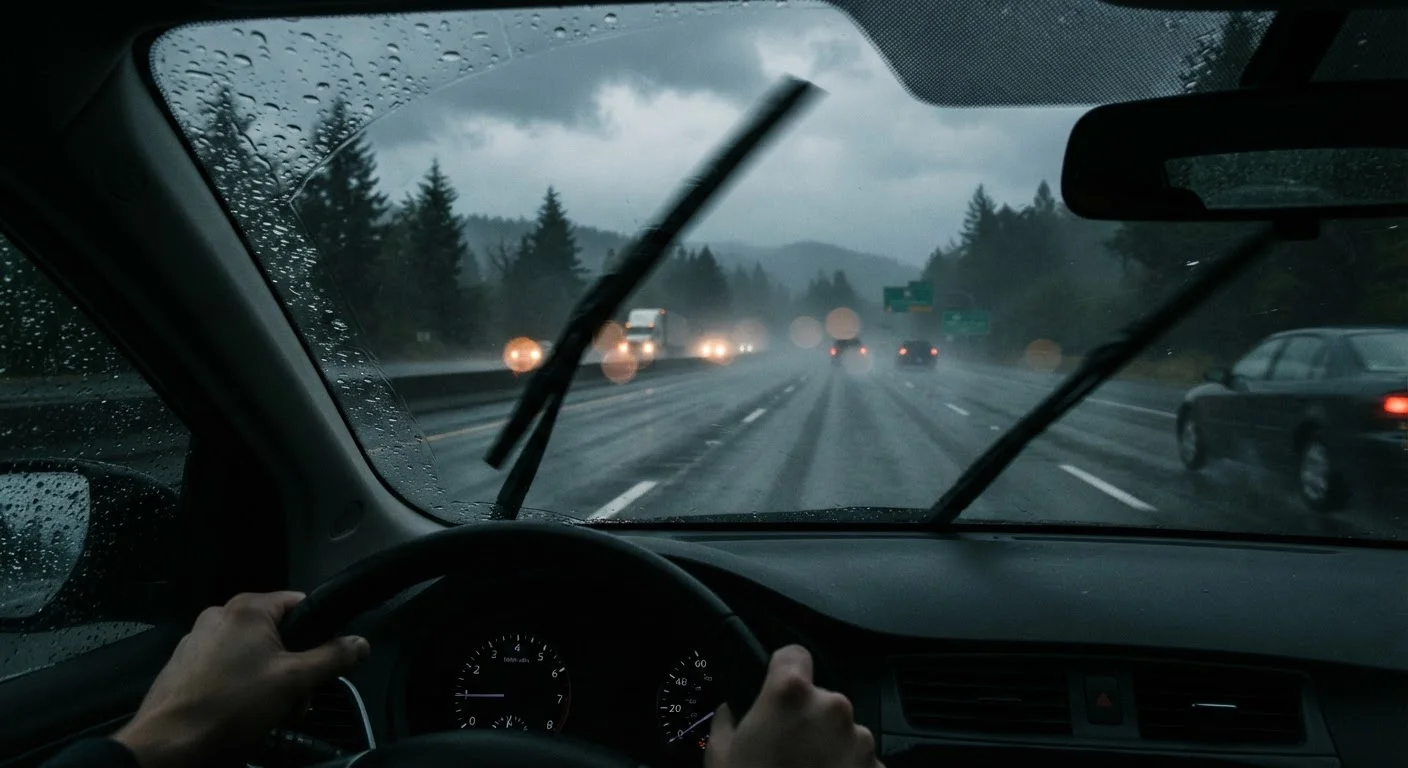
Why Weather Changes the Rules of the Road
Most drivers develop habits calibrated for dry, clear conditions - and those habits can become liabilities the moment the weather turns. Rain reduces tire grip, snow transforms braking distances, and fog compresses your visual horizon to a fraction of its normal range. Each condition creates a distinct set of risks that require deliberate, specific adjustments rather than a general sense of caution.
Understanding why each weather type is dangerous helps you respond appropriately rather than reactively. Wet pavement can reduce tire traction by up to one-third compared to dry surfaces. Snow and ice push that loss far further. Fog doesn't change how your car handles mechanically, but it dramatically narrows the time available to perceive and react to hazards. These aren't reasons to avoid driving - they're reasons to drive differently.
For a broader look at the habits that quietly increase crash risk in any condition, see our article on common behaviors that erode safety.
Best Practices for Every Weather Condition
The following practices address the most common and highest-risk weather scenarios American drivers encounter. Apply them consistently, not just when conditions feel extreme.
Reduce speed well below the posted limit in rain, snow, or fog.
Speed limits reflect safe travel under normal, dry conditions. In adverse weather, your stopping distance increases substantially and reaction time becomes more critical. Driving slower gives you the time and space your braking system needs to work effectively.
Triple your following distance on wet or icy roads.
The standard three-second following distance assumes dry pavement. On wet roads, braking distances increase by roughly 50%; on ice, they can increase by ten times or more. A larger gap gives you room to respond before a collision becomes unavoidable.
Use low-beam headlights in fog, never high beams.
High beams reflect off water droplets in fog and create a bright 'wall' that reduces your own visibility while blinding oncoming drivers. Low beams direct light downward onto the road surface where it's actually useful.
Steer and brake gently to avoid skidding on slippery surfaces.
Abrupt steering or hard braking on low-traction surfaces overwhelms tire grip and can cause a skid or spin. Smooth, gradual inputs keep tires at the edge of their grip threshold rather than beyond it.
If you skid, steer in the direction of the skid without braking hard.
Counter-intuitively, steering toward the skid helps re-align the rear of the vehicle with the front, allowing tires to regain grip. Hard braking during a skid locks wheels and removes your ability to steer entirely.
Treat every shiny road surface in cold weather as potential black ice.
Black ice forms when freezing temperatures create a thin, nearly transparent layer of ice on pavement. It looks like a wet road but offers almost no traction. Bridges, overpasses, and shaded stretches are particularly prone to black ice before other areas freeze.
Quick Wins You Can Apply on Your Next Drive
You don't need to overhaul your driving style overnight. A few targeted adjustments made before and during a weather-affected trip can meaningfully reduce your risk exposure.
Preparing Your Vehicle Before the Weather Hits
Safe wet-weather driving starts before you turn the key. Worn wiper blades, under-inflated tires, or a failing defroster can turn a manageable situation into a dangerous one. Tires with insufficient tread depth lose hydroplaning resistance rapidly on standing water, and wiper blades that skip or streak leave dangerous visibility gaps during heavy rain.
~21%
Of all US vehicle crashes are weather-related
According to the Federal Highway Administration, approximately 21% of annual vehicle crashes in the US involve adverse weather conditions.
10x
Increase in braking distance on ice vs. dry pavement
Transportation safety research consistently shows that stopping distances on ice can be ten times greater than on dry pavement at the same speed.
Fog lights, if your vehicle has them, are designed specifically for low-visibility conditions - use them in addition to low-beam headlights rather than as a replacement. Defrost systems should be tested before winter arrives, not during the first freeze. For a full seasonal vehicle readiness checklist, our seasonal car maintenance guide covers tires, fluids, and visibility systems in detail. If you're getting ready specifically for winter, cold-weather car care guidance is a practical starting point.
New or inexperienced drivers face a steeper adjustment curve in adverse conditions. Our guide on building confidence as a new driver covers the foundational habits that make weather driving less overwhelming over time.
This article is for general informational and educational purposes. Always use your own judgment and follow posted road signs, local advisories, and guidance from transportation authorities when driving in adverse weather conditions.
The content provided on our blog site traverses numerous categories, offering readers valuable and practical information. Readers can use the editorial team’s research and data to gain more insights into their topics of interest. However, they are requested not to treat the articles as conclusive. The website team cannot be held responsible for differences in data or inaccuracies found across other platforms. Please also note that the site might also miss out on various schemes and offers available that the readers may find more beneficial than the ones we cover.