

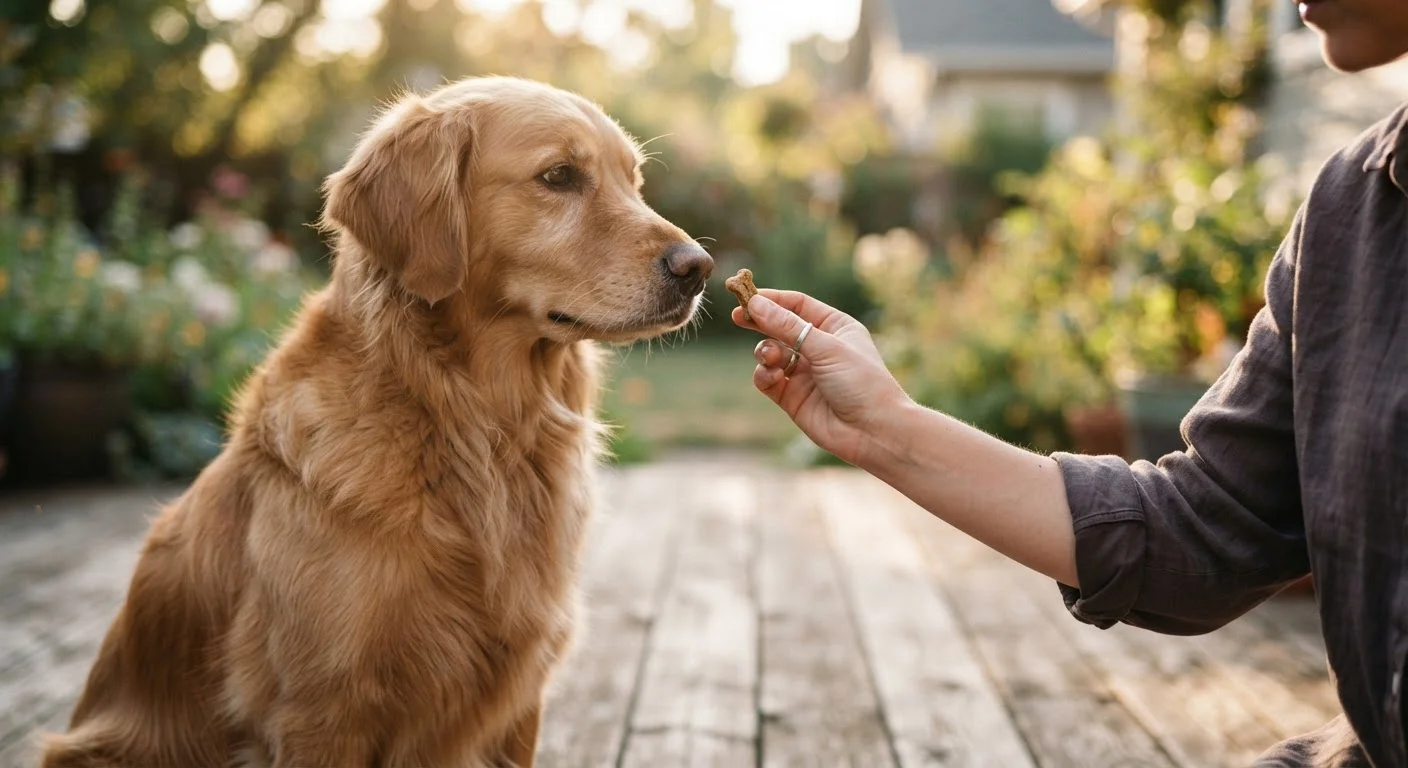
The Science Behind Reward-Based Training
Positive reinforcement is one of four quadrants in operant conditioning - the learning framework developed through decades of behavioral science. In simple terms, it means adding something the learner wants immediately after a behavior, which makes that behavior more likely to occur again. For dogs, this is one of the most effective and well-documented training methods available.
What makes it powerful is its clarity. When a dog performs a behavior and immediately experiences something good - a treat, a toss of a ball, enthusiastic praise - the brain connects the two. Over repetitions, the behavior strengthens. The mechanism is consistent across breeds, ages, and individual temperaments, which is why certified behaviorists and veterinary behaviorists widely recommend it. To understand your dog more completely as you train, it helps to read body language cues alongside behavioral cues - see our guide to reading your dog's body language for a practical breakdown.
Timing Is Everything in Reinforcement
A reward delivered even two to three seconds after the desired behavior can reinforce something entirely different. Dogs connect consequences to what they were doing in that exact moment. If your dog sits, then sniffs the ground, then gets a treat - you may be reinforcing sniffing, not sitting. Mark the behavior the instant it happens, then deliver the reward.
Common Mistakes That Undermine Positive Reinforcement
Understanding the concept is straightforward. Applying it consistently and correctly is where most owners stumble. The mistakes below are among the most frequent seen in real-world training - each one has a behavioral explanation and a clear path forward.
Rewarding after too long a delay, so the dog can't connect the treat to the correct behavior.
Why it happens: Owners often fumble for treats or pause to praise verbally before delivering the reward, stretching the gap past the learning window.
Using low-value rewards for high-difficulty or high-distraction situations.
Why it happens: Owners assume any treat will do, or they use the same kibble the dog eats every meal, which carries little novelty or motivational pull in a busy park.
Inconsistent reinforcement schedules that inadvertently teach the dog to ignore cues.
Why it happens: Family members apply different rules, or the same owner rewards sporadically without a plan - sometimes rewarding, sometimes ignoring, sometimes scolding the same behavior.
Relying exclusively on food, ignoring other reinforcers the dog genuinely values.
Why it happens: The association between positive reinforcement and treats is so strong that owners overlook play, praise, sniffing opportunities, and access to things the dog wants (like the door opening for a walk).
Punishing undesired behavior while forgetting to reinforce the desired alternative.
Why it happens: It feels intuitive to correct what's wrong without teaching what's right. Owners say "no" to jumping but never train "four on the floor" as the rewarded default.
Training in ideal conditions only, then expecting performance in real-world settings.
Why it happens: Owners practice in the living room but then expect their dog to respond perfectly at the dog park - a completely different environment full of competing stimuli.
Building reliable leash behavior is one area where these principles are especially visible in action. Our loose-leash walking guide shows how reinforcement timing and reward placement directly shape how dogs respond on walks.
Don't Mistake Bribery for Reinforcement
Showing a treat before asking for a behavior is a lure - a useful teaching tool, but not the same as reinforcement. Dogs trained exclusively with visible lures often refuse to comply unless the treat is already in sight. Fade the lure early and reward after the behavior to build reliable responses.
Putting It Into Practice
Effective positive reinforcement is less about having the perfect treat and more about precision, consistency, and understanding what motivates your individual dog. Start with short sessions - three to five minutes - in low-distraction environments. Use a marker to nail your timing. Vary your rewards to keep engagement high. And don't skip the proofing phase; a behavior that only works in the kitchen isn't a trained behavior yet.
If you're using crate training alongside obedience work, the same principles apply - many owners make reinforcement errors there too. Our crate training myth guide addresses how reward-based approaches make that process far smoother. When reward-based training is applied with accurate timing and appropriate reinforcers, it builds not just compliance but genuine communication between dog and owner.
This article provides general educational information about dog training methods and is not a substitute for guidance from a certified professional dog trainer or veterinary behaviorist. If your dog displays aggression, extreme fear, or other serious behavioral concerns, consult a qualified professional.
The content provided on our blog site traverses numerous categories, offering readers valuable and practical information. Readers can use the editorial team’s research and data to gain more insights into their topics of interest. However, they are requested not to treat the articles as conclusive. The website team cannot be held responsible for differences in data or inaccuracies found across other platforms. Please also note that the site might also miss out on various schemes and offers available that the readers may find more beneficial than the ones we cover.