

Why Leash Manners Matter Beyond Good Behavior
A dog that lunges, zigzags, or hauls you down the street isn't just frustrating - it's a physical hazard. Repeated tension on a standard flat collar can put strain on a dog's trachea and cervical vertebrae, and owners frequently report shoulder, wrist, and lower-back soreness after walks with strong pullers. Beyond injury risk, a chaotic walk rarely gives a dog the mental engagement it actually needs.
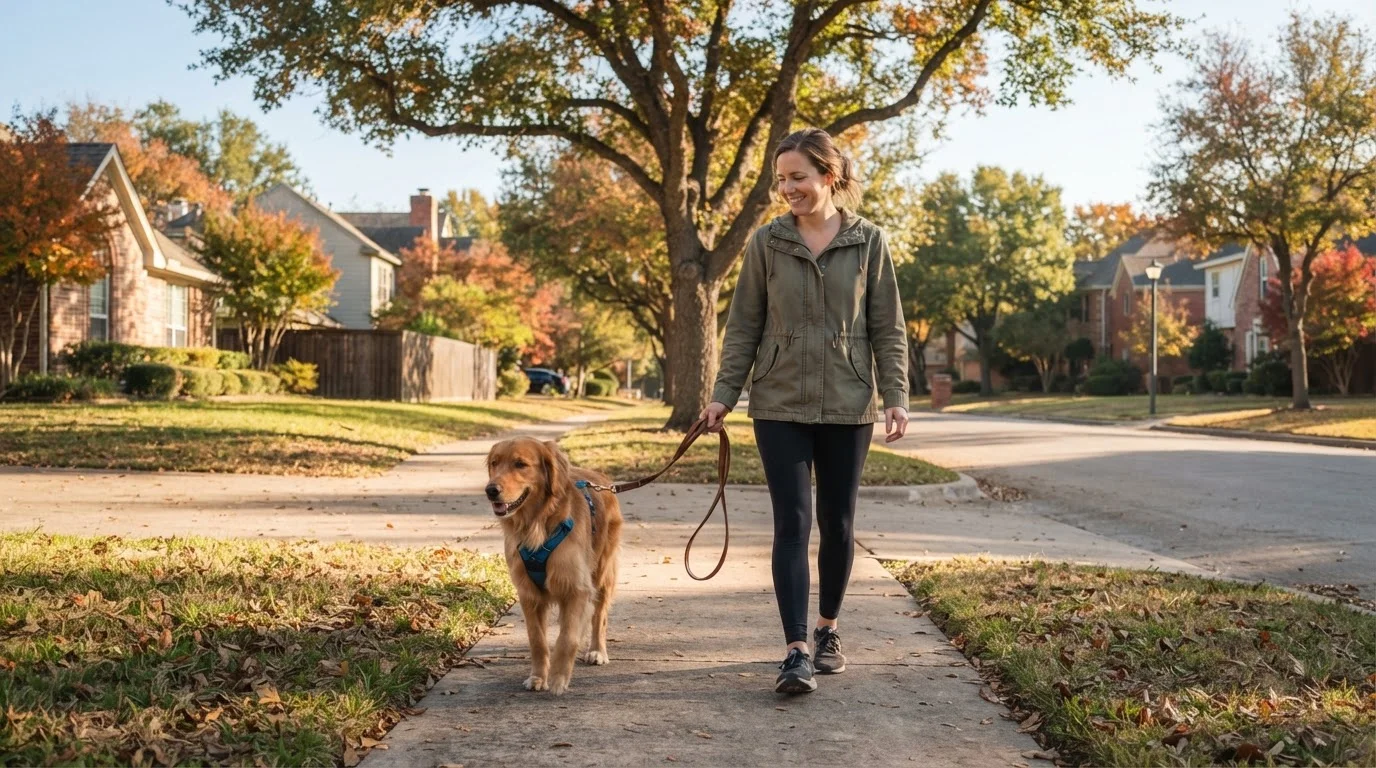
The goal isn't a perfectly heeled military march. It's a loose leash - one with a J-shaped curve of slack - so both you and your dog can move comfortably without constant tension. That's a learnable skill, not a breed destiny. Understanding the basics of reward-based training will help you apply the practices below more effectively.
Best Practices for Loose-Leash Walking
The following practices reflect guidance widely shared by certified professional dog trainers and applied animal behaviorists. Implement them consistently and you'll see results - though timelines vary by age, breed, and the dog's prior reinforcement history.
Stop moving the moment the leash goes taut.
Forward movement is the reward your dog is pulling toward. Removing it the instant tension appears teaches the dog that pulling produces the opposite of what they want. Done consistently, this breaks the pulling feedback loop without any punishment.
Reward the slack, not just the sit.
Many owners only reward their dog for stopping or sitting - but the actual goal is a loose leash while moving. Marking and rewarding the moment the leash goes slack during walking teaches the dog the precise behavior you want.
Use a front-clip harness or head halter for dogs that pull hard.
Standard back-clip harnesses can encourage pulling by distributing force across the chest - the same principle used in sled dog rigs. A front-clip harness redirects a pulling dog toward you, which naturally slows forward momentum and makes training easier.
Train in short sessions before the full walk.
Asking a dog bursting with pent-up energy to practice leash manners on its main exercise walk is like asking a child to practice handwriting right before recess - the conditions aren't in their favor. A few focused minutes of leash-manner work in a low-distraction area before the walk lowers arousal and primes the dog for better choices.
Change direction to keep your dog's attention on you.
When a dog forgets you're on the other end of the leash, pulling follows. Unexpectedly changing direction keeps your dog monitoring your movement rather than fixating on what's ahead. It builds attentiveness without any confrontation.
Set realistic expectations about sniff breaks.
Sniffing is a dog's primary way of gathering information about their environment - it is mentally tiring in the best way. A walk that allows no sniffing is higher in physical stress and lower in enrichment. Building in designated 'sniff zones' means your dog gets a real outlet, making polite walking elsewhere more sustainable.
Quick Wins to Start Today
You don't need a training plan overhaul to start making progress. These immediate actions can shift the dynamic on your very next walk.
Puppy vs. Adult Dog Timelines Differ
Puppies have shorter attention spans and tire quickly, so two- to three-minute sessions repeated several times a day are more effective than one long practice walk. Adult dogs with established pulling habits may need several weeks of consistent work before you see durable improvement - especially if the pulling has been reinforced for years. Either way, patience and consistency matter more than the speed of progress.
Common Mistakes That Slow Progress
Even well-intentioned owners inadvertently reinforce the pulling they're trying to stop. The most frequent error is continuing to walk forward while the leash is taut - the dog learns that pulling is what moves the walk along. A second common pitfall is inconsistency between household members: if one person lets the dog drag ahead while another requires a loose leash, the dog simply hasn't learned a clear rule.
Retractable leashes deserve special mention. Their constant tension teaches dogs that pulling is the normal state of affairs, making loose-leash training significantly harder. A standard 4-6 foot leash gives you more control and clearer communication. If you have a new puppy, pairing early leash habits with a broader setup routine - like the one outlined in our puppy-proofing guide - sets a strong foundation before problems develop.
Finally, watch your dog's body language during walks. Stress signals - lip licking, yawning, tucked tail, hard staring at a trigger - mean your dog is over threshold and unlikely to learn in that moment. Learning to read those signals the way trainers do helps you adjust the walk before frustration escalates for either of you.
“The leash is a communication tool, not a control tool. When owners understand that, the whole dynamic of the walk changes.”
— Patricia McConnell, Certified Applied Animal Behaviorist and author on canine behavior
This article provides general educational information for dog owners and is not a substitute for guidance from a licensed veterinarian or certified professional dog trainer.
The content provided on our blog site traverses numerous categories, offering readers valuable and practical information. Readers can use the editorial team’s research and data to gain more insights into their topics of interest. However, they are requested not to treat the articles as conclusive. The website team cannot be held responsible for differences in data or inaccuracies found across other platforms. Please also note that the site might also miss out on various schemes and offers available that the readers may find more beneficial than the ones we cover.