

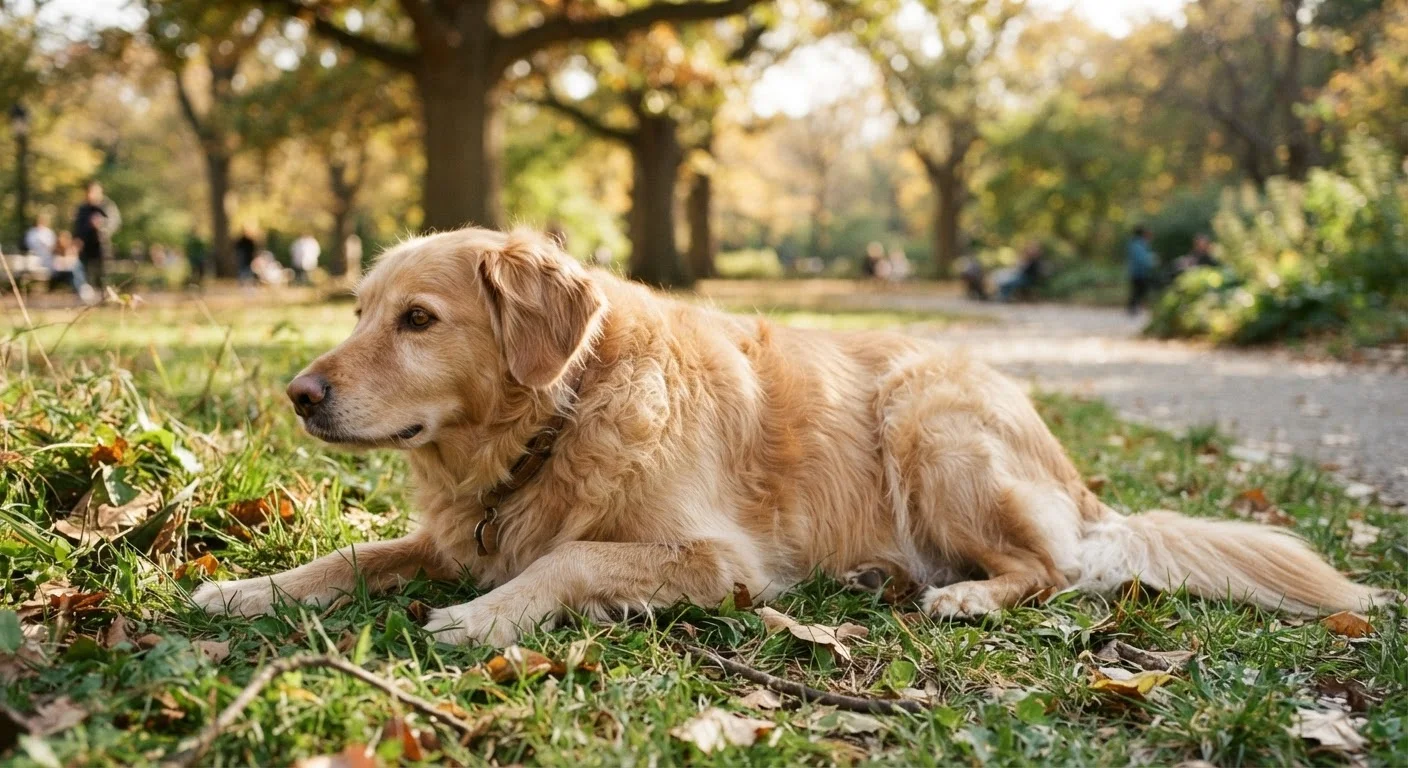
Why Body Language Matters More Than Sound
Dogs communicate primarily through posture and movement, not vocalization. A bark can mean excitement, alarm, or frustration - the same sound carries very different meanings depending on what the rest of the body is doing. Professional trainers learn to treat the whole dog as a single signal: ears, tail, mouth, eyes, weight distribution, and muscle tension all work together to form a message.
Reading those signals accurately helps you respond appropriately - whether that means stepping back to give your dog space, or recognizing that a greeting is genuinely friendly. It also matters for safety. Most bites are preceded by clear warning signals that owners miss because they weren't sure what to look for. See our guide to hidden pain signals for related cues that often get overlooked.
| Primary communication mode | Body posture and movement (Applied animal behavior consensus) |
| Body zones trainers monitor | Tail, ears, eyes, mouth, weight/posture |
| High-arousal tail wag | Rapid, stiff, tight arcs - not always friendly |
| Whale eye indicates | Discomfort, stress, or warning |
| Calming signals researcher | Turid Rugaas, Norwegian dog trainer and author ("On Talking Terms With Dogs: Calming Signals") |
| Breed anatomy caveat | Natural tail/ear set varies; always read in context |
The Five Body Zones Trainers Watch First
Tail
Tail position and movement speed both carry meaning. A tail held at mid-height and wagging loosely in wide arcs signals relaxed friendliness. A tail held very high and wagging in rapid, stiff, tight circles can indicate high arousal or tension - not necessarily friendliness. A tail tucked low or pressed against the belly signals fear or submission. Note that breed anatomy matters: a husky's natural tail curl looks raised even at rest, while a greyhound's tail naturally hangs low.
Ears
Forward-facing, slightly lifted ears show alertness or interest. Ears pinned flat against the skull almost always indicate fear, appeasement, or pain. Ears rotated back but not pinned are common during greeting - a softer, more deferential posture.
Eyes
Soft, almond-shaped eyes with relaxed lids mean a dog is comfortable. Hard, round, fixed eyes - sometimes called whale eye when you see the whites at the edges - are a warning signal. Prolonged direct staring is a challenge in dog communication; a dog that looks away and blinks is actively trying to reduce tension.
Mouth
A relaxed open mouth with loose lips signals contentment. Tight, closed lips or lips pulled back to expose teeth are stress signals. A commissure pull - where the corners of the mouth stretch back and down - typically indicates fear rather than aggression, even when teeth are visible.
Weight and Posture
Weight shifted forward with a stiffened body indicates confidence, challenge, or predatory interest. Weight shifted backward or a crouched, lowered body indicates uncertainty or fear. A dog rolling onto its back can be a relaxed invitation to play (body loose, mouth open) or a stress response (body rigid, mouth closed).
Whale Eye
A canine stress signal in which the whites (sclera) of the eyes become visible at the edges, usually when a dog turns its head while keeping its gaze fixed. It typically indicates discomfort, anxiety, or a warning to back off.
Calming Signal
A behavior dogs use to reduce tension - in themselves or in others - such as yawning, lip-licking, or looking away. These are communicative gestures, not random habits.
Trigger Stacking
The accumulation of multiple stressors over a short period, which can push a dog's arousal or anxiety above the threshold where bites or reactivity become more likely, even from events that wouldn't normally cause a reaction on their own.
Commissure Pull
A facial expression in which the corners of a dog's mouth stretch backward and downward, indicating fear or submission. It can look superficially like a snarl but signals appeasement rather than aggression.
Appeasement Behavior
Actions a dog uses to signal non-threat and reduce social tension, such as lowering the body, rolling over, or avoiding direct eye contact. These behaviors are communicative and should not be punished.
Calming Signals and Stress Indicators
Canine behaviorists including Turid Rugaas have documented a set of behaviors dogs use to de-escalate tension - often called calming signals. These include yawning outside of tiredness, lip-licking without food present, sniffing the ground when another dog approaches, turning the head or body away, and shaking off as if wet after a stressful interaction. When your dog offers these signals, they're communicating that they feel pressure and are trying to reduce it.
Stress signals that accumulate over time - called trigger stacking - are worth knowing. A dog who is mildly worried about the mail carrier, then meets an unfamiliar dog, then gets handled at the vet all in one morning may be at a much higher threshold by afternoon than their baseline behavior would suggest. Recognizing this helps you manage your dog's environment proactively, which supports better training outcomes. See our guide to reward-based training for how emotional state affects a dog's ability to learn.
Putting It Together: Reading the Whole Picture
No single cue tells the full story. A wagging tail with a tucked body and flattened ears describes a frightened dog, not a friendly one. A dog making hard eye contact while leaning forward with a still tail is very different from one making soft eye contact while leaning into you with a loose, wagging tail - even though eye contact is the shared feature.
Trainers develop the habit of scanning the whole dog in sequence: start at the tail, move through the torso and shoulders, finish at the ears and face. With practice, this becomes fast and intuitive. If you've recently brought home a rescue, remember that stress from adjustment can suppress or exaggerate normal signals for weeks. Our guide to the first 30 days with a rescue dog walks through what behavioral changes to expect as your dog settles in.
If your dog's body language includes signals that seem out of character - sudden stiffness, new avoidance, flinching - consider that pain can change how a dog presents. A veterinarian should always be your first contact when behavior shifts unexpectedly, as medical causes need to be ruled out before assuming a behavioral explanation.
The content provided on our blog site traverses numerous categories, offering readers valuable and practical information. Readers can use the editorial team’s research and data to gain more insights into their topics of interest. However, they are requested not to treat the articles as conclusive. The website team cannot be held responsible for differences in data or inaccuracies found across other platforms. Please also note that the site might also miss out on various schemes and offers available that the readers may find more beneficial than the ones we cover.