

Summary
28 items · 1.5-3 hours
Why Puppy-Proofing Matters Before Day One
A new puppy experiences the world almost entirely through scent, touch, and taste. That means power cords look like chew toys, cabinet doors are puzzles worth solving, and anything on the floor is fair game. Most puppy injuries happen in the home, and many occur within the first week - before owners have had time to notice a hazard.
Think of this checklist the way you would a safety inspection: methodical, room by room, low to the ground. Crouch down to puppy eye level in each space. What you see from there - dangling blind cords, a forgotten grape under the sofa, a gap behind the refrigerator - is what your puppy will find first. Once you've finished here, the next phase is helping your pup settle in; our guide on getting a new dog settled in the first 30 days walks through that transition in detail.
Don't Rely on Visual Checks Alone
Many hazards - a dropped pill under a nightstand, a toxic plant root at soil level, antifreeze residue on a garage floor - are only visible when you get down to floor level. Before your puppy arrives, do a complete walk-through on your hands and knees in every room they will access. This one step catches the hazards a standing inspection will miss every time.
Tools and Supplies You'll Need
You don't need a contractor-level toolkit, but having the right supplies on hand before you start makes the process faster and more thorough. Gather these items first, then work through each room systematically.
Cord Organizers or Cable Covers
Conceal and protect electrical cords from chewing throughout the home.
Child-Proof Cabinet Latches
Prevent a puppy from nosing open lower cabinets in the kitchen and bathroom.
Baby Gates
Block stairways and restrict access to rooms that have not yet been audited.
Exercise Pen (X-Pen)
Create a contained safe zone in an open living area when a walled room is not available.
Dog Crate (appropriately sized)
Provide a secure sleeping and resting space that keeps the puppy safe overnight.
Flashlight or Phone Torch
Illuminate dark gaps behind appliances, under furniture, and inside lower cabinets during your inspection.
Heavy-Duty Trash Can with Locking Lid
Prevent a puppy from accessing food waste and household garbage.
ASPCA Animal Poison Control Center Number (888-426-4435)
Keep this number saved in your phone in case of suspected ingestion of a toxic substance.
Room-by-Room Hazard Checklist
Work through each group below before your puppy's first night. Mark items complete as you go. Pay special attention to the kitchen and bathroom - these two rooms contain the highest concentration of hazards in most homes.
Living Room & Common Areas
Kitchen
Bathroom
Bedroom & Hallways
Garage & Outdoor Spaces
Safe Zone Setup
Know Your Nearest Emergency Veterinarian
Before your puppy's first night, locate the closest 24-hour emergency veterinary clinic and save the address and phone number. If you suspect your puppy has ingested something toxic, do not wait for symptoms to worsen - call your vet or the ASPCA Animal Poison Control Center (888-426-4435) immediately. Time is a critical factor in most poisoning cases.
Food hazards deserve their own attention. Grapes, raisins, xylitol (found in sugar-free gum and some peanut butters), onions, garlic, macadamia nuts, and chocolate are all toxic to dogs. Our guide to table scraps and dangerous foods provides a vet-referenced breakdown of what's harmful and what's safe.
Setting Up a Safe Zone
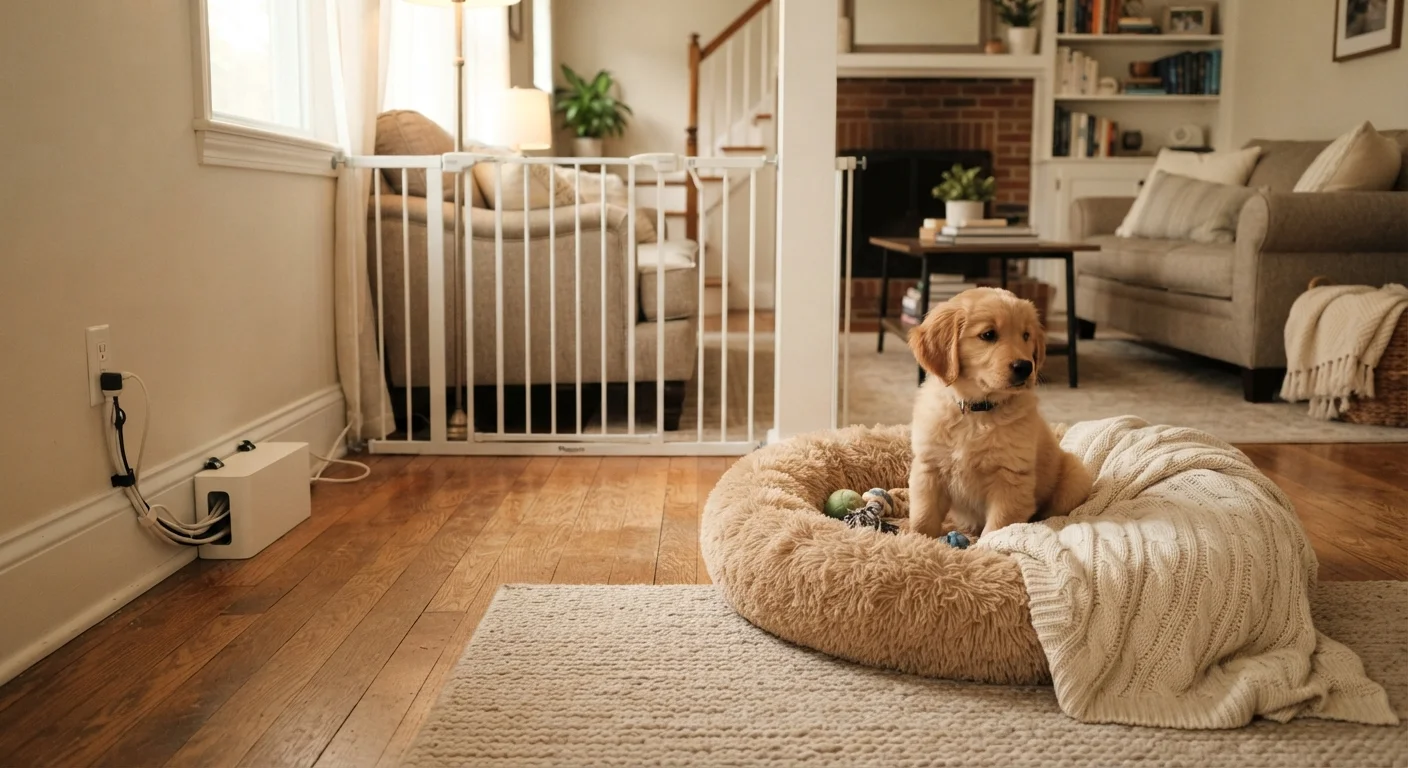
Before your puppy arrives, designate one confined, fully audited area as their home base - typically a kitchen, laundry room, or exercise-pen setup in a main living area. This space should contain their crate, water, age-appropriate chew toys, and a soft sleeping surface. Limiting access to the rest of the house initially isn't cruel; it gives the puppy a manageable territory to feel secure in before gradually expanding their world.
Crate training is one of the most effective tools for keeping a young puppy safe overnight. If you have concerns or hesitations about using a crate, our article on crate training myths addresses the most common worries with evidence-based clarity.
If you have a yard, walk the perimeter before letting the puppy outside unsupervised. Fence gaps, garden chemicals, cocoa mulch, and certain plants pose real risks. The same diligence you'd bring to a garden safety check applies to any outdoor space a puppy will access.
This article is for general informational purposes only and does not constitute veterinary advice. Consult a licensed veterinarian with any specific concerns about your puppy's health or safety.
The content provided on our blog site traverses numerous categories, offering readers valuable and practical information. Readers can use the editorial team’s research and data to gain more insights into their topics of interest. However, they are requested not to treat the articles as conclusive. The website team cannot be held responsible for differences in data or inaccuracies found across other platforms. Please also note that the site might also miss out on various schemes and offers available that the readers may find more beneficial than the ones we cover.