

What We Actually Know About Grass-Eating
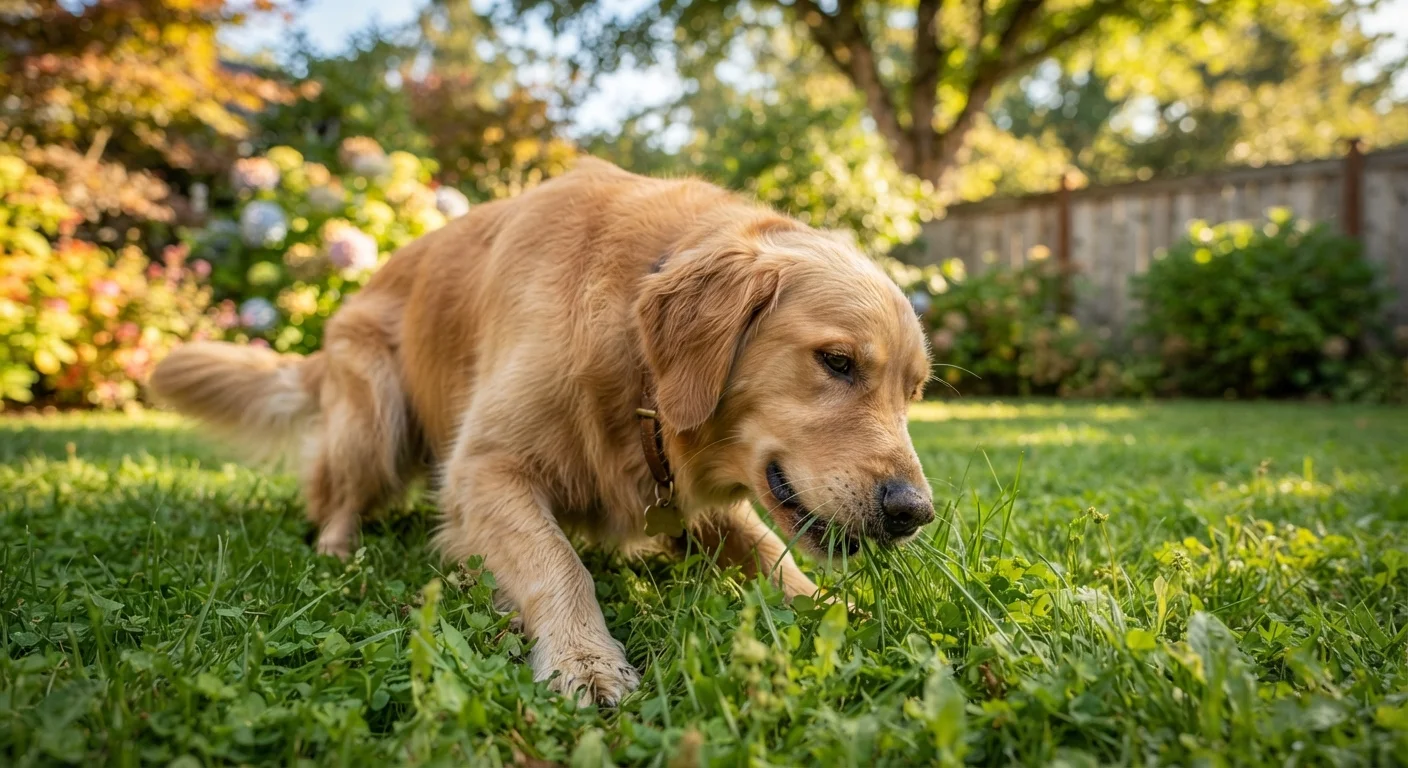
Walk almost any dog through a yard or park, and there's a reasonable chance they'll pause to nibble on a patch of grass. It's so common that veterinarians field the question constantly: Why does my dog do that? The honest answer is that no single explanation has been proven definitively - but the behavior has been studied, and a few patterns stand out.
A widely referenced survey of dog owners found that grass was the most frequently consumed plant, and that the majority of dogs eating it showed no signs of illness beforehand. That challenges the popular idea that dogs eat grass specifically to make themselves vomit. In reality, vomiting after grazing appears to be the exception, not the rule.
What researchers and veterinarians generally agree on is this: grass-eating is a normal canine behavior with roots that likely predate domestication. Wild canids consume plant material, and dogs may be doing something similar by instinct - not because something is wrong.
<25%
Dogs that vomit after eating grass
A survey published in Applied Animal Behaviour Science found that fewer than 25% of dogs vomited after consuming grass, challenging the assumption that grass-eating is primarily a vomiting trigger.
~79%
Dog owners who report grass-eating
The same research found that a large majority of dog owners had observed their pets eating plants, with grass being by far the most commonly consumed type.
~9%
Grass-eaters appearing ill beforehand
Only about 9% of grass-eating dogs showed signs of illness prior to eating, suggesting most cases are not driven by nausea or digestive distress.
The Most Plausible Reasons Your Dog Eats Grass
While no single explanation fits every dog, several reasons have reasonable support:
- Instinct and ancestral behavior: Dogs are omnivores by nature. Their wild relatives consume prey that often includes plant material in the gut, and some plant-eating may simply be baked into canine behavior.
- Taste and texture preference: Some dogs - especially in spring when grass is tender and fresh - appear to enjoy it the way they enjoy any food. They're not distressed; they're grazing contentedly.
- Fiber or digestive regulation: Grass adds fiber, and some dogs may seek it out when their gut needs a little help moving things along. This is speculative but plausible, particularly in dogs eating lower-fiber diets. See our guide to wet food vs. dry kibble for more on how diet composition affects digestion.
- Boredom or habit: Dogs that spend long periods in the yard with little stimulation sometimes eat grass the way a restless person might snack - not from hunger, but from habit or under-stimulation.
- Stomach discomfort: In some cases, a dog with nausea or gas may eat grass and then vomit. This is the scenario owners most often worry about, and it does happen - but it's far less universal than assumed.
Observe the Context, Not Just the Behavior
Before worrying about grass-eating, ask: Is my dog relaxed or frantic? Does this happen after meals, on an empty stomach, or randomly? Has anything changed in their diet or routine recently? Context almost always tells you more than the behavior alone. Keeping a simple mental note of when and how your dog eats grass helps your vet give better guidance if you do need to call.
When Grass-Eating Becomes a Warning Sign
The casual, relaxed dog who pauses mid-walk to chew a few blades is almost never a cause for concern. The version worth paying attention to looks different: frantic, repetitive eating - the dog is actively seeking out and consuming grass with urgency, not curiosity.
Watch for these accompanying signs that suggest something more is going on:
- Repeated vomiting after eating grass (more than once or twice)
- Loss of appetite or refusal of regular meals
- Lethargy, weakness, or obvious discomfort
- Bloating or a visibly distended abdomen
- Diarrhea or changes in stool
- Eating grass at an unusual frequency compared to normal
Any of these patterns - especially in combination - warrants a call to your vet rather than a wait-and-see approach. Dogs instinctively mask discomfort, so behavioral shifts are worth noting. Our article on signs your dog may be in pain walks through those subtler cues in more detail.
It's also worth knowing that sudden changes in any ingestion behavior can be a prompt to schedule a routine annual vet visit if one is overdue.
Grass-Eating in Puppies
Puppies explore the world with their mouths, so grass-nibbling in young dogs is especially common and usually harmless. That said, puppies are more vulnerable to toxins and parasites that may be present in soil and grass. Make sure any area where your puppy grazes is free of chemical treatments and has been checked for parasites, which your vet can advise on during routine visits.
The Safety Question: Not All Grass Is Equal
Even if grass-eating itself is benign, what's on the grass matters enormously. Lawns and landscaped areas are frequently treated with:
- Herbicides (weed killers)
- Pesticides (insect control)
- Chemical fertilizers
- Fungicides
These products can be toxic to dogs even in small amounts, and many remain active on grass long after application - sometimes days or weeks. If you use any lawn treatments at home, keep your dog off treated areas according to the product's re-entry guidelines, and be cautious about allowing grazing on neighbors' lawns, parks, or golf courses where treatment practices are unknown.
Plain, untreated grass from a yard you know is chemical-free is very unlikely to harm your dog. The grass itself isn't the hazard - it's what may be coating it.
This article provides general educational information about canine behavior and is not a substitute for professional veterinary advice. If you have concerns about your dog's health or behavior, consult a licensed veterinarian.
Frequently Asked Questions
Daily grass-eating is common in many dogs and is generally considered normal behavior. If your dog is otherwise healthy, energetic, and eating their regular food without issue, occasional or daily nibbling usually isn't a cause for alarm. However, if the behavior seems compulsive or increases suddenly, mention it at your next vet visit.
Not necessarily. Research suggests most dogs don't appear ill before eating grass, and the majority don't vomit afterward. While some dogs may turn to grass when their stomach is bothering them, it's equally plausible they simply like the taste or texture.
Plain grass is not toxic to dogs, but grass treated with pesticides, herbicides, or fertilizers can be harmful. Always check whether any lawn your dog has access to has been chemically treated, and avoid letting dogs graze on unfamiliar landscaping.
If the grass is untreated and the behavior is relaxed and infrequent, there's generally no need to intervene. If the grass may be treated with chemicals, redirect your dog immediately. If grass-eating is frantic, frequent, and paired with vomiting or appetite loss, consult your veterinarian.
This theory is popular but not well-supported by research. Most dogs on a complete and balanced commercial diet are unlikely to be deficient in fiber or nutrients. That said, if you're concerned about your dog's diet, a vet can help evaluate whether their food is meeting their needs.
Contact your vet if grass-eating is sudden and compulsive, if your dog vomits repeatedly, seems lethargic, loses appetite, or shows other signs of distress. These patterns - rather than casual grazing - are the signals worth acting on promptly.
The content provided on our blog site traverses numerous categories, offering readers valuable and practical information. Readers can use the editorial team’s research and data to gain more insights into their topics of interest. However, they are requested not to treat the articles as conclusive. The website team cannot be held responsible for differences in data or inaccuracies found across other platforms. Please also note that the site might also miss out on various schemes and offers available that the readers may find more beneficial than the ones we cover.