

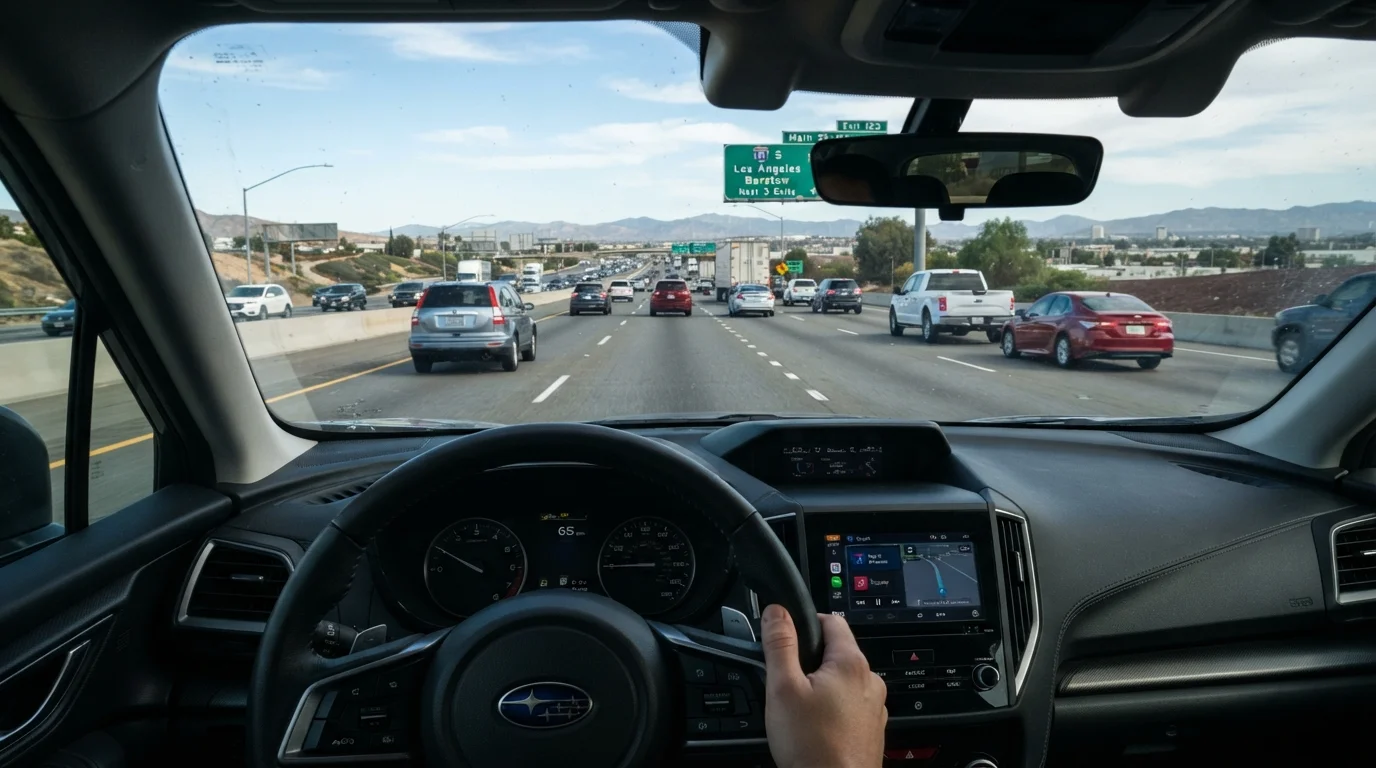
More Than Following the Rules
Most drivers learn to follow traffic laws - stop at red lights, yield at merges, observe posted speed limits. These are the foundation of legal driving, but they don't fully define safe driving. Defensive driving goes a layer deeper: it's the practice of staying alert to what could go wrong, not just what the rules say should happen.
On American roads, where driver behavior varies enormously - from cautious commuters to distracted smartphone users - the ability to anticipate trouble is what separates good drivers from great ones. Defensive driving means assuming that other drivers will make mistakes and positioning yourself to handle those mistakes without incident. It's an active, ongoing mindset rather than a passive rulebook.
For a grounding in the traffic rules that form the baseline, see our quick rules reference on speed limits and following distance.
94%
Crashes attributed to human error
According to the National Highway Traffic Safety Administration (NHTSA), approximately 94% of serious crashes involve driver-related factors such as recognition errors, decision errors, and performance errors.
3 sec
Minimum recommended following distance
Traffic safety organizations commonly recommend maintaining at least a three-second gap under normal driving conditions, with larger gaps advised in poor weather or at highway speeds.
The Core Principles of Defensive Driving
Defensive driving isn't one single technique - it's a cluster of habits that, practiced together, dramatically lower your crash risk.
Scan Far Ahead
Most drivers focus on the car directly in front of them. Defensive drivers scan 12-15 seconds ahead, watching for brake lights, merging vehicles, pedestrians, or changing road conditions. The further ahead you see, the more time you have to react gradually instead of abruptly.
Maintain Safe Following Distance
Tailgating is one of the leading causes of rear-end collisions. Keeping a proper cushion between you and the vehicle ahead gives you stopping room if traffic suddenly halts. Our article on why tailgating is more dangerous than most drivers realize explains the stopping-distance physics in plain terms.
Manage Your Speed for Conditions
Posted speed limits reflect ideal conditions. Rain, fog, heavy traffic, or road construction all call for reduced speeds. Defensive drivers treat the speed limit as a ceiling, not a target, adjusting constantly to what's actually happening on the road. For detailed guidance on weather-specific adjustments, see our article on driving in rain, snow, and fog.
Eliminate Distractions and Fatigue
A driver who is fatigued or distracted cannot execute defensive techniques, no matter how well they know them. Reaction time suffers, scanning becomes shallow, and decision-making slows. Driver fatigue in particular impairs performance in ways that can feel deceptively mild until it's too late.
Practice the 'What If' Habit
As you drive, regularly ask yourself: 'What would I do if the car in front braked right now?' or 'What if that pedestrian steps off the curb?' Running these quick mental scenarios keeps your attention focused and your responses primed. Over time, this kind of anticipatory thinking becomes second nature.
Where Defensive Driving Matters Most
Every driving environment has its own risk profile, and defensive techniques should be calibrated accordingly.
Urban streets: Pedestrians, cyclists, double-parked vehicles, and frequent signal changes mean constant hazard management. Keep speeds moderate and be prepared for unpredictable movement from all directions.
Highway driving: Higher speeds amplify the consequences of any mistake. Lane discipline, generous following distances, and early signaling for lane changes are especially important.
School zones and residential areas: Children and pets move unpredictably. Slow down well before the posted zone boundary - our article on school zone rules and what the signs actually mean covers the legal and safety specifics.
Certain habits that feel normal can quietly undermine your defensive readiness. Our piece on habits that quietly erode your safety behind the wheel highlights common patterns worth examining in your own driving.
Building the Habit - and Why It Pays Off
Defensive driving is a skill that improves with intentional practice. New drivers building foundational habits - and the considerations specific to that stage - are covered in our guide to teen drivers and building confidence safely. But the work doesn't stop after you've had your license for a decade.
Formal defensive driving courses, offered by organizations like the National Safety Council and AAA, teach structured techniques and are recognized by many state courts (for ticket dismissal) and insurers (for potential premium reductions). Beyond formal training, the most effective approach is consistent self-reflection: after each drive, consider whether your scanning, spacing, and speed choices matched the actual conditions you faced.
The ultimate benefit of defensive driving isn't just fewer crashes - it's lower stress. Drivers who feel in control of their environment rather than at the mercy of it tend to experience less road anxiety overall. Keeping your vehicle in reliable mechanical condition supports that confidence too; see our car maintenance hub for practical upkeep guidance.
This article provides general driver education information. Always follow applicable traffic laws in your state and consult official driving resources for jurisdiction-specific rules.
Frequently Asked Questions
Defensive driving prioritizes safety and anticipation, while aggressive driving involves behaviors like tailgating, speeding, and cutting off other vehicles. Defensive drivers adjust to road conditions; aggressive drivers push risk onto others. See our article on <a href="/cars-driving/driving-safety/aggressive-driving-vs-road-rage-where-one-ends-and-the-other-begins">aggressive driving vs. road rage</a> for a deeper breakdown.
Many auto insurers offer a discount for completing an approved defensive driving course, though the amount and eligibility vary by state and insurer. Check with your insurance provider directly before enrolling to confirm whether your specific course qualifies.
A commonly cited guideline is to scan at least 12-15 seconds ahead of your vehicle - roughly a city block at urban speeds or a quarter mile on the highway. This gives you time to identify and respond to hazards before they become emergencies.
No - defensive driving principles apply to all drivers regardless of experience level. In fact, experienced drivers sometimes develop complacency, which increases risk. Periodically reviewing defensive habits helps any driver stay sharp.
The three-second rule means you should stay at least three seconds behind the vehicle in front of you under normal conditions. Pick a fixed object, note when the car ahead passes it, and count - if you pass the same object before three seconds, you're following too closely. In poor weather, extend that gap significantly.
The content provided on our blog site traverses numerous categories, offering readers valuable and practical information. Readers can use the editorial team’s research and data to gain more insights into their topics of interest. However, they are requested not to treat the articles as conclusive. The website team cannot be held responsible for differences in data or inaccuracies found across other platforms. Please also note that the site might also miss out on various schemes and offers available that the readers may find more beneficial than the ones we cover.