

Why Bird Ownership Catches New Owners Off Guard
Birds look compact and self-contained, which leads many first-time owners to assume they're simpler to care for than dogs or cats. That assumption is one of the most common - and most consequential - mistakes you can make before bringing a bird home. Birds have evolved highly specialized physiologies and social needs that require real preparation and ongoing attention.
If you're still in the research phase, the species comparison guide is a strong starting point for matching a bird's needs to your household. And it's worth reading alongside the common small-pet myths article, which covers how misconceptions about non-traditional pets lead to poor care decisions across the board. The mistakes below apply broadly to parakeets, cockatiels, conures, lovebirds, and similar companion birds.
Using nonstick cookware or aerosol products near the bird's living space.
Why it happens: New owners aren't warned that birds' respiratory systems are far more sensitive than mammals', and nonstick fume dangers aren't listed on most product packaging.
Feeding a diet composed almost entirely of seeds.
Why it happens: Seed mixes are prominently marketed as bird food and are familiar to most people, creating the impression they're nutritionally complete.
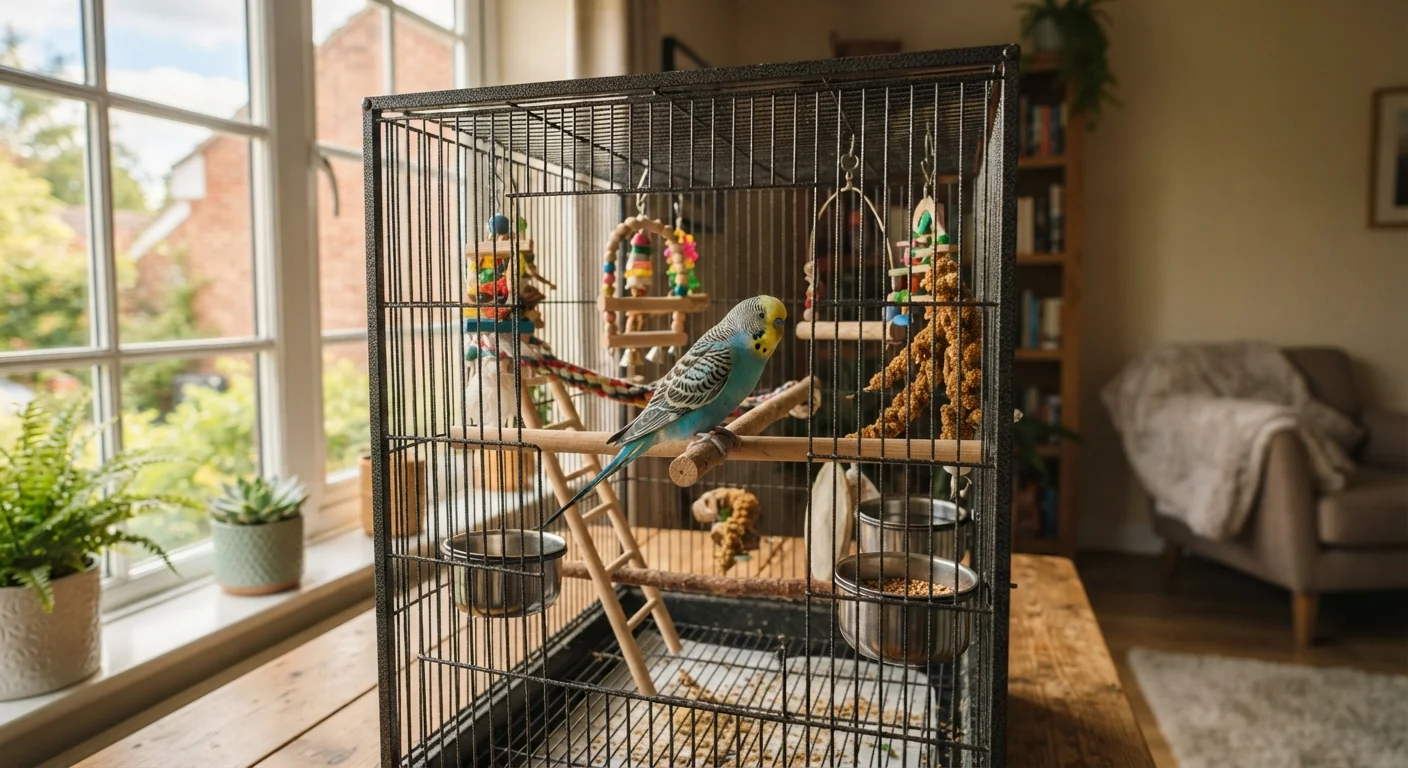
Choosing a cage that is too small or placed in a problematic location.
Why it happens: Cage size recommendations on packaging are often minimal standards, and owners don't always realize that drafty windows, kitchen fumes, and direct TV noise cause stress.
Not scheduling an avian vet visit until the bird is visibly ill.
Why it happens: Birds naturally mask illness, and owners often assume that if a bird is eating and moving around, it's fine. Many owners also don't realize general vets may lack avian expertise.
Underestimating daily interaction and enrichment requirements.
Why it happens: Birds in cages appear content and self-contained, masking the reality that most companion species are highly social and require active engagement to thrive.
Clipping wings without understanding the implications, or skipping it without safety precautions.
Why it happens: Wing clipping is a genuinely debated topic, and new owners often proceed (or don't) based on incomplete information from pet store staff.
Air Quality and Household Hazards Most Owners Don't Know About
Birds have an extremely efficient respiratory system that moves air through their lungs continuously - a design that makes them uniquely vulnerable to airborne toxins. What's merely unpleasant to a human can be fatal to a bird within minutes.
Nonstick Cookware Can Be Fatal to Birds
When PTFE-coated (nonstick) cookware is overheated, it releases odorless fumes that can kill a bird within minutes. This is not a rare or extreme scenario - it is one of the most commonly reported causes of sudden avian death in domestic settings. If you own a bird, consider replacing nonstick cookware with stainless steel or cast iron and ensure excellent kitchen ventilation at all times.
Polytetrafluoroethylene (PTFE), the nonstick coating used in many pans and appliances, releases odorless fumes when overheated that are well-documented as lethal to birds. This includes some waffle makers, air fryers, and self-cleaning oven cycles. Beyond cookware, scented candles, aerosol sprays, plug-in air fresheners, cigarette smoke, and heavily fragranced cleaning products all pose serious risks. Carbon monoxide from gas appliances and paint fumes during renovations are additional dangers many owners don't anticipate.
~700
Bird species affected by PTFE fume toxicity
Avian veterinary literature consistently documents PTFE (nonstick coating) fume toxicity as one of the leading preventable causes of sudden death in pet birds.
60-80%
Of a healthy companion bird's diet recommended as pellets
Many avian nutritionists and veterinary organizations recommend that high-quality pellets make up the majority of a companion bird's daily diet, with seeds offered sparingly.
The practical fix is to keep birds out of kitchens, ensure excellent ventilation throughout the home, and audit every product you use near the bird's space before bringing one home. When in doubt, run it by an avian veterinarian.
Diet, Socialization, and Veterinary Care Gaps
Three additional oversight areas consistently show up in the first months of bird ownership, and each one has a direct impact on long-term health and behavior.
The All-Seed Diet Problem
Seed mixes are widely sold as complete bird food, but they're roughly the equivalent of feeding a child candy for every meal - appealing, but not nutritionally complete. Seeds are high in fat and low in vitamins A, D, calcium, and other critical nutrients. Most avian nutritionists recommend a diet that leans heavily on high-quality pellets, with fresh vegetables, leafy greens, and limited fruit supplementing daily meals. Introduce dietary changes gradually; birds can be resistant to new foods and may refuse them initially.
Underestimating Social Needs
Companion birds - especially parrots, cockatiels, and conures - are flock animals. Isolation leads to stress behaviors including feather-destructive behavior (commonly called feather plucking), excessive screaming, and aggression. Daily out-of-cage time and direct interaction aren't optional extras; they're welfare necessities. If your schedule doesn't reliably allow for this, consider whether a pair of birds would better meet their social needs.
Not Locating an Avian Vet Before an Emergency
General-practice veterinarians often have limited training in avian medicine. Birds are also prey animals that instinctively hide signs of illness, meaning by the time symptoms are obvious, the situation may already be urgent. Finding a board-certified avian veterinarian - or a vet with demonstrated avian experience - before you have an emergency is one of the highest-value steps a new bird owner can take. Schedule a wellness exam within the first few weeks of bringing your bird home.
Birds Hide Illness Until It's Advanced
As prey animals, birds instinctively suppress outward signs of sickness. A bird that appears healthy may already be significantly unwell. Fluffed feathers, changes in droppings, reduced appetite, or unusual quietness are warning signs that warrant prompt veterinary attention - not a wait-and-see approach. Always consult an avian veterinarian rather than attempting home treatment.
Caring for a bird well requires the same kind of proactive research that applies to any first-time pet experience. The financial side of bird ownership - from vet costs to habitat upgrades - is also worth planning for in advance, and budgeting basics can help you build a realistic monthly plan.
The content provided on our blog site traverses numerous categories, offering readers valuable and practical information. Readers can use the editorial team’s research and data to gain more insights into their topics of interest. However, they are requested not to treat the articles as conclusive. The website team cannot be held responsible for differences in data or inaccuracies found across other platforms. Please also note that the site might also miss out on various schemes and offers available that the readers may find more beneficial than the ones we cover.