

Start here
The Real Cost of Cat Ownership
Next
What to Set Up Before Day One
Then
Understanding Cat Behavior (Including the Weird Stuff)
When you're ready
Health Basics Every First-Time Owner Should Know
Avoid pitfalls
Common Mistakes New Cat Owners Make
The Real Cost of Cat Ownership
Most people budget for food and a carrier - and stop there. The full picture looks different. First-year expenses routinely run $1,000 or more once you account for spay or neuter surgery (if not already done), core vaccinations, a wellness exam, a carrier, litter boxes, a scratching post, food bowls, and an initial food supply.
Ongoing annual costs generally fall between $500 and $1,500 for a healthy adult cat. Dental cleanings, which cats often need by middle age, are a significant and frequently overlooked expense. Building a small emergency fund - many vets suggest $500 to $1,000 set aside - is more practical than expecting every year to be uneventful.
Budget for the Unexpected Early
Pet insurance is worth evaluating before your cat has any diagnosed conditions, since most plans exclude pre-existing ones. Weigh premium costs against your financial comfort with unexpected vet bills. Even a modest dedicated savings account specifically for pet care can reduce the stress of surprise expenses.
Pet insurance is worth evaluating before your cat has any diagnosed conditions, since most plans exclude pre-existing ones. Weigh premium costs against your financial comfort with unexpected vet bills before deciding.
What to Set Up Before Day One
Your cat's first impression of your home matters. Set up a single, quiet room - a spare bedroom or bathroom works well - with a litter box, food and water dishes, a hiding spot, and a soft surface to rest on. This decompression space lets a new cat adjust at their own pace before exploring the full house.
- Litter boxes: Plan for one box per cat plus one. Place them in low-traffic, accessible spots - not next to the food bowl.
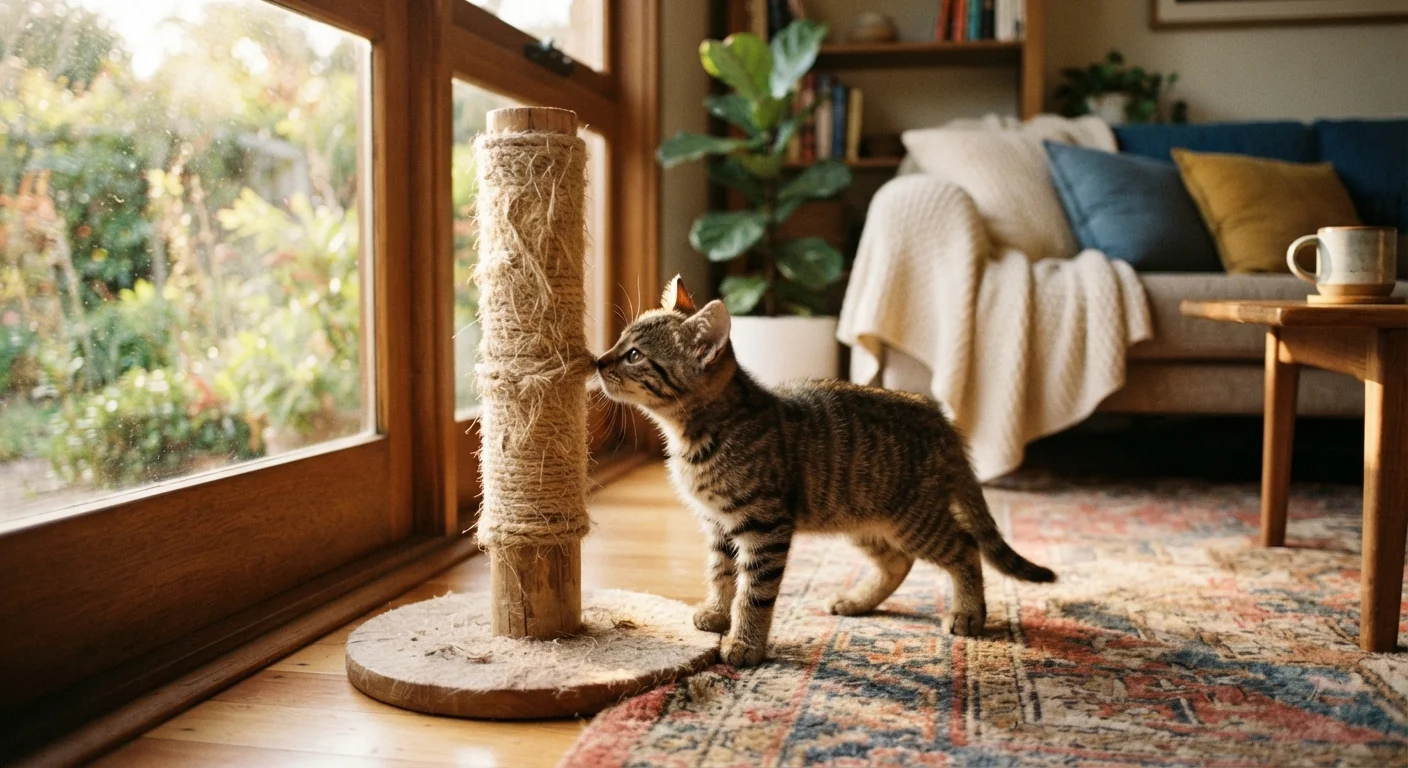
- Scratching surfaces: Cats scratch to mark territory and maintain their claws. Provide at least one tall, stable vertical scratcher and one horizontal option.
- Vertical space: Cat trees, shelves, or window perches give cats the elevation they instinctively seek. This matters especially for indoor cats.
- Toxic plant check: Remove or relocate any plants toxic to cats before your cat arrives. Lilies in particular pose a severe kidney risk.
For a thorough look at ongoing indoor setup, see the Indoor Cat Care: A Complete Owner's Roadmap.
Understanding Cat Behavior (Including the Weird Stuff)
Cats communicate through body language, vocalizations, and rituals that look bizarre until you understand them. A slow blink directed at you is a feline signal of trust - you can return it. Kneading (the rhythmic pawing motion on soft surfaces) is a comfort behavior carried over from kittenhood. Chattering at birds through a window is thought to be a predatory response, possibly mimicking a killing bite.
What looks like aloofness is often a cat assessing safety on their own timeline. Forcing interaction - picking up a cat that's trying to leave, for instance - builds distrust rather than affection. Let your cat initiate contact, especially in the first weeks.
Cats and Dogs Are Not the Same
Cats are not small dogs. Their social needs, stress signals, and interaction preferences differ significantly. A cat that retreats isn't necessarily unhappy - it may simply be regulating its own comfort level, which is completely normal feline behavior. Misreading this as rejection leads many owners to push for contact that actually erodes trust over time.
Cats are not small dogs. Their social needs, stress signals, and interaction preferences differ significantly. A cat that retreats isn't necessarily unhappy - it may simply be regulating its own comfort level, which is normal feline behavior.
Some widely held ideas about cat behavior don't hold up under scrutiny. The veterinary science perspective on cat myths article covers several of these in depth.
Health Basics Every First-Time Owner Should Know
Indoor cats still need annual veterinary exams. Many illnesses - dental disease, hyperthyroidism, kidney disease - are subtle in early stages and easier to manage when caught through routine checkups. Core vaccines (rabies, FVRCP) are recommended for indoor cats in most of the US regardless of outdoor exposure.
Watch for these early warning signs that warrant a vet call:
- Changes in litter box habits - straining, blood, or going outside the box
- Sudden weight loss or gain
- Increased thirst and urination
- Hiding more than usual, especially paired with reduced appetite
- Labored or open-mouth breathing
Dental health is frequently underestimated. Most cats show signs of dental disease by age three. Discuss a tooth-brushing routine or dental diet with your vet at your first visit. For at-home care that complements vet visits, the at-home grooming guide walks through what you can reasonably manage yourself.
This article provides general information about cat care and is not a substitute for professional veterinary advice. Always consult a licensed veterinarian for your cat's specific health needs.
Common Mistakes New Cat Owners Make
Even well-intentioned owners fall into predictable traps. Here are the ones that cause the most friction:
- Skipping the vet in year one
- The first exam establishes a baseline and catches issues early. Delaying it is a false economy.
- Using one litter box for multiple cats
- Territorial competition over a single box leads to accidents and stress-related health issues.
- Free-feeding dry food without limits
- Obesity is one of the most common preventable health problems in domestic cats. Measured meals - wet food, dry food, or a combination your vet recommends - are preferable to constant grazing.
- Declawing as a furniture solution
- Declawing is a surgical amputation that carries recognized welfare concerns and is banned or restricted in several US cities and states. Scratching posts and regular nail trims are the appropriate alternative. See the nail trimming guidance for practical technique.
- Introducing a second cat too quickly
- Cats are territorial. A rushed introduction often sets the relationship back by months. A slow, scent-based introduction process over one to two weeks gives both cats the best chance of coexisting.
FVRCP vaccine
A combination core vaccine for cats covering feline viral rhinotracheitis, calicivirus, and panleukopenia - three common and potentially serious diseases. Most vets recommend it for all cats, including indoor-only ones.
Decompression period
The initial adjustment phase when a new cat arrives home. Confining the cat to a small, safe space for several days allows them to get comfortable before exploring a larger environment.
Free-feeding
Leaving food out continuously so a cat can eat whenever it wants. This can contribute to overeating and obesity in cats that don't self-regulate their intake.
Vertical space
Elevated surfaces - shelves, cat trees, window perches - that allow cats to climb and observe from height. Cats are natural climbers and use vertical space for security and territory.
Core vaccines
Vaccinations recommended for all cats regardless of lifestyle, typically including rabies and FVRCP. Non-core vaccines are given based on individual risk factors your vet will assess.
Kneading
A rhythmic pushing motion cats make with their front paws, usually on soft surfaces or their owners. It's a comfort behavior that originates in kittenhood nursing and generally signals a relaxed, content cat.
Frequently Asked Questions
Ongoing annual costs typically range from $500 to $1,500 depending on your cat's age and health. This covers food, litter, annual vet exams, and routine preventives. Unexpected illness or dental care can push costs significantly higher, so a small emergency fund is wise.
Yes. Annual wellness exams help catch dental disease, weight changes, and early illness before symptoms appear. Indoor cats are not immune to parasites, viruses, or chronic conditions. Most vets recommend at minimum a yearly visit for adult cats.
This is a normal exploratory behavior - cats use their paws to test objects and interact with their environment. It may also be attention-seeking if the behavior gets a reaction from you. Providing adequate play and enrichment can reduce the frequency.
The general guideline is one box per cat, plus one extra. For a single cat, two boxes in different locations reduces territorial stress and keeps backup available. Scooping daily and a full change weekly are the baseline for hygiene.
It's better to start small. Confine your new cat to one quiet room with all essentials for the first few days so they can adjust without being overwhelmed. Gradual introductions to more space reduce hiding, stress, and litter box avoidance.
Lilies, pothos, sago palm, and oleander are among many plants toxic to cats. Even small amounts of true lilies can cause acute kidney failure. The ASPCA maintains a comprehensive toxic plant database that is worth checking before bringing any new plant home.
The content provided on our blog site traverses numerous categories, offering readers valuable and practical information. Readers can use the editorial team’s research and data to gain more insights into their topics of interest. However, they are requested not to treat the articles as conclusive. The website team cannot be held responsible for differences in data or inaccuracies found across other platforms. Please also note that the site might also miss out on various schemes and offers available that the readers may find more beneficial than the ones we cover.