

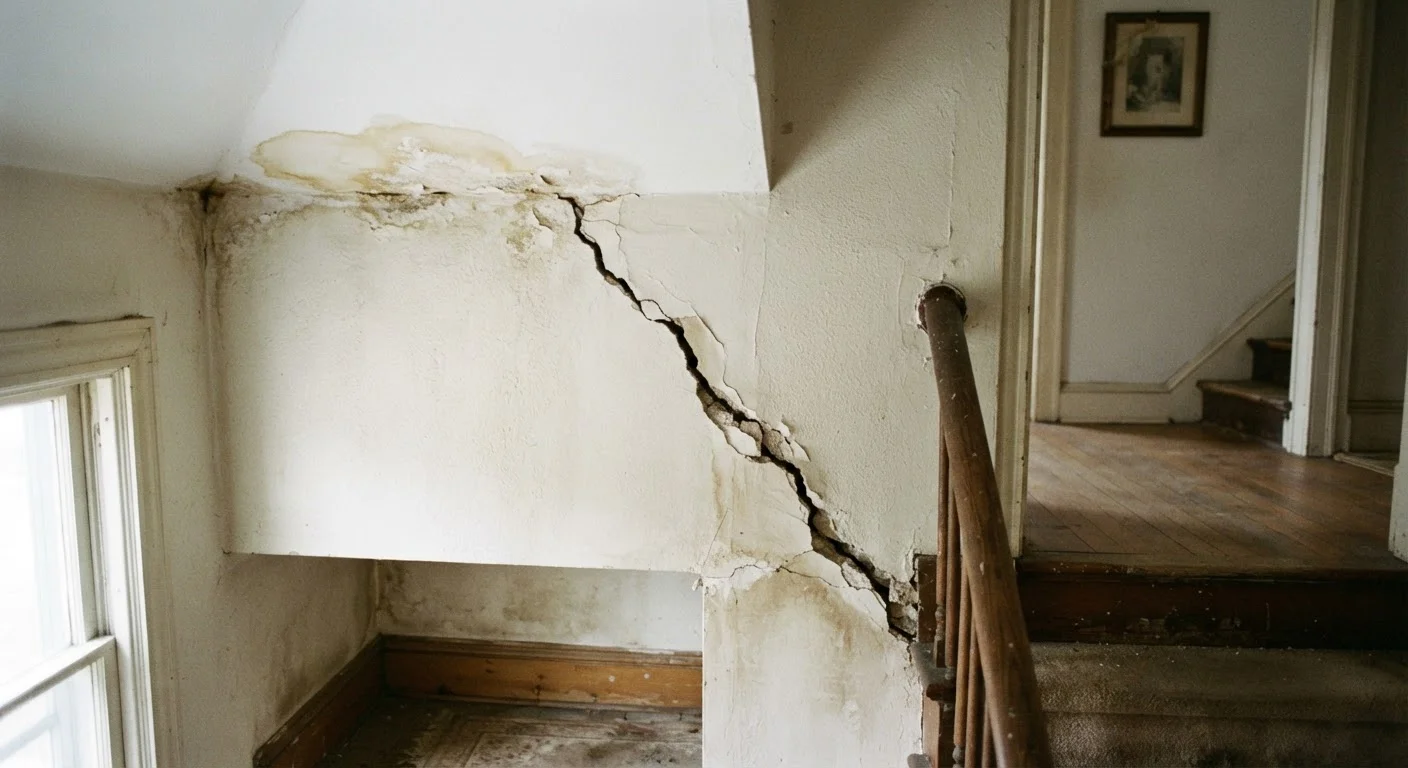
Why Small Problems Don't Stay Small
Every home is an interconnected system. A gap in caulking around a window seems trivial - until it lets moisture into the wall cavity, where it feeds mold growth, rots sheathing, and eventually compromises interior drywall. What started as a $15 caulk tube repair can, over two or three winters, become a $4,000 remediation job.
This pattern - where a low-cost problem silently compounds into a high-cost failure - is the core mechanism of deferred maintenance. Most homeowners don't skip repairs out of carelessness; they prioritize other expenses with the honest belief that the small issue can wait. The problem is that many building materials and systems don't hold at the point of damage. They deteriorate, and they drag adjacent materials with them.
Water is the most frequent accelerant. A missing shingle, a cracked chimney cap, or a slow pipe drip introduces moisture into spaces designed to stay dry. Left alone, that moisture enables wood rot, mold, pest intrusion, and in climates with freeze-thaw cycles, structural cracking. The most costly roofing repairs almost always trace back to a minor oversight that went unaddressed for a season or two.
1-4%
Annual home value recommended for maintenance budgeting
Industry guidance from home inspectors and real estate professionals commonly cites 1-4% of a home's value as a reasonable annual maintenance reserve, with older homes trending toward the higher end.
Up to 10x
Cost multiplier when small repairs become structural failures
Building professionals frequently observe that unaddressed minor repairs - particularly involving water intrusion - can cost ten or more times the original fix once secondary damage is factored in.
~40%
Of home insurance claims tied to water damage
Water damage and freezing are among the most common causes of homeowner insurance claims in the U.S., according to insurance industry data, and many cases originate with maintenance lapses.
The Real Financial Toll
When homeowners think about deferred maintenance, they often frame it as a timing question - fix it now or fix it later. But the math rarely stays equal. Deferred repairs don't pause at their current cost; they grow.
Consider a concrete example: a hairline crack in a basement wall is typically a cosmetic issue easily sealed by a homeowner. Ignored over several years, it can allow water infiltration that hydrostatic pressure then widens. The repair transitions from a DIY sealant application into a professional waterproofing project that may involve excavation, drainage systems, and significant labor - costs that can reach tens of thousands of dollars depending on severity and region.
Beyond repair bills, deferred maintenance depresses property value. Appraisers formally classify it as physical depreciation, and real estate professionals routinely see buyers discount offers - or walk away - when inspection reports reveal a backlog of unaddressed issues. If you're planning to sell, a pattern of neglect can surface in ways that a fresh coat of paint won't conceal.
Systems Most Vulnerable to Neglect
While every part of a home benefits from regular attention, certain systems carry outsized risk when maintenance lapses:
- Roofing and gutters: Clogged gutters redirect water against fascia, soffits, and foundations. A few missing granules on shingles expose underlayment to UV degradation. Annual inspection and cleaning can prevent water from ever entering the structure.
- HVAC: Dirty filters restrict airflow, forcing the system to work harder and shortening its lifespan. Skipping annual tune-ups risks refrigerant issues, heat exchanger cracks, or compressor failure - each a significantly larger expense than the service call.
- Plumbing: Slow drips at supply lines or shutoff valves often signal deteriorating fittings. Undetected leaks behind walls or under slabs can cause mold and structural damage before any visible sign appears.
- Foundation and grading: Soil that slopes toward the foundation directs runoff against the structure. Correcting grading early is straightforward; correcting water damage to a foundation is not.
- Exterior caulking and seals: Caulk around windows, doors, and penetrations has a finite lifespan. When it fails, conditioned air escapes and outdoor moisture enters - raising utility costs while accelerating material decay.
A structured approach to inspecting these systems each quarter is one of the most reliable ways to stay ahead of compounding problems. The quarterly maintenance schedule is a practical starting point for building that habit.
Do a 20-Minute Walkthrough Each Season
You don't need a professional inspection to catch most emerging problems early. Walk the perimeter of your home each season, checking gutters, caulking, grading, and visible roof edges. Inside, look at ceilings, under sinks, and around appliances for any sign of moisture. Early detection is the cheapest maintenance tool available to any homeowner.
How to Prioritize When You Can't Fix Everything at Once
Most homeowners face a gap between what needs attention and what the budget allows. Prioritization matters more than perfection. A useful mental framework is to rank issues by the rate of damage acceleration and the scope of what they can affect downstream.
Active water intrusion - any leak, whether from the roof, plumbing, or a failed seal - should be addressed first, regardless of cost, because moisture damage compounds faster than almost any other problem and reaches more systems. Safety-related failures (electrical, gas, structural) belong in the same urgent tier. After those, prioritize anything that protects the building envelope: siding, windows, flashing, and roofing.
Cosmetic issues - peeling paint on an interior wall, a sticky door latch, a cracked tile in a dry area - can realistically be scheduled further out without meaningful consequence.
Keeping a simple running list of identified issues, even photographed on a phone, makes it easier to track deterioration over time and communicate with contractors when you do seek quotes. It also helps during insurance claims and at resale, when disclosure requirements apply. For broader financial context on protecting long-term household value, the saving and debt fundamentals that apply to other areas of homeownership apply here too - an ounce of prevention genuinely reduces the debt burden of emergency repairs later.
Frequently Asked Questions
Buyers and appraisers both account for visible neglect during a sale. Outstanding maintenance issues can lower appraised value, reduce buyer offers, or trigger required repairs as a condition of financing. In competitive markets, a poorly maintained home may sit longer and sell for significantly less than comparable properties in good condition.
Roof leaks, foundation cracks, electrical faults, plumbing leaks, and HVAC failures carry the highest risk when deferred. These systems protect the structural integrity, safety, and habitability of the home. Addressing them promptly - or calling a licensed professional immediately - is nearly always the lower-cost outcome.
Yes. Insurers can deny claims if damage is traced to neglect rather than a sudden covered event. For example, a roof that fails after years of documented disrepair may not be covered. Some insurers also cancel or non-renew policies when an inspection reveals significant maintenance deficiencies.
A commonly cited general guideline suggests setting aside roughly 1-2% of your home's value annually for maintenance, though older homes or those with aging systems may require more. This is general budgeting guidance - your actual needs will vary based on the home's age, condition, and local climate. Consult a home inspector for a property-specific assessment.
For routine tasks like caulking, gutter cleaning, or filter replacement, DIY is typically cost-effective. However, work involving electrical, gas, structural, or roofing systems usually requires licensed contractors and may need permits. Improper DIY repairs on regulated systems can increase costs, void warranties, and create safety hazards.
The content provided on our blog site traverses numerous categories, offering readers valuable and practical information. Readers can use the editorial team’s research and data to gain more insights into their topics of interest. However, they are requested not to treat the articles as conclusive. The website team cannot be held responsible for differences in data or inaccuracies found across other platforms. Please also note that the site might also miss out on various schemes and offers available that the readers may find more beneficial than the ones we cover.