

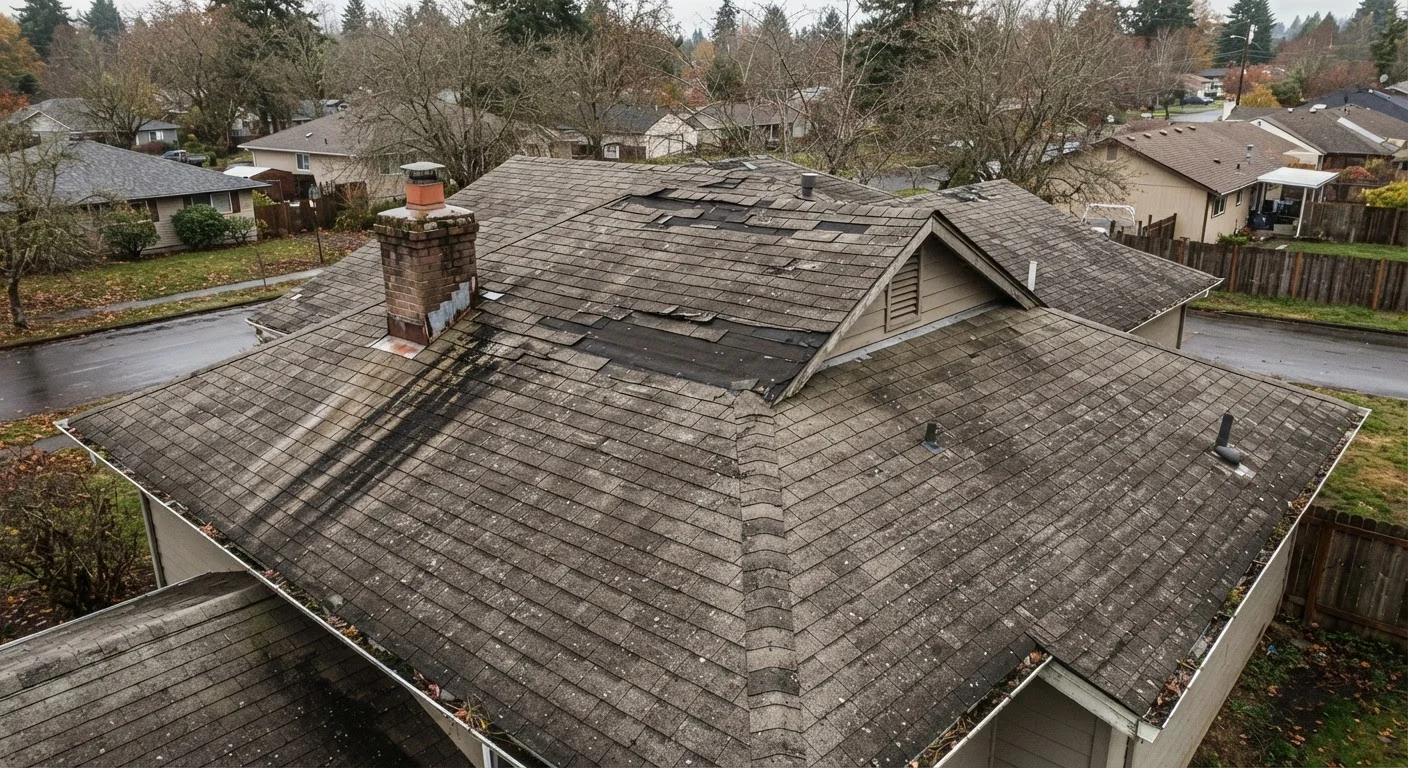
Why Roofs Deteriorate Faster Than Homeowners Expect
Most homeowners think about their roof only when something goes wrong - a drip in the ceiling, shingles in the yard after a storm. That reactive mindset is precisely what turns manageable maintenance tasks into four-figure repair bills. Roofing systems degrade gradually, through a combination of UV exposure, freeze-thaw cycles, organic growth, and drainage failures. Each factor is controllable to a degree, but only when caught early.
Understanding where things go wrong - and why - is the first step toward keeping those costs in check. Our seasonal maintenance guide offers a useful framework for building roof checks into a regular household routine. The mistakes below represent the most common gaps we see homeowners overlook.
Skipping biannual roof inspections.
Why it happens: Roofs are out of sight, so damage that isn't causing an active leak rarely triggers concern. Many homeowners assume no visible interior water means the roof is fine.
Letting gutters stay clogged through fall and winter.
Why it happens: Gutter cleaning is easy to postpone, especially when leaves keep falling. Homeowners often wait until spring, not realizing wet debris holds moisture against the fascia and roof edge all winter.
Ignoring deteriorating flashing around chimneys, vents, and skylights.
Why it happens: Flashing - the metal strips that seal joints between roofing and vertical surfaces - rarely gets examined unless a leak is obvious. The sealants and caulk used around flashing dry out and crack over time, often without visible exterior signs.
Overlooking attic ventilation and insulation issues.
Why it happens: Homeowners tend to treat the attic as a separate system from the roof, but inadequate ventilation traps heat and moisture that degrades shingles from beneath and can cause structural decking to warp or rot.
Allowing moss, lichen, or algae to grow unchecked.
Why it happens: Organic growth on shingles looks cosmetic at first, so many homeowners treat it as a low priority. In fact, moss retains moisture and can lift shingle edges, accelerating water infiltration.
Patching shingles without addressing the underlying cause.
Why it happens: Replacing a cracked or missing shingle feels like a complete fix, but if the damage was caused by flashing failure, improper ventilation, or decking issues, the replacement shingle will fail under the same conditions.
The Compounding Cost of Doing Nothing
A cracked piece of flashing might cost a roofer an hour of labor to reseal. Left through a wet season, that same crack can allow water behind the decking, saturating insulation and promoting mold growth in the attic. What started as a minor repair can spiral into decking replacement, insulation removal, and mold remediation - a scope that typically runs several times the original fix.
Never Ignore Attic Staining or Soft Spots
Dark staining on attic rafters or decking, a musty smell, or any soft spot when pressing on interior ceilings are signs that moisture has already penetrated. These conditions warrant a professional assessment without delay - not because the situation is necessarily dire, but because the longer moisture is present, the more material it affects. Do not assume that if the staining is old and dry, the problem has resolved on its own.
This pattern plays out repeatedly with gutters as well. Our guide on gutter cleaning and inspection walks through how blocked drainage stresses roofing materials at the eaves - an area already vulnerable to ice dam formation in colder climates. For a broader look at how deferred upkeep compounds, see the hidden costs of deferred home maintenance.
40%
Of homeowner insurance claims involve water damage
Water intrusion - often roofing-related - consistently ranks among the top causes of homeowner insurance claims in the U.S., according to insurance industry reports.
3-5x
Cost multiplier when repairs are deferred
Roofing contractors and home inspection professionals commonly note that small fixes left unaddressed can multiply in scope and cost by several times within one to two seasons.
Budgeting proactively for upkeep is also worth considering. General personal finance resources - like those found in our budgeting basics hub - can help homeowners set aside a realistic annual maintenance reserve rather than absorbing surprise expenses all at once.
The content provided on our blog site traverses numerous categories, offering readers valuable and practical information. Readers can use the editorial team’s research and data to gain more insights into their topics of interest. However, they are requested not to treat the articles as conclusive. The website team cannot be held responsible for differences in data or inaccuracies found across other platforms. Please also note that the site might also miss out on various schemes and offers available that the readers may find more beneficial than the ones we cover.