

Summary
28 items · 30-60 minutes to review; tasks spread across the year
Why a Quarterly Approach Works
Home maintenance feels overwhelming when it piles up - but spread across four quarters, it becomes a manageable rhythm. Each season brings predictable stress on different parts of your home: winter strains your heating system and roof, summer taxes your cooling and exterior surfaces, and the shoulder seasons are ideal for catching what the extremes leave behind.
A quarterly schedule also pairs well with your broader household planning. If you track home upkeep costs, tools like a simple monthly budget - see our budgeting basics guide - can help you set aside funds for materials and the occasional professional visit before you need them urgently.
Use the checklist below as a living document. Walk through it each quarter, note any issues you find, and decide which tasks you can handle yourself and which warrant a call to a licensed contractor. For tasks involving structural, electrical, gas, or roofing work, always consult a qualified professional and check whether local permits or inspections are required.
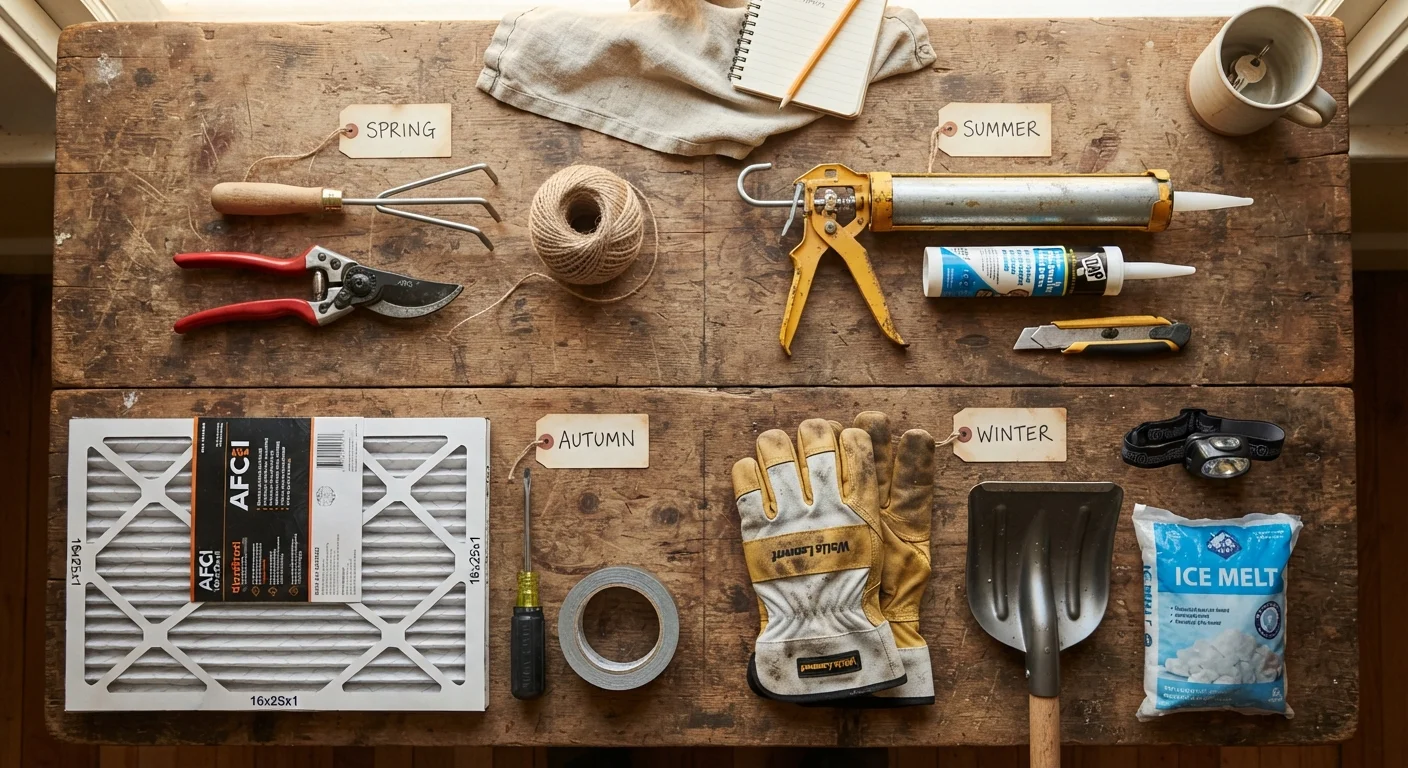
Caulk gun and exterior caulk
Used to seal gaps around windows, doors, and siding joints each spring and fall.
Replacement HVAC filters
Kept on hand so air filter replacement happens on schedule rather than being delayed by a shopping trip.
Gutter scoop and garden hose
Used to clear debris from gutters and flush downspouts during spring and fall cleanings.
Binoculars
Allows a safe ground-level inspection of the roof surface without climbing a ladder.
Cordless screwdriver and assorted fasteners
Tightens loose deck boards, fence hardware, and cabinet hinges found during quarterly walkthroughs.
Voltage tester (non-contact)
Used to verify power is off before inspecting outlet covers or light fixtures - never work on live circuits.
Extension ladder (if needed)
Provides access to gutters and low-slope roof edges - use only on stable ground with a spotter present, and follow all ladder safety guidelines.
Your Quarterly Maintenance Checklist
The 28 items below are organized by season. Not every task applies equally to every climate or home type - adjust based on your region, your home's age, and any issues flagged in previous quarters. If you're preparing for a formal home inspection, our home inspection preparation guide covers additional documentation and walk-through steps worth reviewing alongside this checklist.
Q1 - Winter (January-March)
Q2 - Spring (April-June)
Q3 - Summer (July-September)
Q4 - Fall (October-December)
For the yard-side of your seasonal routine, the seasonal yard maintenance schedule covers mowing, pruning, fertilizing, and soil prep month by month - a natural companion to these interior and exterior home tasks.
Leave Hazardous Work to Licensed Professionals
This checklist covers general inspection and light maintenance tasks that most homeowners can safely handle. Any work involving your electrical panel, gas lines, structural components, or roof repairs should be performed by a licensed contractor. Check with your local building department about permit requirements before starting any regulated work - unpermitted repairs can create problems when you sell or file an insurance claim.
Staying Consistent Year After Year
The real value of a seasonal checklist isn't completing it perfectly once - it's building a habit. Many homeowners find it useful to keep a simple maintenance log: date, task completed, any issues noted, and action taken. Over time, this log reveals patterns (the same roof flashing leaks every spring, for instance) and gives you documentation that can be helpful if you ever sell or need to make an insurance claim.
If you want to work some of these tasks into a weekend cadence, our weekend home improvement projects guide highlights manageable tasks that deliver noticeable results without requiring full days of effort. And because your home's exterior takes as much seasonal punishment as any system inside, it's also worth reviewing common roof maintenance oversights that often go unnoticed until they become costly repairs.
Consistency - even imperfect consistency - is what separates a home that ages gracefully from one that surprises its owners with expensive problems. Pick a weekend each quarter, work through the relevant section of this checklist, and you'll be ahead of the majority of homeowners on your block.
The content provided on our blog site traverses numerous categories, offering readers valuable and practical information. Readers can use the editorial team’s research and data to gain more insights into their topics of interest. However, they are requested not to treat the articles as conclusive. The website team cannot be held responsible for differences in data or inaccuracies found across other platforms. Please also note that the site might also miss out on various schemes and offers available that the readers may find more beneficial than the ones we cover.