

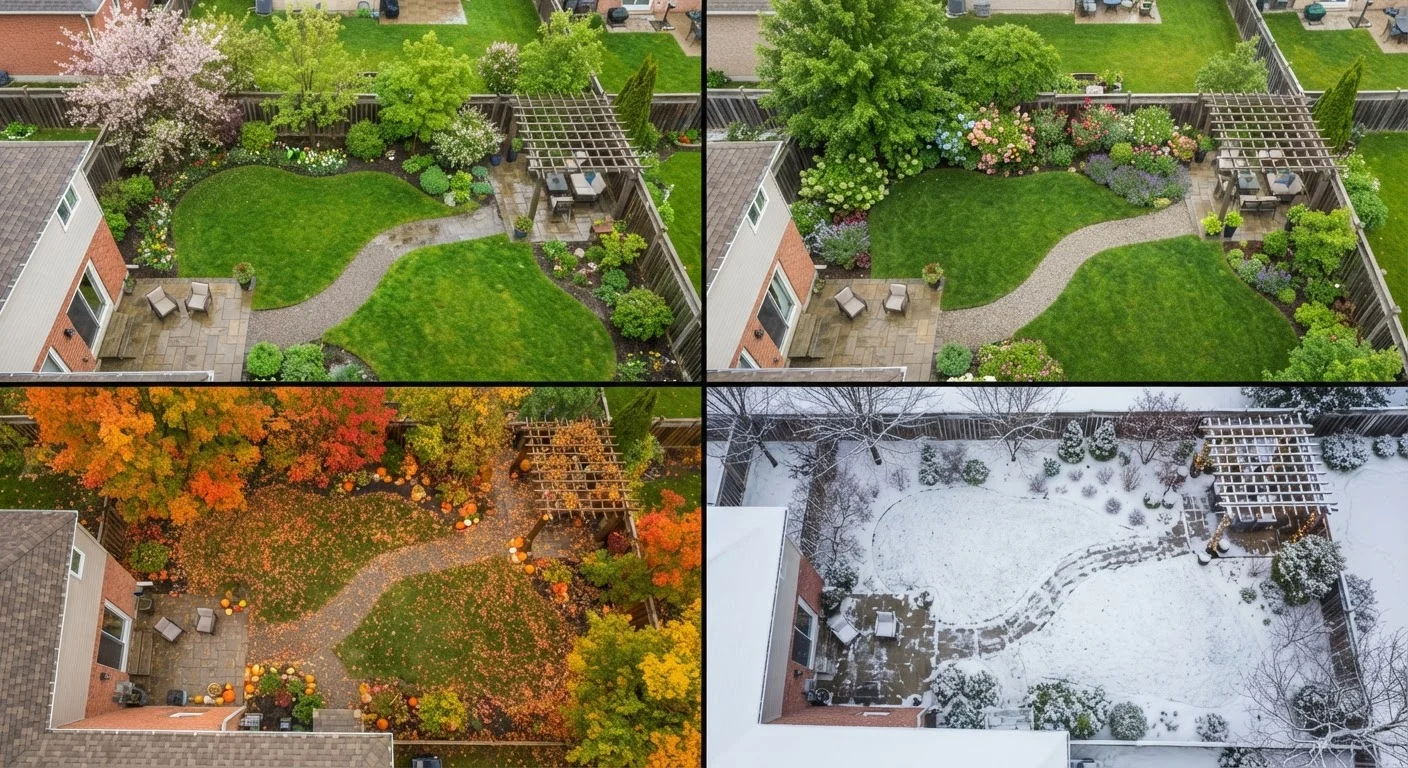
Why a Seasonal Schedule Makes Yard Work Easier
Yard maintenance feels overwhelming when tasks pile up. Breaking the year into seasons - and knowing which chores belong where - turns a daunting to-do list into a manageable rhythm. Timing matters in lawn and garden care: fertilizing at the wrong time can burn grass, pruning too late can cost a season of blooms, and skipping fall prep can mean a weaker yard come spring.
Think of this schedule as a reference you return to several times a year rather than a single read. Pair it with a detailed spring readiness checklist when you're ready to dig deeper into warm-season prep. You might also find that budgeting for supplies and services is easier with a structured household budget that includes seasonal yard expenses.
Spring Tasks (March-May)
Spring is the year's most active window for yard work. As soil temperatures climb above 50°F, most cool-season grasses break dormancy and warm-season varieties prepare to grow.
- Dethatch and aerate: Loosen compacted soil and remove built-up thatch so water, air, and nutrients can reach grass roots effectively.
- Overseed bare patches: Early spring suits cool-season grasses; late spring suits warm-season varieties. Match seed type to your regional climate zone.
- Apply a balanced starter fertilizer: Wait until grass shows active growth - fertilizing dormant turf wastes product and can stress roots.
- Prune dead wood and winter damage: Cut back dead or damaged branches on shrubs and trees before new growth obscures the problem areas.
- Edge beds and re-apply mulch: A 2-3 inch layer of mulch conserves moisture and suppresses weeds through the growing season.
For plant selection ideas that minimize ongoing effort, see our guide to low-maintenance plants for American backyards.
Summer Tasks (June-August)
Heat and drought stress are the primary threats to a summer yard. Consistent watering habits and mowing height adjustments carry the most weight during this season.
- Mow high: Raise your mower blade so grass stands 3-4 inches tall. Taller blades shade soil, reducing moisture evaporation and weed germination.
- Water deeply and infrequently: About 1 inch of water per week - ideally in one or two sessions - encourages deep root growth. Early morning watering reduces fungal risk.
- Spot-treat weeds: Address broadleaf weeds before they set seed. Hand-pulling is effective for isolated patches.
- Deadhead flowering plants: Removing spent blooms on annuals and perennials prolongs the flowering period through late summer.
- Monitor for pests: Check the undersides of leaves for aphids, spider mites, and other common insects. Early identification limits spread.
Thatch
A layer of dead grass stems, roots, and debris that accumulates between the soil surface and living grass blades. Excessive thatch (over ½ inch) blocks water and nutrients from reaching roots.
Aeration
The process of creating small holes in the soil - usually with a core aerator - to relieve compaction and improve the movement of air, water, and fertilizer to grass roots.
Deadheading
Removing spent or faded blooms from flowering plants to encourage continued flower production and prevent plants from setting seed prematurely.
Overseeding
Spreading grass seed over an existing lawn to fill bare spots, thicken turf, or introduce a more resilient variety without fully removing the existing lawn.
Slow-release fertilizer
A fertilizer formulated to break down gradually over weeks or months, feeding plants steadily rather than delivering a rapid nutrient spike that can stress turf or leach into waterways.
Fall Tasks (September-November)
Fall is often called the most important season for lawn health. The work you do now directly determines how well your yard emerges from winter.
- Fertilize cool-season grasses: A fall application of a slow-release, nitrogen-rich fertilizer helps cool-season turf store energy for winter dormancy and spring recovery.
- Overseed thin areas: Cooler soil temperatures and reduced weed competition make fall ideal for overseeding in most of the northern US.
- Rake and compost leaves: A thick mat of wet leaves can suffocate grass. Mow leaves into fine pieces as an alternative to raking - this returns organic matter to the soil.
- Plant spring bulbs: Tulips, daffodils, and crocuses go in the ground in fall for a spring reward.
- Cut back perennials selectively: Some perennials benefit from cutting back in fall; others provide winter habitat for beneficial insects. Research your specific plants before cutting.
For a fuller picture of fall home upkeep beyond the yard, the seasonal home maintenance quarterly guide is a useful companion resource.
Winter Tasks (December-February)
Most yards rest in winter, but a few habits protect what you built the rest of the year.
- Clean and store tools: Remove soil, oil metal surfaces lightly, and store tools in a dry space to prevent rust and extend their life.
- Plan for the coming year: Review what worked and what didn't. Order seeds and plan any bed changes or new plantings before spring inventory runs thin.
- Inspect hardscaping: Check paths, retaining walls, and edging for winter frost damage. Minor repairs are far cheaper when addressed before spring freeze-thaw cycles worsen cracks.
- Protect sensitive shrubs: Burlap wrapping or a layer of mulch around the root zone of marginally hardy plants reduces winter kill in colder climates.
Just like your car benefits from seasonal attention - see the seasonal car maintenance checklist for reference - your yard's long-term health depends on a consistent, year-round routine rather than occasional bursts of effort.
The content provided on our blog site traverses numerous categories, offering readers valuable and practical information. Readers can use the editorial team’s research and data to gain more insights into their topics of interest. However, they are requested not to treat the articles as conclusive. The website team cannot be held responsible for differences in data or inaccuracies found across other platforms. Please also note that the site might also miss out on various schemes and offers available that the readers may find more beneficial than the ones we cover.