

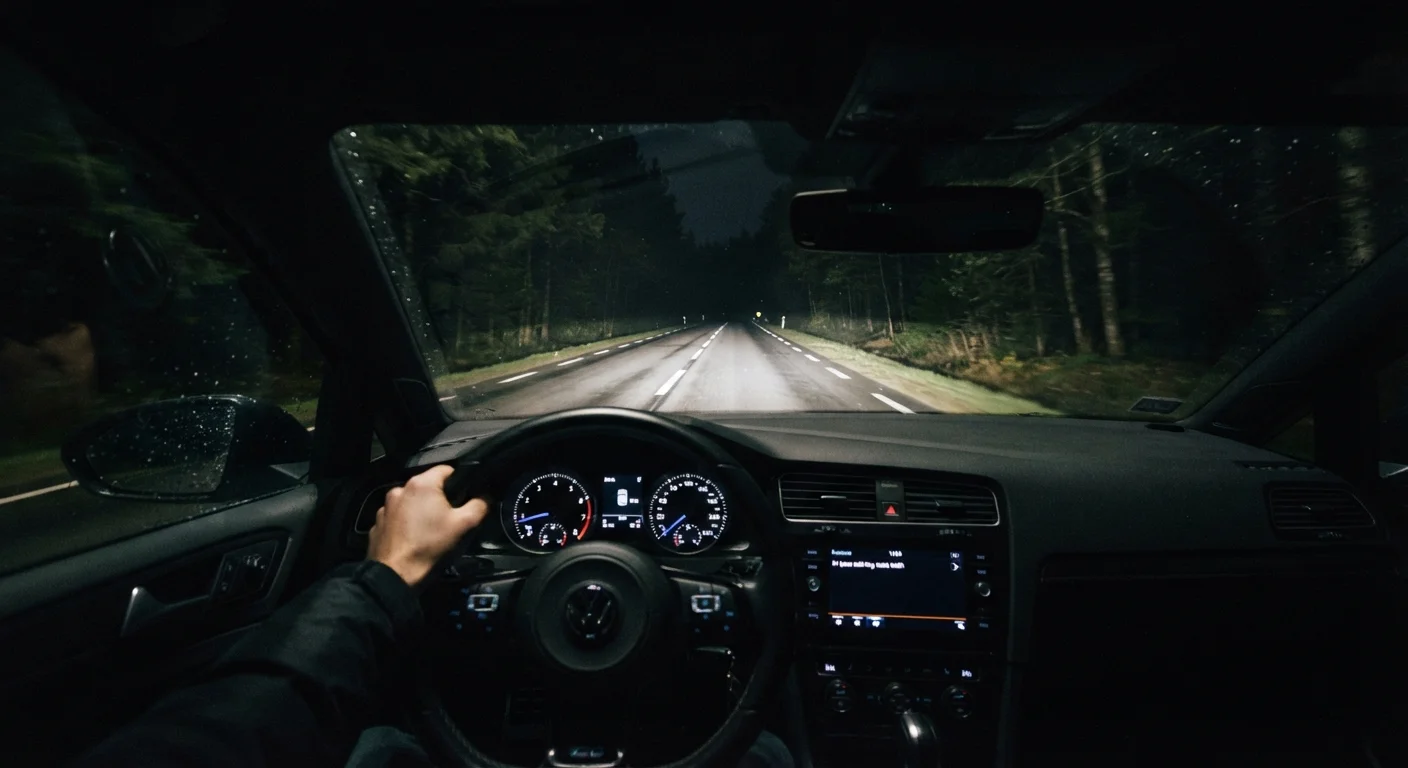
What Actually Changes When the Sun Goes Down
Most drivers treat nighttime driving as an extension of daytime driving - same roads, same habits, just darker. That assumption is where the danger starts. Several physical and physiological factors shift dramatically after dark, and they compound each other in ways that feel subtle until something goes wrong.
The human eye relies on two types of photoreceptors: cones for color and detail in daylight, and rods for low-light peripheral vision. After dark, your cones become far less effective, reducing contrast sensitivity and making it harder to distinguish hazards - a pedestrian in dark clothing, a pothole, a stopped vehicle without lights - from the surrounding road. Depth perception and peripheral vision both narrow. And unlike daytime, when ambient light from many sources helps fill in what your headlights miss, nighttime driving places almost all visual load on your headlights alone.
This connects directly to a common error called overdriving your headlights: traveling at a speed where your stopping distance exceeds the illuminated range of your headlights. Standard low beams illuminate roughly 160-200 feet ahead. At 60 mph, your stopping distance - including reaction time - can exceed 300 feet. That gap is where crashes happen.
3×
Higher nighttime traffic fatality rate per mile
The National Safety Council estimates traffic deaths per mile driven are roughly three times higher at night than during daylight hours.
~200 ft
Standard low-beam headlight range
Most standard low-beam headlights illuminate approximately 160-200 feet ahead, while stopping distance at highway speeds can exceed 300 feet.
50%
Of fatal crashes occur at night
The NHTSA has consistently found that roughly half of all fatal traffic crashes occur during nighttime or low-light conditions, despite far lower traffic volumes.
Glare, Fatigue, and the Hidden Compounders
Headlight glare from oncoming vehicles is one of the most underestimated hazards on nighttime roads. Modern LED and HID headlights are significantly brighter than older halogen units, and they can temporarily overwhelm your rod cells, causing a brief period of impaired vision even after the vehicle passes. The instinctive reaction - staring directly at the oncoming lights - makes the effect worse. Experienced night drivers focus on the right edge of their lane markings as oncoming traffic approaches.
Fatigue layers on top of these visual challenges in a particularly dangerous way. The body's circadian rhythm naturally drives sleepiness during late-night and early-morning hours, even in people who feel reasonably alert. Drowsy driving impairs reaction time in ways that closely parallel alcohol impairment. For a deeper look at how fatigue affects your ability to drive safely, see our guide to driver fatigue.
Together, reduced vision and elevated fatigue create conditions where you have less time to detect a hazard and a slower response when you do. That combination demands a different set of habits - not just the same habits performed more carefully.
Adjust Your Speed to Match Your Sight Distance
A practical rule of thumb: you should always be able to stop within the distance your headlights illuminate. If you're on a dark road and your low beams don't feel like enough, slow down before reaching for the high-beam switch. Speed reduction is the most direct control you have over overdriving your lights.
Practical Adjustments That Actually Compensate
Understanding the risks is the first step; the second is building habits that compensate for them. Several straightforward adjustments make a measurable difference:
- Slow down. Reducing speed extends the time available to react to hazards within your headlight range. Even a 5-10 mph reduction meaningfully closes the gap between your stopping distance and visible range.
- Increase following distance. The standard three-second rule is a minimum for daylight. At night, four to five seconds gives you a better margin. Tailgating is more dangerous than most drivers realize - and after dark, that danger multiplies.
- Use high beams appropriately. On rural, unlit roads with no oncoming traffic, high beams extend your effective sight distance substantially. Switch back to low beams promptly when other vehicles are present.
- Keep windshields and mirrors clean. Dirt, haze, and road film scatter light and intensify glare significantly. A clean windshield has a direct impact on nighttime visual clarity.
- Get regular eye exams. Night vision declines with age and can be affected by conditions like cataracts or vitamin A deficiency. Many drivers adapt gradually to worsening vision without recognizing it as the cause of their nighttime discomfort.
Night driving also intersects with other risk factors worth understanding. For context on how similar visibility challenges arise in bad weather, see driving in rain, snow, and fog. And if you're working with a newer driver in your household, teen driver guidance specifically addresses building safe nighttime skills from the start.
This article is for general informational purposes only and does not constitute professional safety, medical, or driving instruction advice. Always follow applicable traffic laws and consult qualified professionals for personalized guidance.
Frequently Asked Questions
Darkness reduces how far and how clearly you can see, limiting your ability to spot hazards, read road conditions, and judge distances accurately. Peripheral vision also narrows in low light. Combined with higher rates of driver fatigue and impaired drivers on the road, nighttime conditions objectively increase crash risk.
Overdriving your headlights means driving at a speed where your stopping distance exceeds the distance your headlights actually illuminate. If something appears in your headlight range, you may not have enough distance to stop safely. The fix is to reduce speed so your braking distance stays within your visible range.
Bright oncoming headlights cause temporary night blindness by overwhelming the rod cells in your eyes that handle low-light vision. Recovery can take several seconds, during which your effective vision is significantly impaired. Avoiding direct eye contact with oncoming lights and focusing on the right edge of your lane can help.
Older drivers generally experience more difficulty with night vision due to natural changes in the eye's lens and pupil response. This doesn't mean night driving must be avoided entirely, but regular eye exams are important, and adjustments like reducing nighttime speed and increasing following distance are advisable. Consult an eye care professional if you notice significant difficulty.
High beams can dramatically extend your sight distance on dark, unlit roads - but they must be switched off for oncoming traffic and vehicles ahead of you, as they cause dangerous glare. Use them on rural or unlit roads when no other vehicles are nearby, and return to low beams when traffic is present.
Pull over and rest if you feel drowsy - no amount of coffee, music, or window air reliably restores alertness. Plan trips to avoid peak fatigue windows, typically between midnight and 6 a.m. If a long night drive is unavoidable, sharing driving duties or scheduling a rest stop can meaningfully reduce risk.
The content provided on our blog site traverses numerous categories, offering readers valuable and practical information. Readers can use the editorial team’s research and data to gain more insights into their topics of interest. However, they are requested not to treat the articles as conclusive. The website team cannot be held responsible for differences in data or inaccuracies found across other platforms. Please also note that the site might also miss out on various schemes and offers available that the readers may find more beneficial than the ones we cover.