

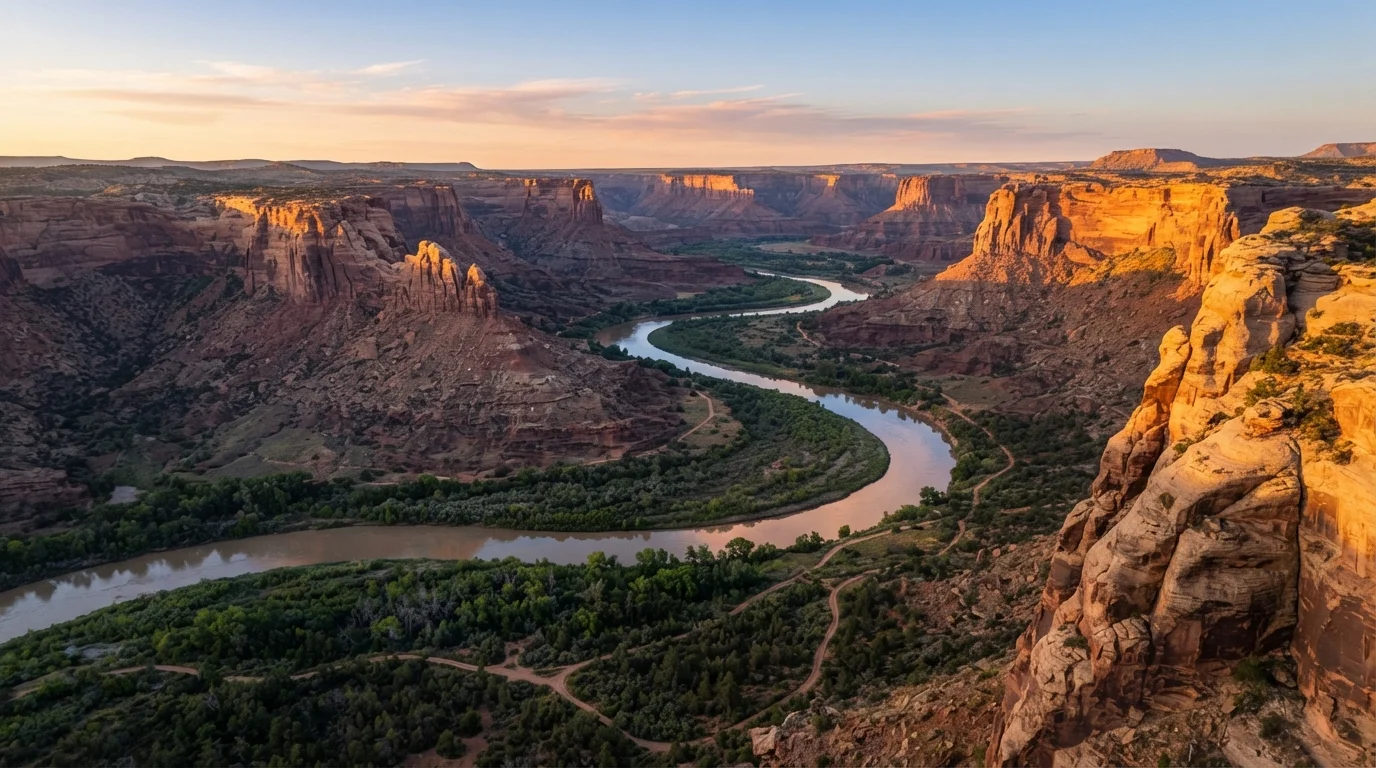
The Parks You Haven't Visited Yet
Yellowstone and the Grand Canyon are genuinely extraordinary - nobody's arguing otherwise. But America's national park system stretches across 63 designated parks and more than 400 protected sites, and the vast majority see a sliver of the foot traffic those two giants absorb each summer. If you've ever stared down a six-hour parking queue at a trailhead or fought for a campsite reserved months in advance, this list is your permission slip to go somewhere new.
These parks aren't consolation prizes. Many shelter ecosystems, geological formations, or wildlife spectacles that exist nowhere else on Earth. The good news: you can often drive right in, pitch a tent without a lottery, and spend a full day on a trail without seeing another soul. For practical trip planning guidance, it helps to research entry fees, seasonal closures, and permit requirements well before you go - conditions vary widely across the system.
Check the America the Beautiful Pass
If you're planning to visit more than two or three national parks in a year, the America the Beautiful Interagency Annual Pass covers entrance fees at most federal recreation sites. It can represent meaningful savings for frequent park-goers, and senior and military discount versions are also available. Always verify current pass details and coverage at the official government recreation website before purchasing.
Eight Parks Worth Putting on Your Radar
North Cascades National Park, Washington
Often called the American Alps, North Cascades contains more glaciers than any other area in the contiguous US outside of Alaska. Its jagged peaks, turquoise lakes, and dense old-growth forest sit just three hours from Seattle, yet the park draws a fraction of the crowds that nearby Mount Rainier receives. The Cascade Pass trail is a classic introduction - a moderate hike that opens onto sweeping alpine panoramas. Wildlife here includes black bears, mountain goats, and the occasional gray wolf.
North Cascades holds more glaciers than anywhere else in the contiguous US outside Alaska.
Congaree National Park, South Carolina
The largest intact expanse of old-growth bottomland hardwood forest in the southeastern US, Congaree is a UNESCO Biosphere Reserve that most Americans have never heard of. Massive loblolly pines and water tupelos create a cathedral canopy above slow-moving black-water creeks. Canoe trails and elevated boardwalks let visitors move through the floodplain at water level - an experience that feels genuinely primeval. Firefly synchronization events in late spring draw devoted observers, though timing varies year to year.
Congaree's old-growth bottomland forest feels genuinely primeval - and most Americans don't know it exists.
Great Basin National Park, Nevada
Straddling the Nevada-Utah border in one of the least-populated corners of the country, Great Basin offers something rare: true darkness. The park is an internationally recognized dark-sky site, making it a destination for stargazers who want Milky Way views without light pollution. During the day, visitors can tour the Lehman Caves, a beautifully decorated limestone cavern, or hike to the ancient bristlecone pines near Wheeler Peak - some of the oldest living organisms on the planet.
Great Basin's ancient bristlecone pines rank among the oldest living organisms on Earth.
Isle Royale National Park, Michigan
Reachable only by ferry or seaplane, Isle Royale sits in the northwest corner of Lake Superior and receives fewer annual visitors than many urban state parks. That isolation is the entire point. The island hosts one of the longest-running predator-prey studies in the world - tracking wolves and moose across its forested interior. Backpackers who commit to the ferry crossing find a genuine wilderness network of trails, waterways, and backcountry campsites with almost no day-trip crowds to contend with.
Isle Royale receives fewer annual visitors than most urban state parks - isolation is the entire point.
Lassen Volcanic National Park, California
Lassen sits in the shadow of its famous neighbor to the south - literally. While visitors flood into Yosemite, Lassen offers a fully developed geothermal landscape of boiling mud pots, steaming fumaroles, and sulfur vents in near solitude. Lassen Peak itself is an accessible summit for fit hikers and last erupted in the early twentieth century, making it one of the few active volcanoes in the contiguous US. The park's Northern California setting also makes it a natural pairing with a broader West Coast road trip.
Lassen's boiling mud pots and volcanic vents rival Yellowstone - with a fraction of the visitors.
Guadalupe Mountains National Park, Texas
Home to the highest peak in Texas and the world's most extensive Permian-age fossil reef, Guadalupe Mountains rewards visitors who appreciate geology as much as scenery. The Guadalupe Peak trail is challenging but delivers sweeping views across the Chihuahuan Desert into New Mexico. Neighboring Carlsbad Caverns (a separate national park) makes a logical addition to any itinerary, and the region's remoteness means dark skies and a real sense of frontier solitude.
Guadalupe Mountains protects the world's most extensive Permian-age fossil reef - above ground and explorable.
Voyageurs National Park, Minnesota
Unlike virtually every other entry on this list, Voyageurs is fundamentally a water park - in the best possible sense. The park's interior is accessible only by boat, canoe, or kayak, which immediately filters out casual visitors. Its interconnected lakes straddle the US-Canada border and offer exceptional walleye fishing, moose sightings, and some of the most reliable aurora borealis viewing in the lower 48 states. Houseboat rentals are a uniquely popular option here, though advance planning is essential.
Voyageurs' interior is accessible only by water - a natural filter that keeps it beautifully uncrowded.
New River Gorge National Park, West Virginia
Designated a national park only in 2020, New River Gorge is the newest entry in the system and arguably one of the most action-packed. The gorge hosts world-class whitewater rafting, hundreds of rock climbing routes, and a rail-trail network through former coal country. The New River itself is geologically one of the oldest rivers in North America. The surrounding region is also worth exploring - for a different kind of domestic adventure, nearby Appalachian towns punch well above their weight for food and culture.
New River Gorge, the system's newest park, packs whitewater, climbing, and ancient geology into one gorge.
Verify Entry and Permit Requirements Before You Go
Conditions, timed-entry permits, seasonal road closures, and fee structures change regularly across the national park system. Always check the official National Park Service website for your destination before finalizing travel plans. For entry-point logistics and campsite availability, booking well in advance - sometimes months ahead for popular sites - is strongly recommended.
Making the Most of Your Visit
Whichever park you choose, a few habits separate a good trip from an exceptional one. Shoulder seasons - generally late spring and early fall - tend to deliver the best mix of mild weather and thin crowds. Wildlife is most active at dawn and dusk, so early starts pay dividends. If overnight stays are part of your plan, creative lodging strategies can stretch your budget considerably, from gateway-town motels to dispersed camping on adjacent public lands.
Going solo? These quieter parks are often ideal for it - manageable trail systems, helpful ranger stations, and communities of fellow travelers who tend to be thoughtful and well-prepared. For a broader look at what to expect, our piece on solo travel in the United States covers both the rewards and the real considerations. Whatever draws you - geology, wildlife, solitude, or sheer novelty - the parks below are ready when you are.
The content provided on our blog site traverses numerous categories, offering readers valuable and practical information. Readers can use the editorial team’s research and data to gain more insights into their topics of interest. However, they are requested not to treat the articles as conclusive. The website team cannot be held responsible for differences in data or inaccuracies found across other platforms. Please also note that the site might also miss out on various schemes and offers available that the readers may find more beneficial than the ones we cover.