

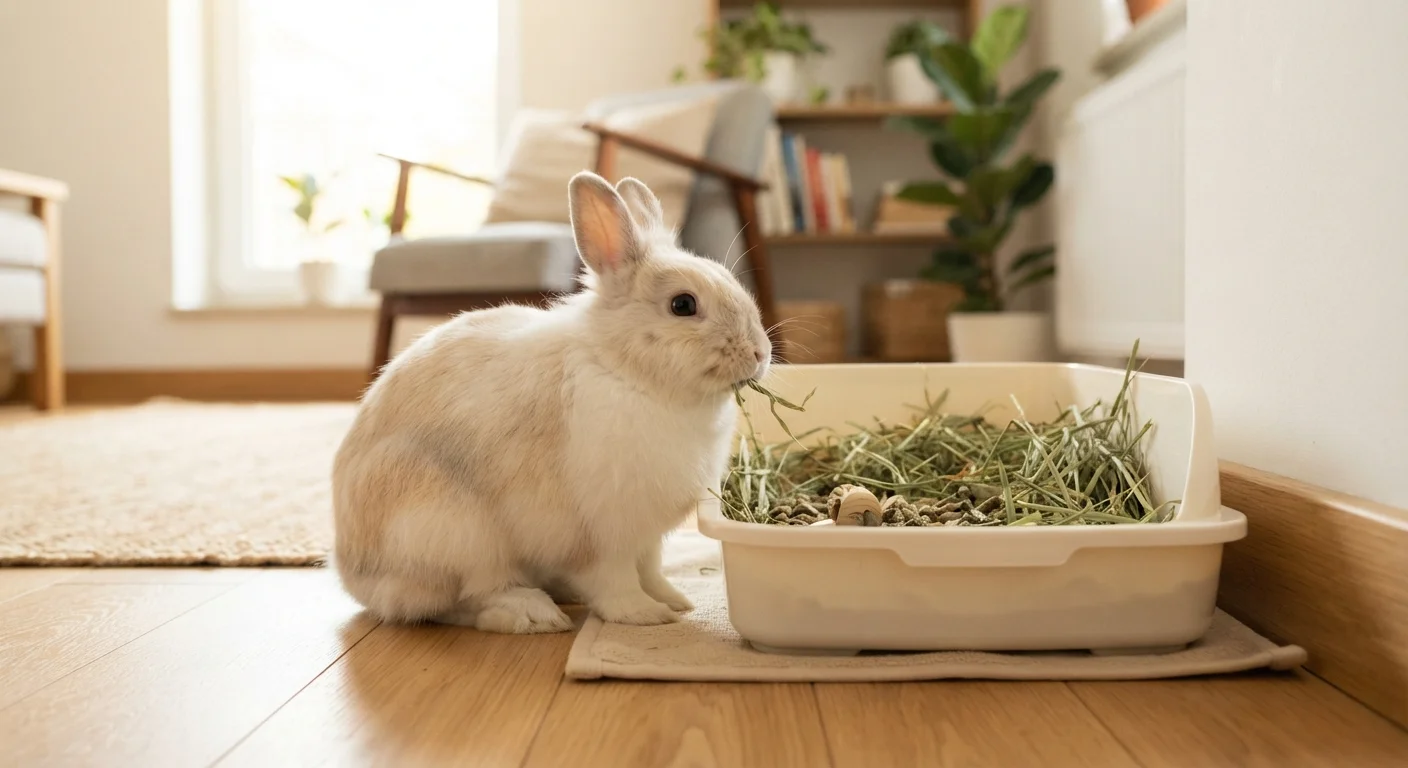
Why Rabbits Are Easier to Litter Train Than You Might Expect
Rabbits are naturally inclined to choose one or two preferred spots for eliminating - a behavior rooted in their wild instincts to keep their living area clean and signal territory. This instinct works in your favor during litter training. Unlike some small animals, rabbits respond well to gentle, consistent shaping of their natural habits rather than requiring entirely new behaviors to be taught.
If you haven't yet set up your home for your new pet, the preparation checklist for new small pet owners is a useful starting point for ensuring your space and supplies are ready before training begins.
Before you start, gather what you'll need:
Litter box (large, open-top)
Provides enough space for the rabbit to comfortably turn around and settle in while eliminating.
Paper-based or wood-pellet litter
Absorbs urine safely without the respiratory or digestive risks associated with clay or clumping cat litters.
Fresh timothy or orchard grass hay
Placed on top of the litter to encourage the rabbit to use the box, since rabbits graze while they eliminate.
Enzymatic cleaner
Removes urine odor from accident spots completely so the rabbit is not drawn back to that location.
Pen or exercise pen (x-pen)
Temporarily limits the rabbit's roaming area during early training to build good bathroom habits in a controlled space.
Step-by-Step Litter Training Instructions
Follow these steps in order, moving at your rabbit's pace. Most rabbits develop reliable box habits within one to three weeks when training is consistent.
Choose the right litter box and placement
Select a box large enough for your rabbit to sit, turn around, and shift position comfortably - for most breeds, a large cat litter box works well. Place it in a quiet corner of the rabbit's enclosure or room. Rabbits often choose their own preferred corner first, so observe where your rabbit already tends to eliminate and position the box there.
Fill with rabbit-safe litter and hay
Add an inch or two of paper-based or wood-pellet litter to the bottom of the box. Never use clay, clumping cat litter, or cedar or pine shavings - these can cause serious respiratory and digestive harm if ingested. Layer a generous handful of fresh hay on top of the litter. Rabbits graze and eliminate simultaneously, so the hay is a powerful draw to the box rather than a nice-to-have.
Start with a smaller, confined space
When first introducing litter training, limit your rabbit's free-roaming area using an exercise pen or by starting in a single room. A smaller space means fewer potential bathroom spots and faster association with the litter box. As your rabbit demonstrates consistent use of the box over several days, gradually expand the accessible area.
Encourage and reinforce box use
If you catch your rabbit beginning to eliminate outside the box, gently and calmly pick them up and place them in the litter box. Do not scold or startle the rabbit - this creates anxiety without teaching the desired behavior. When the rabbit uses the box correctly, offer calm verbal praise or a small, appropriate treat such as a piece of leafy green immediately afterward to reinforce the behavior.
Clean accidents thoroughly
Blot up any urine with paper towels, then apply an enzymatic cleaner to the spot and let it air dry completely. Standard household cleaners often mask scent to human noses but leave enough odor trace to attract the rabbit back to the same spot. Place any stray droppings directly into the litter box - the familiar scent cues help the rabbit understand where the correct location is.
Consider spaying or neutering
Intact rabbits - both male and female - are significantly more likely to spray urine or scatter droppings as territorial marking behavior. Spaying or neutering generally improves litter box consistency and is also strongly recommended by rabbit veterinarians for overall health reasons. Speak with an exotic animal veterinarian experienced with rabbits about the appropriate timing for the procedure.
Hay in the Litter Box Is Not a Mistake
Many new rabbit owners separate the hay rack from the litter box to keep them 'clean,' but this works against training. Rabbits naturally graze and eliminate at the same time, so placing hay directly in or immediately over the litter box is one of the most effective ways to encourage consistent box use. Use the hay placement strategically - not just as a training aid, but as your rabbit's daily routine.
Troubleshooting Common Litter Training Challenges
Even with the best setup, some rabbits take longer or develop habits that need correction. Here are the most common issues and practical responses:
- Rabbit ignores the box entirely: Try repositioning the box to wherever the rabbit already prefers to go. The rabbit's preference is more useful data than an ideal placement from a human perspective.
- Rabbit tips the box over: Switch to a heavier box or one with a weighted base. Some rabbits treat lightweight boxes as obstacles to move.
- Rabbit uses the box but still scatters droppings: Scattered droppings outside the box (without associated urine) are often territorial marking and are rarely a trainable behavior in intact rabbits. Spaying or neutering typically resolves this.
- Regression in a previously trained rabbit: Sudden changes in litter box habits can indicate a health issue - urinary tract infections, bladder sludge, and gastrointestinal problems are common in rabbits and can affect elimination. Consult an exotic animal veterinarian if regression is sudden or accompanied by changes in droppings, appetite, or activity level.
Once your rabbit is reliably litter trained and roaming more freely, the guide to creating a safe environment for small pets in shared households offers practical advice for households with other pets or children.
This article is for general informational purposes only and is not a substitute for advice from a qualified exotic animal veterinarian familiar with rabbit care.
The content provided on our blog site traverses numerous categories, offering readers valuable and practical information. Readers can use the editorial team’s research and data to gain more insights into their topics of interest. However, they are requested not to treat the articles as conclusive. The website team cannot be held responsible for differences in data or inaccuracies found across other platforms. Please also note that the site might also miss out on various schemes and offers available that the readers may find more beneficial than the ones we cover.