

Start here
Why Saving and Debt Go Hand in Hand
Next
Build a Starter Emergency Fund First
Then
Understanding What You Owe
Apply it
Two Proven Methods for Paying Down Debt
Keep going
Building Momentum Over Time
Why Saving and Debt Go Hand in Hand
If you're starting from zero, the financial world can feel like two tug-of-war ropes pulling in opposite directions: one labeled save money, the other pay off debt. The good news is that these goals aren't enemies. They're two sides of the same foundation - and building them together, in the right order, is what makes financial stability achievable.
Before anything else, it helps to understand the basic terrain. Debt costs you money in the form of interest. Savings earn you money (however modestly) and protect you from future debt. The roadmap in this guide prioritizes building a small safety net first, then attacking debt strategically, so each step reinforces the next.
If you're not yet comfortable with terms like net income, cash flow, or interest rate, it's worth reading Personal Finance From the Ground Up before continuing. Everything here builds on that foundation.
Emergency fund
A dedicated savings account set aside for unexpected expenses like medical bills or car repairs, so you don't have to rely on credit cards or loans when something goes wrong.
APR (Annual Percentage Rate)
The yearly cost of borrowing money, expressed as a percentage. A higher APR means your debt grows faster if you carry a balance.
Minimum payment
The smallest amount a lender requires you to pay each month. Paying only the minimum keeps the account in good standing but extends the time it takes to pay off the balance and increases total interest paid.
Debt avalanche
A repayment strategy where you focus extra payments on the debt with the highest interest rate first, minimizing how much interest you pay overall.
Debt snowball
A repayment strategy where you focus extra payments on the smallest debt balance first, paying it off quickly to build motivation before moving to larger balances.
Automatic transfer
A scheduled, recurring move of money from one account to another - such as from checking to savings - that happens without manual action each time.
Build a Starter Emergency Fund First
The most common reason people fall deeper into debt is a surprise expense - a car repair, a medical bill, a job disruption. Without any savings buffer, those emergencies go straight onto a credit card or loan. That's why most personal finance frameworks recommend creating a small emergency fund before putting extra money toward debt.
A useful starting target is $500 to $1,000, or roughly one month of essential expenses, whichever is smaller for your situation. That amount won't cover every crisis, but it will handle most minor ones without derailing your debt payoff plan.
Practical steps to get there:
- Open a separate savings account - one that isn't your everyday checking account - so the money stays put.
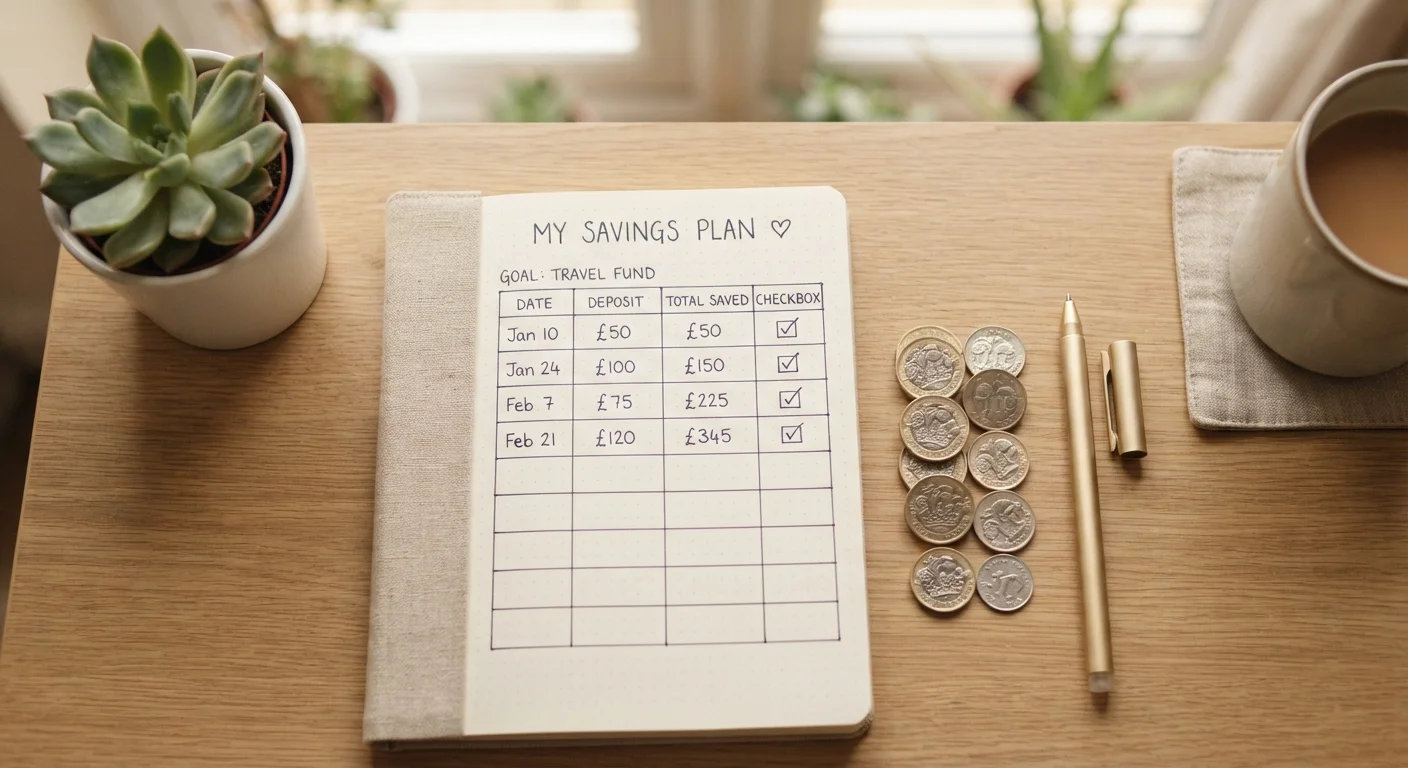
- Set up an automatic transfer on payday, even if it's $25 or $50 at first.
- Treat the fund as off-limits except for genuine emergencies.
For a step-by-step approach to building this fund on a tight income, see Building Your First Emergency Fund on a Tight Budget. And for more on why this single account changes your financial picture, The Emergency Fund: What It Is and Why It Changes Everything goes deeper.
Start Small, Then Scale Up
If $50 a month toward savings feels out of reach, start with $10 or $20 and increase the amount by a small increment every few months. Consistency over time matters more than the size of the initial contribution. Many banks let you schedule automatic increases to your recurring transfer - a feature worth using.
Understanding What You Owe
Before you can pay down debt efficiently, you need a clear inventory of what you owe. Many people avoid this step because it feels uncomfortable - but clarity is the starting point for every good plan.
Gather a statement for every debt you carry and create a simple list with four columns:
- Creditor name (e.g., credit card issuer, student loan servicer)
- Current balance
- Interest rate (APR)
- Minimum monthly payment
This list becomes your debt map. It tells you the true cost of each obligation and sets the stage for choosing a payoff method. For a thorough walkthrough of what comes next - from negotiating with creditors to tracking progress - The Complete Guide to Getting Out of Debt is a natural next read.
Two Proven Methods for Paying Down Debt
Once your starter emergency fund is in place and your debt list is complete, you're ready to choose a repayment strategy. Two methods are widely used and well-supported by financial educators:
The Debt Avalanche
Pay the minimum on all debts, then direct any extra money to the debt with the highest interest rate. Once that balance reaches zero, move to the next-highest rate. This approach minimizes the total interest you pay over time.
The Debt Snowball
Pay the minimum on all debts, then direct extra money to the debt with the smallest balance. Once that's gone, roll that payment into the next-smallest balance. Progress comes faster in the early stages, which many people find motivating.
Neither method is objectively superior - the right one depends on whether you're primarily driven by math or by momentum. Research consistently shows that consistency matters more than optimization: the method you'll actually stick with is the method that works.
If you're weighing whether to split extra funds between saving and debt repayment simultaneously, Paying Off Debt While Saving at the Same Time examines that trade-off in detail.
Building Momentum Over Time
The hardest part of this roadmap isn't the first step - it's staying consistent through the middle months when progress feels slow. A few habits make a real difference:
- Automate what you can. Automatic transfers to savings and scheduled debt payments remove the temptation to skip a month.
- Track your debt total monthly. Watching the number fall - even slowly - reinforces that the plan is working.
- Build a budget. Knowing exactly where your money goes each month reveals dollars that could be redirected toward debt or savings. The six-step budget guide is a practical place to start.
- Celebrate milestones without overspending. Paying off a card or hitting a savings target is worth acknowledging - just not in a way that sets you back.
Progress compounds. Once your high-interest debt is gone, the money you were sending to lenders becomes available for your emergency fund, your savings goals, or your future. That shift is the payoff for starting today.
For daily habits and small wins that support this longer-term plan, explore the Everyday Money Wins hub.
This article provides general financial education and information. It is not personalized financial advice. For guidance specific to your situation, consider consulting a qualified financial professional.
Saving and Debt Repayment Can Coexist
You don't have to choose between saving and paying down debt - the two goals are often pursued in parallel. The key is sequencing: a small emergency fund comes first, then extra dollars are directed toward debt. Once high-interest debt is cleared, savings goals can expand. A written budget is the tool that makes this coordination visible and manageable.
Frequently Asked Questions
Most financial educators recommend saving a small emergency buffer - often $500 to $1,000 - before directing extra money at debt. Without any savings cushion, an unexpected expense will likely push you back into debt. Once that buffer exists, shifting focus to high-interest debt usually makes mathematical sense.
A common starting target is one month of essential expenses, with a longer-term goal of three to six months. If that feels overwhelming, begin with a flat $500 or $1,000. Even a modest buffer meaningfully reduces the chance that a surprise bill derails your progress.
The avalanche method targets the debt with the highest interest rate first, minimizing total interest paid. The snowball method targets the smallest balance first, delivering quick wins that keep motivation high. Both approaches work - the best one is the one you will stick with.
Yes, in most cases. Carrying a small emergency fund alongside debt repayment is widely considered a sound strategy because it prevents new debt from replacing old debt. The trade-off between saving and paying down debt becomes more nuanced when high-interest debt is involved - see our deeper look at <a href="/personal-finance/saving-and-debt/paying-off-debt-while-saving-at-the-same-time-is-it-worth-it">paying off debt while saving simultaneously</a>.
Check your most recent statement or log in to your account online - the APR (Annual Percentage Rate) is required to be disclosed. You can also call the lender's customer service line. Knowing each rate is essential for choosing a payoff strategy.
Redirect the money you were sending to debt payments toward building a fully funded emergency fund, then toward other savings goals. Many people also begin contributing to a retirement account at this stage. A budget will help you make that transition intentionally - our <a href="/personal-finance/budgeting-basics/your-first-monthly-budget-in-six-steps">first monthly budget guide</a> is a good next step.
The content provided on our blog site traverses numerous categories, offering readers valuable and practical information. Readers can use the editorial team’s research and data to gain more insights into their topics of interest. However, they are requested not to treat the articles as conclusive. The website team cannot be held responsible for differences in data or inaccuracies found across other platforms. Please also note that the site might also miss out on various schemes and offers available that the readers may find more beneficial than the ones we cover.