

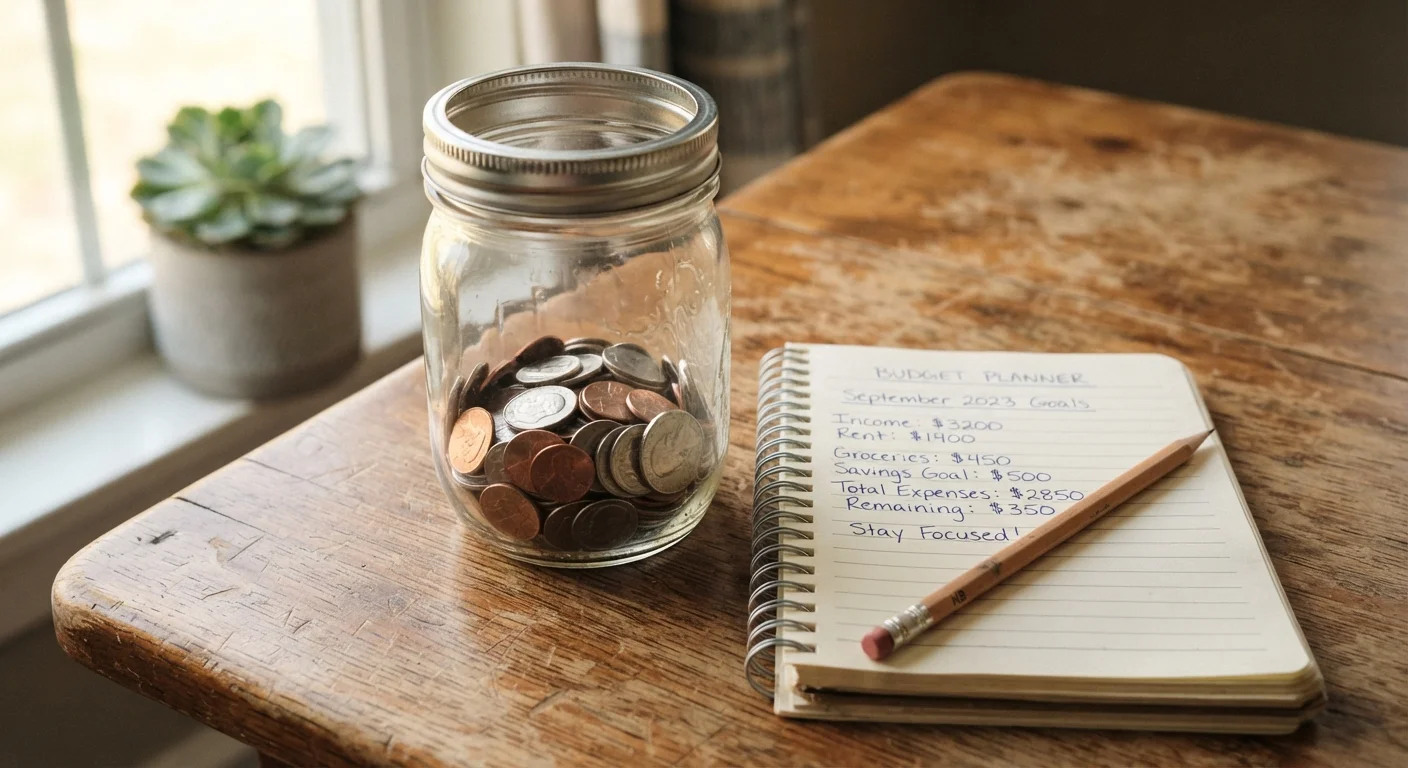
Why Building an Emergency Fund on a Tight Budget Is Possible
Many people assume an emergency fund is something you build after you have financial breathing room. In reality, it's the opposite: an emergency fund is what creates breathing room. Without one, a single unexpected expense - a car repair, a medical bill, a missed shift - sends you to a credit card or a high-interest loan, starting a cycle that's hard to escape.
The good news is that you don't need a large income to start. You need a clear target, a separate place to keep the money, and a consistent habit - even a very small one. For a broader look at how emergency savings fits into your overall financial picture, the starter's roadmap to saving and debt is a useful companion.
Define 'Emergency' Before You Save
An emergency fund is strictly for unplanned, necessary expenses - a car repair that prevents you from getting to work, an unexpected medical bill, or a sudden job loss. It is not for sales, vacations, or predictable annual costs like car registration. Defining clear rules before you save prevents you from draining the fund for non-emergencies and having nothing left when a real crisis hits.
If terms like 'cash flow' or 'net income' feel unfamiliar as you work through these steps, the personal finance basics guide builds that vocabulary from the ground up.
What You'll Need Before You Start
You don't need special tools or financial expertise - just a few basics in place before you run through the steps below.
What you will need
Dedicated Savings Account
Holds your emergency fund separately from everyday spending money to reduce temptation and improve tracking.
Monthly Budget Worksheet or App
Helps you identify where your money is going so you can find room to redirect even small amounts toward savings.
Automatic Transfer Feature
Schedules recurring deposits into your emergency fund so saving happens consistently without manual effort.
Subscription Audit Tool or Bank Statement
Surfaces recurring charges you may have forgotten, freeing up dollars to redirect toward your fund.
Once these are in place, you're ready to follow the steps. The entire setup process typically takes under 30 minutes.
Step-by-Step: Building Your Emergency Fund
Work through these steps in order. Each one builds on the last, and the goal is steady progress - not perfection. Even completing the first two steps today puts you meaningfully ahead of where you started.
Set a concrete first milestone
Skip the standard advice to save three to six months of expenses immediately - that target feels paralyzing when money is already tight. Instead, commit to a starter goal of $500 to $1,000. This amount is large enough to absorb the most common financial shocks (a flat tire, a small ER copay, a broken appliance) without requiring years of sacrifice to reach.
Write the number down somewhere visible. A specific, achievable target is far more motivating than an abstract long-term goal.
Open a separate savings account for the fund
Do not keep your emergency fund in the same account you use for daily spending. A separate account - even at the same bank - creates a psychological barrier that makes it less likely you'll spend the money casually. Look for an account with no monthly maintenance fees and no minimum balance requirements.
Label the account clearly, whether the label is in the account nickname field online or just in your own records. 'Emergency Fund' is a constant reminder of what that money is for.
Find your savings amount by reviewing your budget
You don't need a large surplus to start. Pull up your last two bank or credit card statements and look for three things:
- Forgotten subscriptions - streaming services, apps, or memberships you rarely use
- Recurring small purchases that add up - daily coffee runs, convenience store stops
- Categories where you consistently overspend relative to your actual needs
Even identifying $20-$40 per month to redirect is a strong start. If you haven't built a monthly budget yet, the six-step budget guide is a practical place to begin.
Automate your savings transfer
Once you know your amount, log into your bank's online portal or mobile app and schedule a recurring automatic transfer from your checking account to your new emergency fund account. Align the transfer date with your payday so the money moves before you have a chance to spend it.
Automation is the single most effective savings habit documented in personal finance research. It removes the decision from your to-do list entirely, which means it actually happens.
Protect the fund with clear rules
Before your fund grows, decide what counts as a legitimate emergency - and stick to it. A general rule: a true emergency is unexpected, necessary, and urgent. Car repairs that affect your ability to work, medical copays for sudden illness, and essential utility disconnection notices typically qualify.
Planned expenses - holiday gifts, a vacation, annual insurance premiums - do not. Those belong in a separate savings bucket or your monthly budget. For more on what an emergency fund is designed to cover, see our guide to emergency fund fundamentals.
Replenish immediately after any withdrawal
The moment you use your emergency fund, treat replenishment as a priority equal to paying a bill. Adjust your next automatic transfer if needed or apply any incoming 'found money' - a tax refund, overtime pay, or cash gift - directly to restoring the balance. A partially depleted fund still offers protection, but a fully restored one offers the most.
Use a 'Found Money' Rule
Any unexpected income - a tax refund, a cash gift, or a small side-gig payment - should go directly into your emergency fund until you hit your first milestone. This approach builds the fund faster without requiring you to squeeze your existing budget further. Even one or two windfalls a year can meaningfully shorten your timeline.
For households dealing with both limited savings and existing debt, the guide to building a $1,000 emergency fund under financial pressure addresses that specific tension directly.
This article is for general informational and educational purposes only and does not constitute personalized financial advice. Consult a qualified financial professional for guidance specific to your situation.
The content provided on our blog site traverses numerous categories, offering readers valuable and practical information. Readers can use the editorial team’s research and data to gain more insights into their topics of interest. However, they are requested not to treat the articles as conclusive. The website team cannot be held responsible for differences in data or inaccuracies found across other platforms. Please also note that the site might also miss out on various schemes and offers available that the readers may find more beneficial than the ones we cover.