

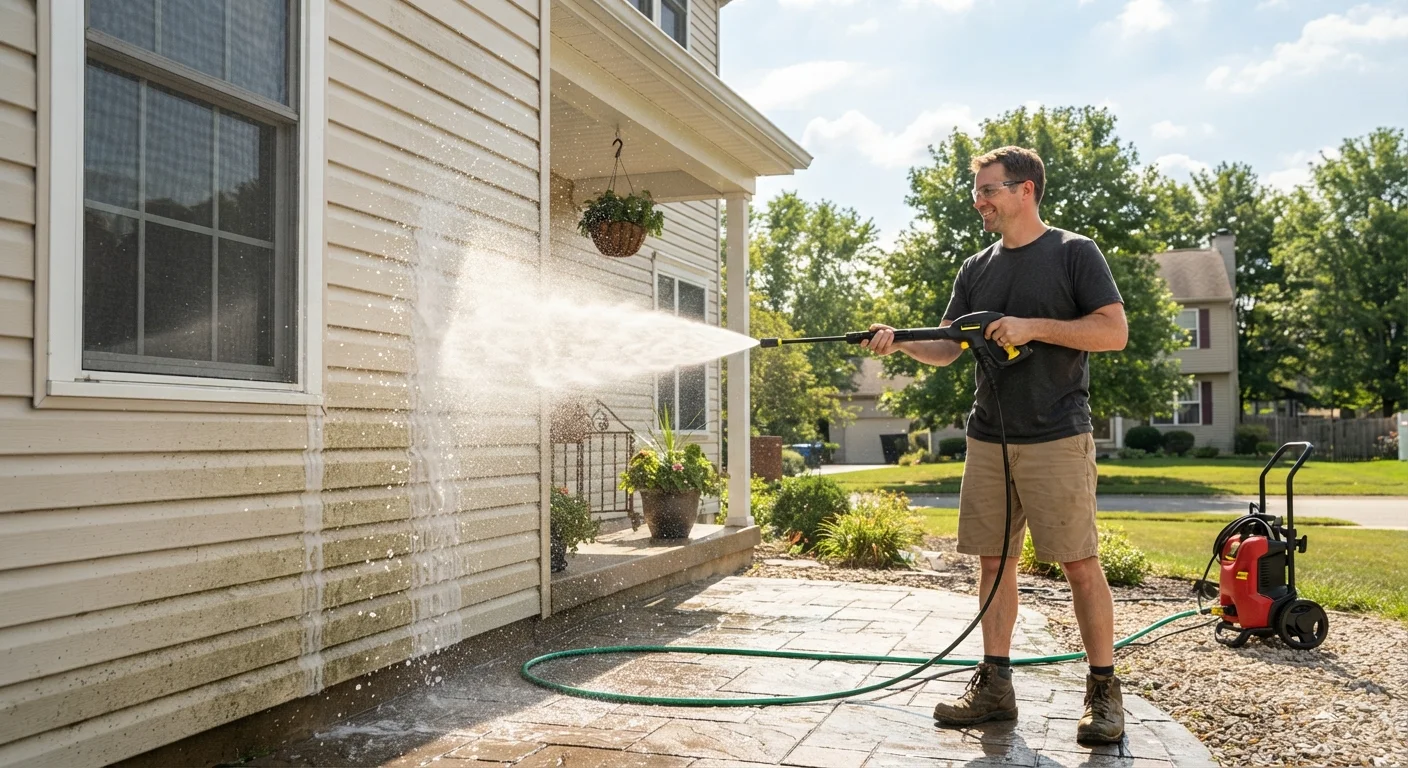
Understanding Pressure and Nozzle Settings
A pressure washer's output is measured in PSI (pounds per square inch). Most residential tasks fall between 1,200 and 2,800 PSI, and choosing the right setting is the single most important decision you'll make before pulling the trigger. Paired with PSI, your nozzle angle determines how concentrated the spray is - and how aggressively it strips surfaces.
Nozzles are color-coded by angle: a 40-degree (white) nozzle delivers a wide, gentle fan suitable for most siding. A 25-degree (green) nozzle works well on concrete and brick. The 0-degree (red) nozzle produces a pinpoint jet powerful enough to cut into soft wood or strip paint - avoid it for home exteriors entirely. A soap nozzle (black) applies detergent at low pressure, which is ideal for loosening grime before rinsing.
Choose the Right Nozzle Before You Start
Lay out all your nozzles before connecting water so you can identify them by color without fumbling mid-job. Keep the red zero-degree nozzle in your kit bag and out of reach during residential work - it has almost no safe application on home exteriors. The white 40-degree nozzle handles the majority of siding and trim cleaning tasks effectively.
As a starting rule: the softer or more porous the surface, the lower your PSI and the wider your nozzle angle should be. When in doubt, test a small, hidden area first.
Surfaces That Handle Pressure Washing Well
Several common exterior surfaces tolerate pressure washing without special precautions, provided you use appropriate settings.
Set your PSI to match the surface you're cleaning, not the size of the job.
Using too much pressure on a softer surface - even briefly - can etch, pit, or permanently roughen it. Concrete and brick can handle 2,500-3,000 PSI; vinyl siding tops out around 1,500 PSI. Starting lower and working up is safer than the reverse.
Always sweep the nozzle continuously - never hold it stationary on any surface.
A stationary stream concentrates enormous force on one spot, which can gouge wood, score vinyl, or strip grout from brick joints in seconds. Continuous, overlapping passes distribute the cleaning force evenly.
Work from top to bottom on all vertical surfaces.
Dirty water and dislodged debris run downward. Washing the lower section first means you'll immediately dirty it again as you clean above. Top-to-bottom sequencing keeps cleaned areas clean.
Pre-treat stubborn stains with appropriate detergent before applying pressure.
High pressure alone often can't break the chemical bond of mildew, algae, or oil stains - it just spreads them. Applying a purpose-formulated exterior cleaner and letting it dwell for several minutes does most of the loosening, so you need less pressure and get a better result.
Wear appropriate personal protective equipment every time you operate the machine.
A pressure washer operating at 2,000 PSI can lacerate skin or force water and debris into eyes. Safety glasses, closed-toe shoes, and long pants are minimum protection. Never point the wand at anyone, and keep bystanders - especially children - well clear of the work area.
Surfaces That Need Extra Care - or Should Be Avoided
Not every exterior surface is a candidate for high-pressure cleaning. Getting this wrong can mean costly repairs or premature deterioration.
1,500 PSI
Maximum recommended PSI for vinyl siding
General guidance from pressure washer manufacturers and home improvement resources suggests vinyl siding should not be washed above this threshold.
18 inches
Minimum safe wand distance for wood surfaces
Holding the nozzle closer than this on softwood surfaces significantly increases the risk of grain raising and fiber damage.
Wood siding and decking are porous and relatively soft. High pressure can raise the wood grain, drive moisture into the fibers, and create conditions for rot or mold - the opposite of your goal. If you do wash wood, use 500-800 PSI maximum with a 40-degree nozzle, hold the wand at least 18 inches away, and always spray with the grain. Let the surface dry completely before painting or staining.
Stucco looks durable but its surface layer is surprisingly fragile. Hairline cracks in stucco can allow water to penetrate behind the finish, leading to structural moisture damage. Low-pressure rinsing (under 1,500 PSI) is generally acceptable; anything higher risks blasting through the finish coat. Inspect stucco closely for cracks before washing - water will follow any existing opening. Learn more about common homeowner misconceptions in our article on home maintenance myths that cost homeowners money.
Windows and door frames present two risks: the seal around window glazing can fail under direct pressure, and water can be forced into wall cavities around frame gaps. Never aim the jet directly at window glass or the edges of frames. If you need to clean windows, a soft brush and bucket is far safer.
Asphalt roof shingles should not be pressure washed. The granules embedded in shingles are their first layer of UV and weather protection, and pressure washing blasts them loose, shortening roof life significantly. A soft-wash system with appropriate cleaning solution is the correct approach for roof cleaning - or hire a professional who specializes in it.
Multi-story walls also deserve a note: working from a ladder while operating a pressure washer is genuinely hazardous due to the kickback force. For anything above the first floor, consider hiring a professional. If you're evaluating whether to DIY or bring in help, our guide on questions to ask before hiring a contractor can help you make that call wisely.
Technique and Safety Practices
Even on safe surfaces, poor technique leads to streaks, water intrusion, or personal injury. Follow these fundamentals every time.
Pressure washing fits naturally into a broader exterior maintenance routine. It pairs well with gutter cleaning - washing down exterior walls first means any debris that lands in gutters can be cleared immediately after. See our guide on gutter cleaning and inspection for a complete walkthrough. For a full picture of when exterior washing fits into your home's annual upkeep, seasonal home maintenance by quarter is a useful planning resource.
Permits and HOA Rules May Apply
Some homeowners associations have rules about exterior cleaning frequency, acceptable methods, or runoff management. Additionally, in areas with water restrictions, high-volume pressure washing during drought conditions may be regulated. Check with your local municipality and any applicable HOA guidelines before scheduling a large exterior wash.
The content provided on our blog site traverses numerous categories, offering readers valuable and practical information. Readers can use the editorial team’s research and data to gain more insights into their topics of interest. However, they are requested not to treat the articles as conclusive. The website team cannot be held responsible for differences in data or inaccuracies found across other platforms. Please also note that the site might also miss out on various schemes and offers available that the readers may find more beneficial than the ones we cover.